

14k Gold Wedding Rings: Pick a Style You'll Love for Life
14k gold wedding rings are bands made from 58.5% pure gold alloyed for strength, ideal for daily wear with timeless color and shine. At Diamond2Deal in New York (420 Madison Ave, 5th Floor, Rm 500), we pair durable 14k bands with certified lab-grown diamonds, next-day shipping, and expert guidance so you can choose with confidence.
By Mit Trivedi — President, Diamond2Deal
Last updated: 2026-06-18
Start Here: Hook & Table of Contents
This complete guide explains what 14k gold wedding rings are, why they’re ideal for everyday wear, how they’re made, and how to choose the right style. You’ll find finish options, settings, sizing, care tips, and a comparison to 18k, platinum, and 10k—plus expert resources from Diamond2Deal.
You want a ring that looks beautiful now and still feels right decades from now. Here’s how this guide will help you get there—fast, clearly, and with zero fluff.
- What 14k means: Purity, durability, and real-world performance.
- Why it’s popular: Everyday strength, classic color, and value.
- How it’s made: Alloys, plating, and finishing choices.
- Styles & settings: From classic bands to diamond eternity designs.
- Fit & sizing: Widths, profiles, comfort, and men’s/women’s nuances.
- Care tips: Cleaning routines, safe storage, and maintenance.
- Compare metals: 14k vs 18k vs platinum vs 10k.
- Local help: Book a diamond expert appointment in Manhattan.
Prefer to skim? Watch for the short featured answers under every section. They’re speakable and designed for quick decision-making.
Quick Summary
Choose 14k gold wedding rings for a balanced mix of beauty and durability. The alloy (58.5% gold) stands up to daily life, comes in yellow, white, and rose tones, and pairs well with lab-grown diamonds. Focus on comfort fit, width, and finish; schedule a brief consult to confirm sizing and style.
In Manhattan and across New York County, couples pick 14k for strength, color options, and style flexibility. It’s a smart, everyday choice that works with diamonds, gemstones, or classic unadorned bands.
What Is a 14k Gold Wedding Ring?
A 14k gold wedding ring is crafted from 58.5% pure gold and 41.5% other metals for durability and color. It’s prized for balanced hardness, daily-wear resilience, and timeless appeal in yellow, white, or rose gold—often enhanced with diamond accents or comfort-fit interiors.
On the karat scale (out of 24), 14k equals 58.5% pure gold. The remaining 41.5% is typically silver, copper, zinc, and palladium or nickel (for some white golds) to adjust color and hardness. This composition helps your band resist dings and retain its shape.
- Yellow, white, rose: The alloy blend shifts color tone without changing karat.
- Everyday ready: 14k is harder than 18k, so it can better handle daily wear.
- Fine detailing: Settings like pavé, channel, or micro-prongs are secure in 14k.
- Finish variety: High polish, satin/matte, brushed, and hammered textures.
In our experience working with bridal clients online and at our New York address, 14k offers the “just right” blend for wedding bands: warm color, excellent durability, and broad style compatibility—from minimalist classics to diamond eternity rings.
Why 14k Gold Wedding Rings Matter for Daily Wear
14k gold balances beauty and resilience, making it a top daily-wear metal. It resists bending better than higher-karat golds, offers multiple color options, and supports secure diamond settings. For most lifestyles, 14k delivers lasting comfort and style with minimal upkeep.
Wedding bands live a tougher life than most jewelry. They meet laptop edges, gym equipment, steering wheels, and garden tools. 14k’s workhorse quality helps your ring keep its form and finish through those everyday bumps.
- Stronger alloy, steadier shape: Less likely to deform than softer, higher-karat bands.
- Friendly to fine pavé: Micro-prongs and channels stay firm under normal wear.
- Color continuity: Yellow and rose tones stay consistent; white gold may need periodic rhodium refreshes depending on wear.
- Style breadth: From plain domed bands to diamond eternity designs and guard wraps.
We often guide couples comparing 14k to 18k or platinum. If you want classic gold color with dependable strength and a comfortable price-to-performance balance, 14k is typically the sweet spot.
How 14k Gold Is Made and How It Performs
14k gold is created by alloying 58.5% pure gold with metals that fine-tune hardness and color. The result: a sturdy, workable metal ideal for bands and diamond settings. White golds are usually rhodium-plated for brightness; polishing and re-plating restore luster over time.
Understanding alloy science helps you choose smartly. Metals like silver and copper add strength, while palladium or nickel shifts gold toward white. The process yields distinct appearances without changing purity.
- Alloy recipe: 58.5% gold + 41.5% alloying metals for color and hardness.
- White gold note: Many white gold bands receive a thin rhodium topcoat for extra brightness.
-
Finish behaviors:
- Polish: Mirror-bright but shows micro-scratches fastest (easily buffed).
- Satin/matte: Hides light wear; touch up with a quick refinish.
- Hammered: Naturally camouflages dings with intentional texture.
- Comfort-fit interiors: Slightly rounded inner walls improve airflow and reduce hot spots.
Technical takeaway: the same 14k purity can look yellow, rosy, or white depending on alloying metals and finishing. That’s why you can match a wedding band to almost any engagement ring style, including lab grown diamond engagement rings.
Types and Styles of 14k Gold Wedding Bands
14k gold bands span classic domed, flat, beveled, and knife-edge profiles in yellow, white, or rose gold, with widths from slim 1.5–2.0 mm up to 8 mm+. Add diamond pavé, channel, bezel, or eternity settings to personalize sparkle while keeping everyday comfort.
Style is personal, but a few frameworks simplify your choice. Start with profile, then pick width, color, and finish. Decide whether you want diamonds or a clean metal band. Finally, confirm fit.
Popular profiles and widths
- Classic domed: Timeless curve; forgiving on micro-scratches. Common widths: 2–6 mm.
- Flat/modern: Clean edges and bold presence; great for stackers. Common widths: 1.8–5 mm.
- Beveled: Angled edges catch light; a subtle design twist.
- Knife-edge: Sharp ridge adds dimension; pairs well with solitaires.
- Comfort-fit: Rounded inner wall; feels slightly looser at the same ring size.
Diamond-forward band ideas
- Pavé: Sparkle across the surface with tiny shared prongs.
- Channel-set: Gems protected between metal walls; smooth top surface.
- Bezel: Each stone wrapped in metal for security and a sleek look.
- Eternity: Diamonds 360° around; maximum brilliance for anniversaries and weddings.
For deeper inspiration, explore our internal education on stacking and anniversary styles in the diamond eternity rings guide and our wedding ring guide. Both distill years of fitting and wear feedback into clear steps.
Fit, Sizing, and Everyday Comfort
Dial in comfort by pairing the right profile with a suitable width and a comfort-fit interior. Confirm size at different times of day, account for seasonal finger changes, and match band height to your engagement ring so both sit flush without pinching.
Comfort is the #1 reason couples return to 14k bands. The metal’s strength enables slimmer profiles without feeling flimsy. That means less bulk between fingers and a ring you’ll forget you’re wearing—until someone compliments it.
- Try widths: Many find 2–3 mm elegant for women’s bands; 4–6 mm often suits men’s hands.
- Measure smart: Fingers may fluctuate a half size through the day; test in morning and evening.
- Pairing height: Align band height so your engagement ring and band nest comfortably.
- Engraving space: Wider interiors allow dates, initials, or a short phrase.
Want help? Our team can recommend widths and fits based on your current ring and daily routine—typing, workouts, or hands-on crafts.
Care, Cleaning, and Long-Term Maintenance
Clean 14k gold wedding rings with warm water, mild dish soap, and a soft brush every 2–4 weeks. For white gold, occasional rhodium re-plating refreshes brightness. Schedule professional inspections annually to check prongs, channels, and micro-pavé integrity.
Simple routines keep your ring looking new. You don’t need special kits—just consistency and common sense during workouts or heavy chores.
- At-home clean: 10–15 minutes in soapy water, gentle brush, rinse, then pat dry.
- Avoid abrasives: Skip harsh chemicals or rough cloths that can dull finishes.
- Safe storage: Use separate pouches to prevent metal-on-metal scuffs.
- Annual checkup: Professional inspection tightens prongs and secures channels.
White gold’s rhodium topcoat typically wears on contact points first. A quick re-plate brings back that cool, bright tone. Yellow and rose golds simply need occasional polish to restore high shine.
14k vs 18k vs Platinum vs 10k: What’s Different?
14k offers the best day-to-day balance of gold content and durability. 18k is richer in color but softer; platinum is dense and naturally white; 10k is the hardest but least gold in composition. Your lifestyle and pairing with diamonds guide the right choice.
Use this snapshot to align your needs with the right metal.
| Metal | Gold Content | Color/Finish Notes | Everyday Wear | Great For |
|---|---|---|---|---|
| 14k Gold | 58.5% gold | Yellow/rose true-to-tone; white often rhodium-plated | Strong, reliable; resists bending well | Daily bands, pavé settings, mixed stacks |
| 18k Gold | 75% gold | Richer yellow/rose; white usually rhodium-plated | Softer; warm luxury feel | Heirloom aesthetics, low-impact wearers |
| Platinum | Typically 90–95% platinum | Naturally white; develops a patina over time | Very dense; prongs hold stones securely | White look without plating; secure settings |
| 10k Gold | 41.7% gold | Cooler tone in yellow; durable alloy | Hardest gold alloy; may feel less luxe | High-contact work environments |
Not sure which way to go? Our women’s wedding band style guide walks through how metal choice affects styling and stacking depth.
Pairing 14k Bands with Lab-Grown Diamonds
14k gold pairs beautifully with certified lab-grown diamonds for ethical sparkle and precise color matching. Choose settings—pavé, channel, or bezel—that suit your lifestyle, and match diamond color to metal tone for a cohesive, bright look.
As a lab-grown diamond leader, we help you match stone characteristics to your band and engagement ring. Clean, bright lab diamonds let metal color shine.
-
Color harmony:
- Yellow/rose bands complement near-colorless stones for warmth.
- White gold enhances bright, icy tones (often with rhodium).
- Setting security: 14k’s strength supports tiny prongs and micro-channels.
- Eternity choices: Explore full or half-eternity for balance of sparkle and comfort.
Browse our internal education on eternity designs in the eternity rings style guide and see how band profiles affect stacking with solitaires and three-stone rings.
Best Practices When Choosing Your 14k Band
Clarify your priorities—color, width, finish, and whether you want diamonds—then try a comfort-fit profile. Confirm size at two times of day, and align band height to your engagement ring. Schedule a short consult to validate choices before engraving.
Practical decision steps
- 1) Set your look: Pick yellow, white, or rose based on skin tone and existing jewelry.
- 2) Choose profile: Domed for classic, flat for modern, beveled for light play.
- 3) Lock width: Test 2–3 mm for delicate; 4–6 mm for bolder or men’s styles.
- 4) Add texture: High polish for shine; satin, brushed, or hammered to mute scuffs.
- 5) Decide diamonds: Pavé for sparkle; channel/bezel for smooth edges; eternity for full brilliance.
- 6) Verify fit: Comfort-fit interior, morning/evening sizing, and flush stacking checks.
Local considerations for Manhattan
- Plan a short weekday visit near Grand Central to try widths and finishes without weekend crowds.
- Summer humidity can cause temporary swelling; size toward the snug end in winter and re-check mid-summer.
- If you commute or lift frequently, consider a satin or hammered finish that hides scuffs from daily city carry.
When you’re ready, save time with our custom ring guide and book an appointment with a Diamond2Deal expert for a focused 20–30 minute review.
Tools and Resources (Sizing, Education, Appointments)
Use a ring sizer, our wedding ring guide, and a quick consult to finalize your 14k band. Education on metal, finish, and lab diamonds shortens the decision cycle and prevents returns or re-sizing.
Great tools make decisions faster and better. We’ve organized essentials so you can move from research to “yes” in a single sitting.
- Wedding Ring Guide: A step-by-step overview of metals, widths, and stacks in our wedding ring guide.
- Eternity Ring Education: Style and comfort tradeoffs in our eternity rings guide.
- Lab-Grown Diamonds: Learn benefits and matching tips in our lab-grown diamond guide.
- Anniversary Planning: Milestone ideas in our anniversary guide.
Prefer a guided path? Book a short appointment with a Diamond2Deal expert—online or at our Madison Avenue office—to align style, finish, and engraving in one go.
Free 20-minute band consult: Bring your engagement ring (or a photo), and we’ll confirm 14k color, width, and finish, then check stacking and comfort. Appointments available most weekdays near Grand Central.
Real-World Examples from Our Clients
The best way to decide is to see what works for people like you. Here are quick real-world scenarios showing how 14k bands handle daily life, stacking, and style updates without fuss.
Everyday professional, keyboard-heavy
- Profile: 2 mm flat 14k yellow with comfort-fit interior.
- Why it works: Low height avoids keyboard contact; yellow pairs with heirloom jewelry.
- Result: Minimal scuffs; yearly polish restores shine.
Active city commuter
- Profile: 4 mm domed 14k white, satin finish.
- Why it works: Satin hides micro-abrasions from bags and subway rails.
- Result: Clean look through the week; occasional rhodium refresh.
Stacking with a lab-grown solitaire
- Profile: 1.8 mm knife-edge 14k rose + half-eternity pavé band.
- Why it works: Knife-edge adds dimension; half-eternity boosts sparkle without bulk.
- Result: Comfortable daily wear with standout weekend shine.
Milestone eternity upgrade
- Profile: 14k yellow full-eternity with lab-grown rounds.
- Why it works: Secure micro-prongs in 14k; warmth complements near-colorless stones.
- Result: Brilliant 360° sparkle and easy annual maintenance.
For more eternity inspiration, explore our eternity ring primer and detailed eternity guide.
Visual Details: Finish, Texture, and Light Play
Polished, satin, brushed, and hammered finishes each change how light moves across 14k gold. Choose polish for mirror shine, satin or brushed for soft glow, and hammered for organic texture that naturally disguises dings.
Finish is more than an aesthetic choice—it affects upkeep and how your band reads across a room or in photos.
- High polish: Brilliant, formal; shows hairline scratches fastest (quickly buffed).
- Satin: Subtle sheen; great for modern or office-forward looks.
- Brushed: Directional grain gives quiet texture and hides wear.
- Hammered: Faceted surface dances with light and masks bumps.
We often pair satin or brushed finishes with white gold for a cool, refined presence, while yellow and rose gold shine in polished or hammered textures that celebrate warmth.
Buying in Manhattan: Timing, Visits, and Support
In Manhattan and New York County, schedule quick weekday visits near Grand Central or Bryant Park to test widths and finishes without weekend lines. Bring your engagement ring for stacking checks, and plan a 20-minute consult to finalize engraving and care schedules.
Local couples value speed, clarity, and hands-on checks. Because our office is near Grand Central, it’s easy to pop in, compare widths, and confirm comfort-fit before you engrave.
- Timing: Weekday late mornings and early afternoons are quiet and efficient.
- What to bring: Your engagement ring, photos in different lighting, and any lifestyle notes.
- What we’ll do: Check width, height, and finish; verify flush stacking; review annual care.
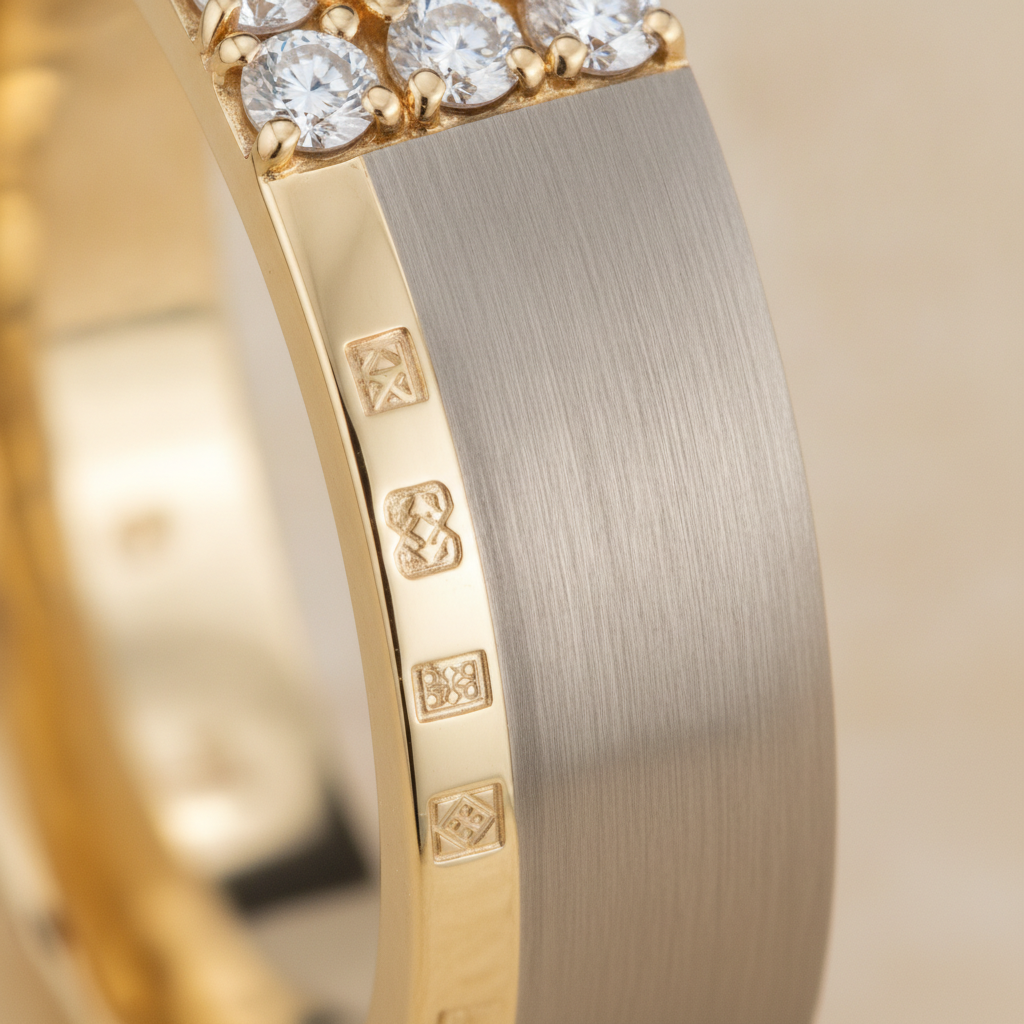
Inspiration: See 14k Bands Up Close
Examining edges, hallmarks, prongs, and finishes up close helps you visualize daily wear. Look for clean setting work, even spacing in pavé, and a smooth comfort-fit interior. These small details drive all-day comfort and long-term durability.
A quick visual checklist:
- Even prongs: Consistent size and spacing secure tiny diamonds.
- Seat finish: Smooth seats avoid chipping stone girdles.
- Interior polish: Comfort-fit needs a smooth inner surface.
- Edge integrity: Beveled or rounded edges resist catching on fabrics.
Frequently Asked Questions
These quick answers cover the most common questions about 14k gold wedding rings: durability, white vs yellow vs rose, care, and pairing with lab-grown diamonds. Each response is clear, direct, and action-oriented.
Is 14k gold durable enough for everyday wedding wear?
Yes. 14k gold is a sturdy alloy (58.5% gold) that resists bending and holds prongs securely, making it ideal for daily-wear wedding bands. It offers a strong balance of beauty and resilience compared to softer higher-karat options.
Should I choose yellow, white, or rose 14k gold?
Match tone to your style and existing jewelry. Yellow is classic and warm, white is bright and modern (often rhodium-plated), and rose adds a soft, romantic hue. All three are 14k—so color choice won’t affect purity.
How do I clean and maintain a 14k wedding ring?
Use warm water, mild soap, and a soft brush every few weeks. Pat dry and store separately. Schedule annual professional checks. For white gold, occasional rhodium re-plating restores brightness when needed.
Do lab-grown diamonds pair well with 14k gold bands?
Absolutely. Certified lab-grown diamonds offer brilliant, consistent color and clarity that match 14k gold beautifully. Choose pavé, channel, or bezel settings, and align diamond color with metal tone for a cohesive look.
Key Takeaways
Pick 14k gold wedding rings for everyday durability, versatile color, and secure diamond settings. Confirm comfort-fit, width, and finish; clean with mild soap; and plan annual checkups. A short expert consult ensures your band stacks and wears exactly as you expect.
- 14k equals 58.5% pure gold—balanced beauty and strength.
- Finish guides upkeep: polish shines; satin/brushed/hammered hide wear.
- Comfort-fit profiles reduce pressure points for all-day wear.
- Match diamond settings to lifestyle: pavé, channel, bezel, or eternity.
- Use our guides and a quick consult to finalize choices with confidence.
Conclusion
A 14k gold wedding ring delivers timeless style with everyday durability. Choose your color, profile, width, and finish, then validate stacking and sizing with a brief consult. With smart care, your band will look refined from year one to year fifty.
Ready to find the right band? Explore profiles and finishes in our wedding ring guide, then tap our team for a quick, focused review. We’ll make sure your choice fits your hand, your life, and your love story.