

Bangle Styling: Look Polished with Less Effort in 2026
Bangle bracelet styling is the art of stacking, spacing, and pairing bangles so your wrist looks balanced, intentional, and comfortable all day. From our New York base at 420 Madison Ave (Manhattan), Diamond2Deal helps you build elegant stacks using lab-grown diamond bangles, tennis bracelets, and fine gold designs that layer seamlessly.
By Mit Trivedi, President — Diamond2Deal
Last updated: 2026-05-09
Quick Summary
The fastest way to style bangles is to anchor your stack with one standout piece, add 2–4 slim bangles for rhythm, and finish with a flexible tennis bracelet for movement. In Manhattan and across New York County, this mix delivers polish with comfort for workdays, dinners, and weekends.
This complete, practical guide shows you exactly how to build a balanced bracelet stack—what to wear where, which widths and metals to combine, and how to match bangles with rings and watches without snagging sleeves.
- What bangle bracelet styling is, why it matters, and how stacking works
- Pro tips to mix metals, widths, and textures without clashing
- How to pair bangles with tennis bracelets, watches, and engagement rings
- Sizing rules to keep stacks comfortable and secure
- Ten ready-to-wear stack formulas for work, weekends, and events
Local considerations for Manhattan
- Commute-friendly comfort: Choose hinged bangles and low-profile tennis bracelets so sleeves slide smoothly on subways around Grand Central.
- Seasonal shifts: In winter, allow slightly more ease for sweaters; in summer humidity, avoid over-stacking to reduce skin contact.
- Day-to-night: If your evening plans are near Rockefeller Center, stack a pavé bangle and a slim tennis bracelet for instant dress-up.
What Is Bangle Styling?
Bangle styling is the methodical way of choosing, stacking, and spacing bracelets to create a cohesive look. It balances one hero piece with slimmer accents, coordinates metals and finishes, and ensures proper fit so the stack feels secure, moves gracefully, and complements your outfit and rings.
At its core, bangle bracelet styling blends design and fit. The right stack highlights your personal style while staying practical for daily movement—typing, commuting, and events. We focus on composition (hero piece + accents), proportion (widths and diameters), and comfort (hinges, clasps, and smooth edges).
Core components
- Hero bangle: A statement piece—diamond pavé, a bold cuff, or a textured gold bangle—that sets the theme.
- Rhythm builders: 2–4 slim bangles or guards that add repetition without bulk.
- Motion layer: A tennis bracelet or station bracelet that adds subtle movement and light.
- Fit and finish: Hinges, clasps, edge rounding, and polish so sleeves don’t snag and skin stays comfortable.
How it connects to your other jewelry
- Engagement rings and bands: Mirror metal color or diamond shapes for cohesion.
- Earrings and pendants: Echo texture (e.g., pavé vs. high polish) for a unified set.
- Watches: Keep bangle heights low so a watch sits flush and doesn’t pinch.
New to diamond details? Our internal lab-grown diamonds guide walks through the 4Cs and sustainability background, making it easier to choose pavé or station bangles with confidence.
Why Bangle Styling Matters
Great bangle styling saves time, elevates outfits, and prevents discomfort. With a repeatable stack formula, you’ll dress faster, avoid clashing metals, reduce snagging, and keep proportions flattering. The result is an intentional look that transitions from office to evening without rethinking your jewelry.
Here’s the thing: most wrist stacks fail because of proportion and fit, not taste. Too many wide pieces feel bulky; poor sizing causes constant sliding. A dialed-in formula keeps you polished with less effort—exactly what busy New Yorkers need between meetings and dinner reservations.
Benefits you’ll notice
- Speed: Fewer decisions—use 1-3 proven stacks for work, weekends, and events.
- Comfort: Hinged and rounded edges reduce pressure points and sleeve snags.
- Versatility: A tennis bracelet adds sparkle without overpowering daytime looks.
- Longevity: Balanced wear reduces micro-scratches and clasp stress.
Diamond2Deal difference
- Next-day shipping on thousands of in-stock styles so you can test stacks at home quickly.
- Education-first approach helps you pick the right pavé quality and metal color for your wardrobe.
- Bookable appointments with a diamond expert for side-by-side stack building and fit checks.
How Bangle Stacking Works (Composition + Fit)
Build your stack in three steps: choose one hero bangle, add 2–4 thin accents for rhythm, then finish with a flexible tennis or station bracelet. Keep widths graduated from bold to slim, and size each piece so movement is smooth but controlled.
Think of your wrist as a small canvas. You need a focal point, supporting lines, and a little movement. That means a primary bangle, slender companions, and one fluid layer.
Step-by-step composition
- Pick your hero: bold pavé bangle or high-polish gold cuff sets the tone.
- Add rhythm: layer 2–4 slim bangles (plain or lightly textured).
- Create motion: finish with a tennis or station bracelet for sparkle and flex.
Fit rules that prevent frustration
- Diameter: The hero bangle should clear your hand but not slide to your palm constantly.
- Graduation: Position the widest bangle nearest the wrist center, tapering outward.
- Contact points: Keep edges rounded and avoid raised prongs near knit sleeves.
Want to deep-dive tennis bracelets before layering? Read our internal tennis bracelet guide for setting styles and flexibility tips.
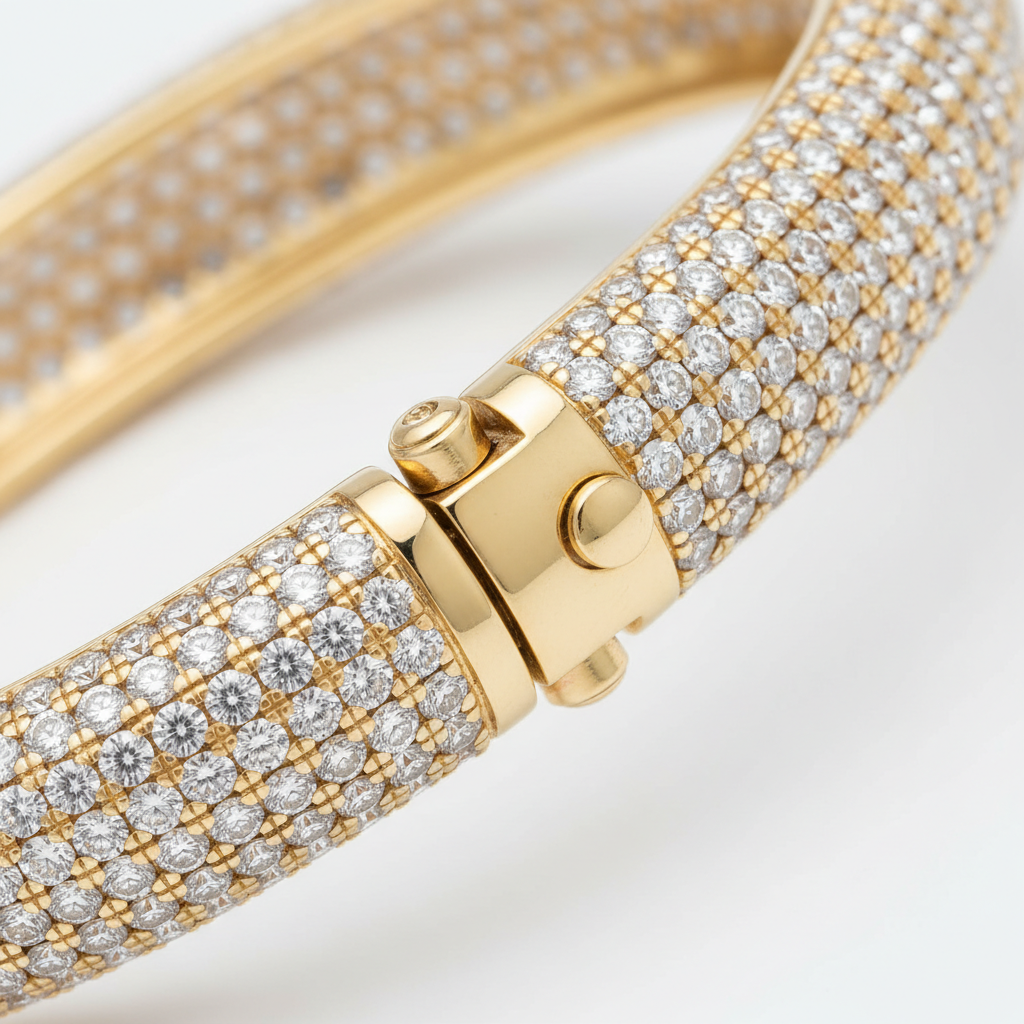
Types of Bangles and When to Wear Them
Choose rigid, hinged, or flexible designs based on your day. Rigid bangles give structure, hinged styles ease on/off under sleeves, and flexible tennis or station bracelets add movement. Mixing one of each creates dimension without bulk.
Different days call for different mechanics. Here’s how each bangle category behaves and where it shines.
Rigid bangles
- Why wear: Clean silhouette; holds shape for a crisp stack.
- Best with: Office looks, tailored blazers, and watches.
- Tip: Size precisely; too loose risks knocking against your watch bezel.
Hinged bangles
- Why wear: Easy on/off; great over knits; secure clasp.
- Best with: Commutes, winter layers, quick outfit changes.
- Tip: Check hinge and safety figure-eight for smooth closure.
Flexible bracelets
- Why wear: Adds fluid sparkle and reduces stacking pressure.
- Best with: Event dressing, date nights, and day-to-night outfits.
- Tip: Use as the last layer so it sits on top and moves freely.
Prefer a modern classic? Explore an internal example like our fancy tennis bracelet as your motion layer.
Best Practices for Bangle Bracelet Styling
Start with one statement bangle, add 2–4 slim styles, and cap with a tennis bracelet. Keep metals coordinated or intentionally mixed, graduate widths from wide to narrow, and size for controlled movement. Test sleeve glide and watch clearance before you head out.
Metals and finishes
- Match or contrast: All one metal reads sleek; mixed metals feel fashion-forward. Keep a repeating element (e.g., all high polish).
- Texture balance: Offset pavé sparkle with two high-polish slims for calm.
- Skin tone harmony: Yellow gold warms; white gold and platinum cool; rose adds blush.
Widths and spacing
- Graduate widths: Place the widest near center wrist; taper outward.
- Mind the margins: Leave a finger-width of movement so pieces don’t jam together.
- Keep it odd: 3 or 5 pieces often look more dynamic than 4.
Comfort checks
- Hinge test: Open/close 5 times; feel for clicks or catches.
- Sleeve slide: Pull a knit over the stack—no snagging means you’re set.
- Watch fit: A low-profile bangle should sit next to the watch without rubbing.
For extra sparkle up top, coordinate with earrings. Our internal diamond stud earring guide and diamond hoop tips show how to echo your wrist’s pavé with your neckline and lobes.
Sizing and Fit: How to Measure and Adjust
Measure across your knuckles with fingers together, then convert to a bangle diameter that just clears the hand. For hinged styles, match your wrist circumference closely; for rigid bangles, allow slight ease. Test comfort by rotating the stack—movement should be smooth, not sloppy.
Getting size right is the difference between a stack you wear daily and one you avoid. Here’s a simple approach that works for most wrists.
Measure once, buy right
- Hand span: Tuck your thumb to your palm; measure across knuckles.
- Convert: Use a diameter chart to select a bangle that just clears that span.
- Hinged rule: Match wrist circumference more closely since the opening helps you on/off.
Fit tests
- Rotation: You should be able to rotate the stack around the wrist without wedging.
- Stop point: The hero bangle shouldn’t drop to the palm with every movement.
- Sleeve trial: Slide on a cardigan or blazer; nothing should catch.
If you’re stacking with bridal rings, tie the story together. Our internal women’s wedding band guide and eternity ring overview help you coordinate shapes and finishes.

Pairing Bangles with Rings, Pendants, and Watches
Mirror one design element across pieces—metal color, diamond shape, or texture—then keep profiles low for comfort. A pavé bangle pairs beautifully with a diamond pendant and slim hoops; watches sit best next to rounded or hinged bangles with smooth edges.
Jewelry looks most expensive when it feels like a set. Echo just one feature so nothing competes.
With rings
- Shape echo: If your engagement ring has round brilliants, a round-station bracelet reinforces the theme.
- Finish echo: Matte bridal bands? Add one brushed bangle among high-polish slims.
With earrings and pendants
- Light path: Match a pavé bangle with a petite diamond pendant for a vertical sparkle line.
- Scale: Bigger hoops mean slimmer bangles to keep the look airy. See our internal hoop earring guide.
With watches
- Clearance: Keep the watch against the wrist bone; place the lowest-profile bangle next to it.
- Material: Polished gold next to a steel watch reads intentional when you repeat the metal elsewhere.
10 Ready-to-Wear Stack Formulas
Use these ten plug-and-play stacks: each starts with a hero bangle, adds slim accents, and finishes with a flexible layer. They cover offices, weekends, weddings, black-tie events, and travel—so you can get dressed fast without guessing.
- Desk to dinner: Pavé bangle + 2 high-polish slims + station bracelet.
- Minimalist workday: Single high-polish cuff + tennis bracelet.
- Weekend casual: Textured bangle + braided slim + plain slim.
- Black tie: Diamond pavé bangle + tennis bracelet + station bracelet.
- Travel set: Hinged bangle + slim bangle + silicone-lined cuff.
- Bridal brunch: White gold pavé bangle + slim pavé guard + pearl station.
- Monochrome gold: 3 yellow-gold slims + one brushed cuff.
- Mixed metals: Yellow cuff + white slim + rose slim + tennis.
- Watch buddy: Low-profile bangle + watch + station bracelet opposite.
- Statement solo: Single bold cuff—let negative space be the stack.
Want a visual anchor? Consider a motion layer like our internal seven-station diamond bracelet to brighten any set without bulk.
Comparison: Bangle Types at a Glance
Rigid, hinged, and flexible bracelets offer different strengths. Rigid delivers structure, hinged improves on/off and sleeve glide, and flexible adds movement and sparkle. Mix one of each for a dimensional, comfortable wrist stack that looks refined and feels easy.
| Type | Flexibility | Best For | Style Notes |
|---|---|---|---|
| Rigid bangle | None | Structure; office; with watches | Crisp silhouette; size precisely |
| Hinged bangle | Low | Commutes; winter layers | Easy on/off; check clasp security |
| Tennis/station | Medium–High | Evenings; day-to-night | Adds motion and sparkle; finish stack |
Tools and Resources
Use a soft tape for sizing, a diameter chart for rigid bangles, and lint-free cloths for care. For design planning, save two or three go-to stacks in your phone, and consult Diamond2Deal’s education guides for diamond and metal basics before buying.
- Measuring: Soft tape measure; diameter conversion chart for rigid bangles.
- Care: Microfiber cloth; gentle jewelry cleaner; separate pouches to prevent micro-scratches.
- Design references: Photos of your favorite stacks to repeat quickly.
- Education: Internal eternity ring guide and anniversary band tips for coordinating sets.
Exploring lab-grown pavé? This external overview of lab-grown vs. natural diamonds provides context: lab-grown vs. natural guide.
Case Examples: Real-World Stacks We Recommend
These three Manhattan-ready stacks show how to mix a hero bangle, slim accents, and a motion layer. Each set balances sparkle and comfort, so sleeves glide and rings coordinate without competing for attention.
Madison Avenue meeting
- Hero: High-polish yellow-gold cuff.
- Accents: Two slim yellow-gold bangles.
- Motion: Diamond station bracelet for light.
- Why it works: Minimal sparkle reads boardroom-ready; movement keeps it lively.
Bryant Park evening
- Hero: White-gold pavé bangle.
- Accents: One brushed white-gold slim + one high-polish slim.
- Motion: Tennis bracelet to echo pavé.
- Why it works: Monochrome metals feel elegant under bistro lights.
Grand Central commute
- Hero: Hinged bangle with rounded edges.
- Accents: Two thin bangles that sit low.
- Motion: Slim station bracelet.
- Why it works: Smooth profiles avoid sleeve snags during rush hour.
Round out the look up top. Our internal stud earring guide shows how a petite pendant and classic studs complete these sets.
Care and Maintenance for Long-Lasting Shine
Clean bangles regularly with gentle solution and a soft brush, store pieces separately, and inspect hinges and clasps every few wears. Avoid harsh chemicals and tackle micro-scratches with professional polishing during routine checkups.
- Weekly care: Wipe with a microfiber cloth after wear; quick soap-and-water clean for sweat or sunscreen residue.
- Monthly check: Inspect hinge play and clasp clicks; look for loose stones in pavé.
- Storage: Separate pouches prevent micro-abrasion; keep tennis bracelets unclasped to reduce kinks.
Frequently Asked Questions
These fast answers cover the essentials: how many bangles to wear, whether to mix metals, and how to size for comfort. Each tip is practical and designed to work with pieces you already own.
How many bangles should I wear at once?
Three to five pieces usually look balanced: one statement bangle, two to three slim accents, and a flexible bracelet. If you add a watch, swap one slim bangle so the wrist doesn’t feel crowded.
Can I mix metals in a bracelet stack?
Yes—mix yellow, white, and rose gold for a modern look. Repeat at least one element (all high polish or all pavé accents) so the stack feels intentional rather than random.
How do I size a rigid bangle correctly?
Measure across your knuckles with your thumb tucked in, convert to bangle diameter, and choose the size that barely clears your hand. For hinged bangles, match wrist circumference more closely since the opening helps with on/off.
What bracelet pairs best with a pavé bangle?
A slim diamond tennis bracelet or a delicate station bracelet. Both add movement and light without competing with the pavé, and they’re easy to wear from day to night.
Will bangles scratch my watch?
Choose low-profile bangles with rounded edges next to the watch and keep a small gap for movement. Test by rotating your wrist—there should be no grinding or pinching.
Key Takeaways
Anchor your stack with a hero bangle, add slim accents, and finish with a flexible bracelet. Graduate widths, repeat one design element, and size for controlled movement. Test sleeve glide and watch clearance before you go.
- 1 standout + 2–4 slim + 1 flexible = reliable stack formula
- Coordinate metals and textures; repeat one element for cohesion
- Size precisely and check hinges/clasps for comfort and security
- Use a tennis bracelet to add sparkle without bulk
Conclusion
Bangle bracelet styling becomes effortless when you follow a clear formula. With one hero piece, a few slim accents, and a motion layer, you’ll get a polished result every time—and it will feel as good as it looks, from Madison Avenue meetings to evening plans.
Ready to build a stack you’ll wear on repeat? Save two go-to combinations from this guide, test them with your sleeves and watch, and photograph what works. If you want help customizing diamond details or metal mixes, our team at 420 Madison Ave in Manhattan is here to guide you.