

Wedding Ring Guide: Choose a Ring You'll Love in 2026
To buy a wedding ring confidently, define your metal, profile, and diamond preferences, confirm ring size, compare certified options, and choose a retailer that offers education, fast shipping, and easy returns. From our Manhattan office at 420 Madison Ave, Diamond2Deal helps you buy a wedding ring online with guidance and next-day shipping on in-stock styles.
By Mit — President, Diamond2Deal
Last updated: June 16, 2026
At a Glance
Buying a wedding ring is a step-by-step process: clarify lifestyle and metal, choose a band style, verify size, evaluate diamond quality, and confirm retailer policies. Prioritize certification, comfort, and support. With next-day shipping on stocked styles and expert guidance, you can pick a ring you’ll love and wear daily.
This complete guide turns expert insight into clear, practical steps. You’ll learn how to size accurately, compare metals (14k vs. 18k vs. platinum), decode diamond grades, and pair bands with engagement rings. We include checklists, comparison tables, and examples from our education-driven approach at Diamond2Deal.
For deeper style inspiration, explore our women’s wedding band style guide for silhouettes, textures, and stack-ready ideas you can apply today.
What is a wedding ring and what are you really buying?
A wedding ring is a durable band—often gold or platinum—designed for daily wear and to symbolize commitment. Buying one means choosing metal and profile, selecting finishes and any diamonds, ensuring accurate fit, and confirming support like warranty, returns, and potential resizing for long-term comfort.
Think of a wedding ring as everyday fine jewelry. It must be comfortable, secure, and made to last. The inner geometry (often comfort-fit) reduces pressure during long wear. Material choice matters: 14k gold is approximately 58.5% pure gold, 18k is 75%, and platinum is naturally white and dense.
- Metals: 14k and 18k gold (yellow, white, rose) and platinum are the most common, time-tested options.
- Profiles: comfort fit, classic dome, flat, knife-edge, and beveled edges change both look and feel.
- Finishes: high polish, matte/satin, brushed, and hammered offer distinct textures and light play.
- Diamonds: Choose lab-grown or natural; settings include pavé, channel, bar, and bezel for different protection levels.
- Measurements: Ring width often ranges from ~1.5 mm to 8 mm; carat equals 200 milligrams (100 “points”).
Diamond ranks 10 on the Mohs hardness scale, which helps resist scratching; however, settings protect the vulnerable edges. That’s why craftsmanship, prong security, and setting style matter as much as the stones themselves. For more structural and stacking tips, see our diamond eternity rings guide.
Why buying the right wedding ring matters
Your wedding ring is likely your most-worn piece of jewelry. The right choice balances comfort, durability, design, and ethics so it looks great now and years from now. Clear policies, education, and fast fulfillment reduce stress as your wedding date approaches.
Daily wear adds up. Over 365 days a year, small design choices compound: the inner profile, band width, and diamond setting all affect how a ring feels at hour 10 of a workday. A comfort-fit interior eases pressure points. Matching your engagement ring’s metal color creates a cohesive stack.
- Longevity by design: Platinum’s density supports channel and bezel settings for diamond security over time.
- Skin-friendly options: Nickel-free alloys and platinum reduce irritation for sensitive skin.
- Care rhythm: Quick at-home cleanings plus a professional check once or twice per year help keep pavé tight.
- Peace of mind: Favor clear warranty language, easy 30-day returns, and responsive service.
Lab-grown diamond wedding rings deliver certified brilliance and a modern sustainability narrative. Consistent cut, color, and clarity keep the band uniform edge to edge. For stacking, coordinate widths (for example, a 2.0–2.5 mm band beside a slim solitaire) to prevent gaps and spinning.
How the wedding ring buying process works
In Manhattan and across New York County, the smoothest way to buy a wedding ring is to define lifestyle and metal, shortlist styles, confirm size twice, verify diamond and craftsmanship, and order from a retailer with strong support. Education and quick appointments prevent sizing misses and timeline stress.
- Define lifestyle: Hands-on work or gym routines? Favor 14k or platinum, lower profiles, and secure settings.
- Pick a metal: 14k (≈58.5% gold) balances strength and color; 18k (75%) offers richer hue; platinum is dense and hypoallergenic.
- Choose a style: Comfort-fit domes, flat bands, knife-edge or beveled edges, and diamond-accented pavé/channel.
- Confirm size: Measure at two times of day; aim for a fit that slides the knuckle with slight resistance.
- Verify quality: Uniform polish, clean setting seats, and graded diamonds for clarity and color expectations.
- Order with confidence: Next-day shipping on stocked styles plus warranty and easy returns simplifies timelines.
| Step | What to decide | Pro tip |
|---|---|---|
| Lifestyle | Daily wear, activities, and work | Lower profiles reduce snag risk for active hands |
| Metal | 14k, 18k, or platinum | Match your engagement ring’s color for a flush stack |
| Style | Width, profile, and finish | Comfort-fit geometry improves long wear |
| Diamonds | Lab-grown or natural; setting style | Channel or bezel protect edges in daily wear |
| Size | Accurate, repeatable measurements | Check morning and evening; fingers swell and shrink |
| Support | Warranty, returns, shipping | Prefer transparent policies and fast fulfillment |
Checklist you can save
- Select a width (2.0–6.0 mm covers most preferences).
- Choose metal: 14k, 18k, or platinum based on lifestyle.
- Decide finish: high polish, matte, brushed, or hammered.
- Pick setting style if adding diamonds: pavé, channel, bar, or bezel.
- Measure size twice and confirm comfort-fit if desired.
- Review warranty and returns; note shipping timelines.
If custom details are on your mind, our custom wedding rings guide explains timelines, engraving, and profile tweaks that help a band feel “just right” from day one.
Wedding ring types, metals, and styles
Most couples pick from classic domes, flat bands, knife-edge and beveled edges, and diamond-accented designs. Popular metals include 14k/18k yellow, white, and rose gold, plus platinum. Start with width and profile, then add finishes or diamonds for personality and stack compatibility.
Choose width first. Bands from about 1.5 mm to 8 mm feel and look very different. Many find 2.0–2.5 mm elegant beside a solitaire, while 4–6 mm suits bolder preferences. Profile changes touch points: domes feel softer; flats look modern; knife-edge creates crisp reflection lines.
- Classic bands: Dome or flat silhouettes in 14k/18k or platinum; high polish for shine or matte for subtlety.
- Diamond bands: Pavé, channel, bar-set, and bezel. Lab-grown diamonds deliver consistent color and clarity across the band.
- Textures: Hammered surfaces scatter light; brushed and satin reduce glare; mixed finishes add contrast.
- Men’s bands: Comfort-fit interiors, beveled edges, and matte finishes read refined yet understated.
- Eternity and anniversary: Full or half-way diamonds for maximum sparkle or balanced comfort.
Protective settings are practical for everyday wear. Diamond is a 10/10 on Mohs, but channel and bezel settings help shield edges from knocks. If you plan a stacked look, keep heights similar so rings sit flush and don’t create gaps. For more pairing ideas, browse our eternity ring style guide and our men’s engagement ring trends for mixed-metal inspiration.
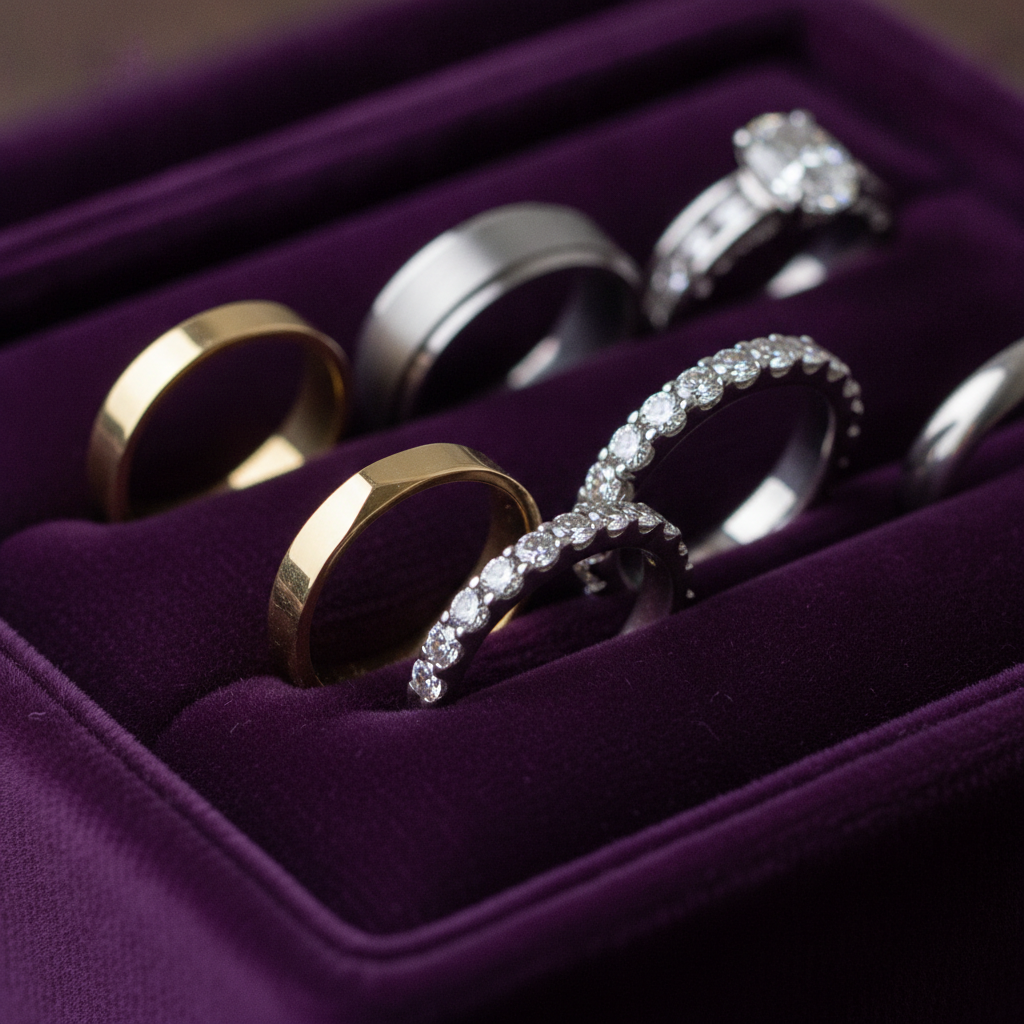
Best practices to buy a wedding ring you’ll love
Prioritize comfort-fit geometry, accurate sizing, certified diamonds, and transparent policies. Stack-test with your engagement ring, pick protective settings for active hands, and set a simple care routine. Booking expert help resolves questions about size, width, and metal in minutes.
- Size with intent: Measure at two times of day and in comfortable room temperature; aim for a controlled slide over the knuckle.
- Stack test: Try bands beside your engagement ring; widths like 2.0–2.5 mm often sit flush with classic solitaires.
- Diamond certainty: Third-party grading for lab-grown bands supports clarity on cut, color, and clarity matching.
- Finish maintenance: Matte/brushed surfaces may need periodic refreshing; high polish camouflages micro-scratches better.
- Policy clarity: Look for a 1-year warranty, straightforward 30-day returns, and quick communication.
Set a simple care cadence: a soft brush, mild soap, and warm water monthly; professional checks every 6–12 months for settings and polish refresh. Note your size and band width in your phone so future bands match feel and balance perfectly.
Get one-on-one help in minutes
If you’re between sizes or debating metals, a short consult can save weeks. Start with our concise wedding ring guide and then schedule a quick chat with our team. Prefer the phone? Call us at 1-729-409-8706 during business hours.
Tools and resources to shop smarter
Use an education hub to master the 4Cs, a printable or physical ring sizer, and bookable expert appointments. Category pages help you compare widths and finishes quickly, and a curated lab-grown selection simplifies diamond choices for eternity and accent bands.
Education reduces guesswork. Learn how cut quality affects sparkle, why 14k may suit active wearers, and how platinum strengthens channels. If you’re unsure, bring your engagement ring to a quick appointment for stack testing. Ten focused minutes can answer 90% of questions.
- Explore bands by metal, width, and finish with real-life photos and measurements.
- Review lab-grown diamond fundamentals and the role of grading in consistent color and clarity.
- Browse men’s wedding bands featuring comfort-fit interiors and durable finishes.
- Compare eternity and anniversary rings to build a cohesive stack.
- Use a metal ring sizer for repeatable measurements across seasons.
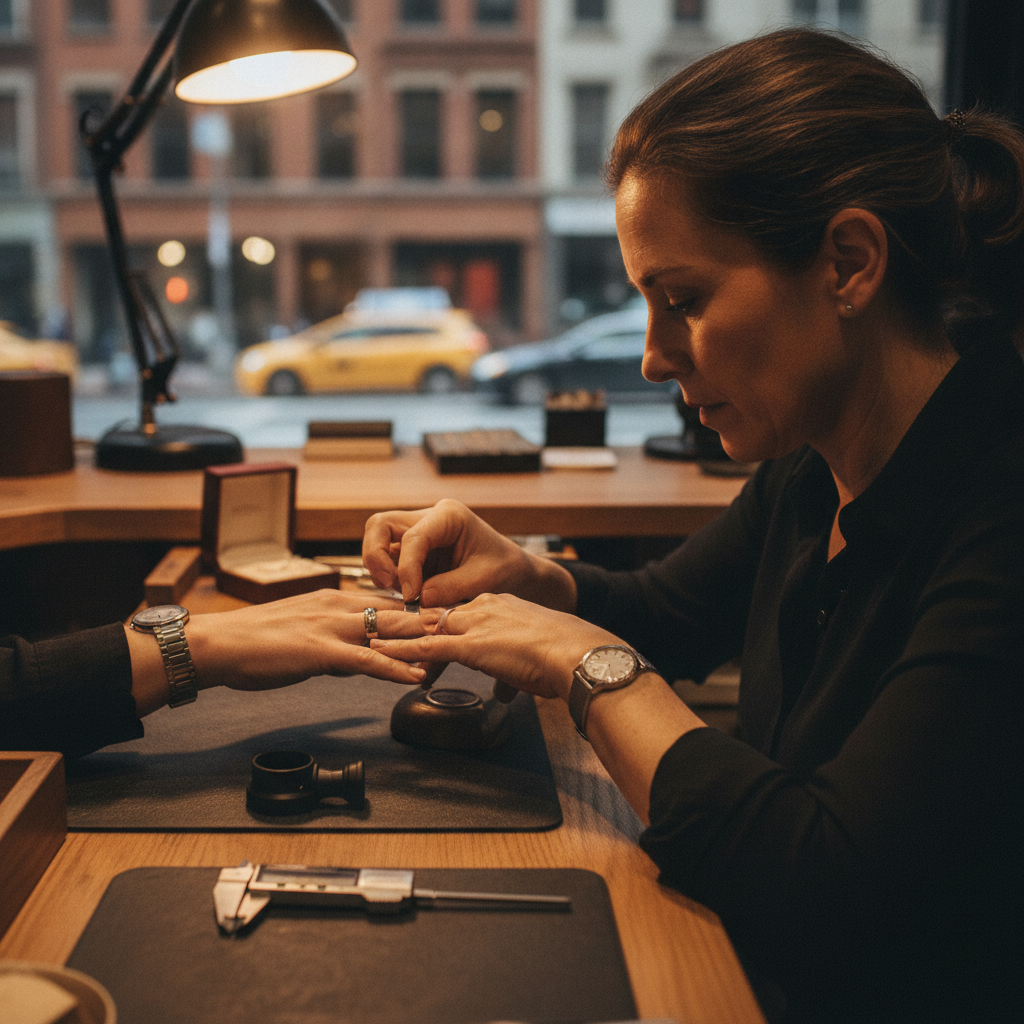
Metal options compared
Choose among 14k and 18k gold in yellow, white, or rose, and platinum. 14k balances strength and color, 18k offers richer hue, and platinum brings density and hypoallergenic wear. Match metal to lifestyle and your engagement ring’s color for a seamless set.
| Metal | Color | Durability | Allergy profile | Care notes |
|---|---|---|---|---|
| 14k Yellow/White/Rose Gold | Classic yellow; bright white (rhodium); warm rose | Strong for daily wear | Alloy dependent; nickel-free options exist | Occasional polish; white gold may need rhodium replating |
| 18k Yellow/White/Rose Gold | Richer hue due to 75% gold | Softer than 14k | Alloy dependent | Shows micro-scratches faster; refresh finish as needed |
| Platinum | Natural white | Very dense; excellent for channels | Hypoallergenic | Develops patina; repolish to restore shine |
If you want a second, independent overview of ring metals, this ring metal primer offers another perspective on color and care. It pairs well with our education content when deciding between white gold and platinum.
Diamond quality in wedding bands
Prioritize cut precision and secure settings. For lab-grown diamond bands, third-party grading clarifies color and clarity, while channel or bezel settings protect edges for daily wear. Even petite stones benefit from consistent cut and careful, even seat heights across the band.
Cut quality drives brilliance and fire, even in tiny pavé. Uniform color and clarity keep the band visually seamless. Because diamond sits at 10 on the Mohs scale, it resists scratching; the setting guards edges against chips. If you’re exploring grading approaches alongside our own education hub, this concise diamond ring guide offers a complementary overview.
- Settings for durability: Channel and bezel protect girdles; micro-pavé maximizes sparkle with precise workmanship.
- Grading helps: Reports for lab-grown diamonds align expectations on color and clarity.
- Maintenance: Quick at-home cleaning and annual professional checks maintain brilliance and security.
If you love curated stacking ideas, this bridal stacking overview can spark combinations, then you can fine-tune widths and finishes with our team. You’ll also see the term “GIA diamond” used as shorthand for grading standards—useful context when evaluating any certified stone.
Real-world examples from our clients
Two quick scenarios show how smart choices pay off: matching metals for a seamless stack and choosing protective settings for active hands. Both couples validated size, finish, and support policies and enjoyed fast, stress-free delivery ahead of their date.
Manhattan stack: classic meets modern
A Midtown couple with a round solitaire wanted a seamless stack. They chose a 14k white gold comfort-fit band at 2.0 mm with a half-eternity lab-grown pavé. Matching metal color and profile helped both rings sit flush. Next-day shipping on an in-stock style kept their timeline tight before engagement photos.
Hands-on lifestyle: durable by design
Another client with a hands-on job preferred a low-profile platinum band with channel-set lab-grown diamonds. The dense metal and protective channels minimized snag risk. A 10-minute sizing consult confirmed a secure fit and a 4.0 mm width that balanced presence with comfort at the keyboard.
Looking for an anniversary upgrade later? Our anniversary bands guide outlines half-eternity versus full-eternity approaches, which can add sparkle without changing daily comfort.
Local considerations for Manhattan
- Plan in-person visits around Midtown foot traffic; quick appointments near Grand Central streamline pickup and stack testing with your engagement ring.
- Peak proposal and wedding seasons cluster around holidays and spring weekends; order early to allow for any adjustments.
- If you work nearby, schedule midday fittings to avoid the evening rush and bring your current ring for on-the-spot stack checks.
Frequently Asked Questions
Most questions center on sizing, metals, and matching sets. Use these concise answers to lock decisions and order confidently—whether you love a minimalist band, a lab-grown diamond eternity, or a men’s comfort-fit style.
How do I measure my ring size at home?
Use a plastic or metal ring sizer and measure at two times of day. Aim for a fit that slides over the knuckle with slight resistance and sits comfortably. If you’re between sizes, consider comfort-fit geometry or book a quick appointment for precision.
Should my wedding ring match my engagement ring?
Matching metals and similar profiles usually create the most cohesive stack. If your engagement ring is white gold or platinum, a white band blends seamlessly. For halos or low baskets, choose a band width and profile that sits flush and avoids gaps.
What’s the difference between 14k and 18k gold for bands?
14k is about 58.5% gold and tends to be more durable for daily wear; 18k is 75% gold with a richer hue but can show micro-scratches faster. Choose based on lifestyle and how you like your rings to age.
Are lab-grown diamond wedding rings real diamonds?
Yes. Lab-grown diamonds have the same crystal structure and optical properties as natural diamonds. Reputable retailers provide third-party grading, and settings are crafted the same way to protect and showcase the stones.
How soon before the wedding should I order?
Order as early as possible to allow for any sizing tweaks. Many stocked styles can ship quickly, but planning ahead ensures stress-free delivery and any adjustments well before your date.
Key takeaways
Choose metal and profile for comfort, verify size twice, and prefer certified diamonds with secure settings. Rely on clear policies and fast shipping to meet your timeline. Education and expert help remove guesswork and ensure a ring you’ll love for years.
- Pick metal and profile to match lifestyle and stack.
- Confirm size at two times of day; comfort-fit can improve all-day wear.
- For diamonds, prioritize precise cut and protective settings.
- Shop with strong policies, warranty, and returns for peace of mind.
- Use education resources and quick expert appointments.
Conclusion
Buying a wedding ring becomes simple when you align lifestyle, metal, style, and sizing with trusted retailer support. With fast shipping, clear education, and expert guidance, you can order today and wear your band confidently for years to come.
You’re ready to choose. Clarify metal and profile, validate size, and explore certified, lab-grown diamond bands or classic silhouettes. If you want a second opinion, book a quick consult—we’ll help you compare options and finalize a ring that feels right the instant you put it on. For more inspiration, scan our eternity ring insights and women’s wedding band styles.