

Choose Lab Grown Wedding Rings That Fit Your Life
A compatibility-first wedding band buyer's guide
Choose Lab Grown Wedding Rings That Fit Your Life
Short answer: Choose a lab grown wedding ring by testing compatibility before comparing sparkle. Confirm how the band sits beside the engagement ring, whether either setting rubs the other, how the width and profile feel through a normal day, whether the design can be resized, and what written specifications and after-sale terms come with the exact ring. A beautiful band that only works alone is not the right stack if you intend to wear both rings together.
Most wedding-ring guides begin with style names. That is useful for browsing, but it can postpone the questions that decide whether a ring is comfortable and maintainable. The height of an engagement-ring basket, exposed girdles, shared prongs, band curvature and even the way your finger changes through the day can determine whether a straight band sits flush or leaves a gap.
This guide is deliberately not another broad introduction to lab-grown diamonds, list of popular styles or price comparison. It gives you a repeatable compatibility process for a ring you expect to wear. Product specifications, grading documentation, stock, sizing and policies must be confirmed for the exact selection.
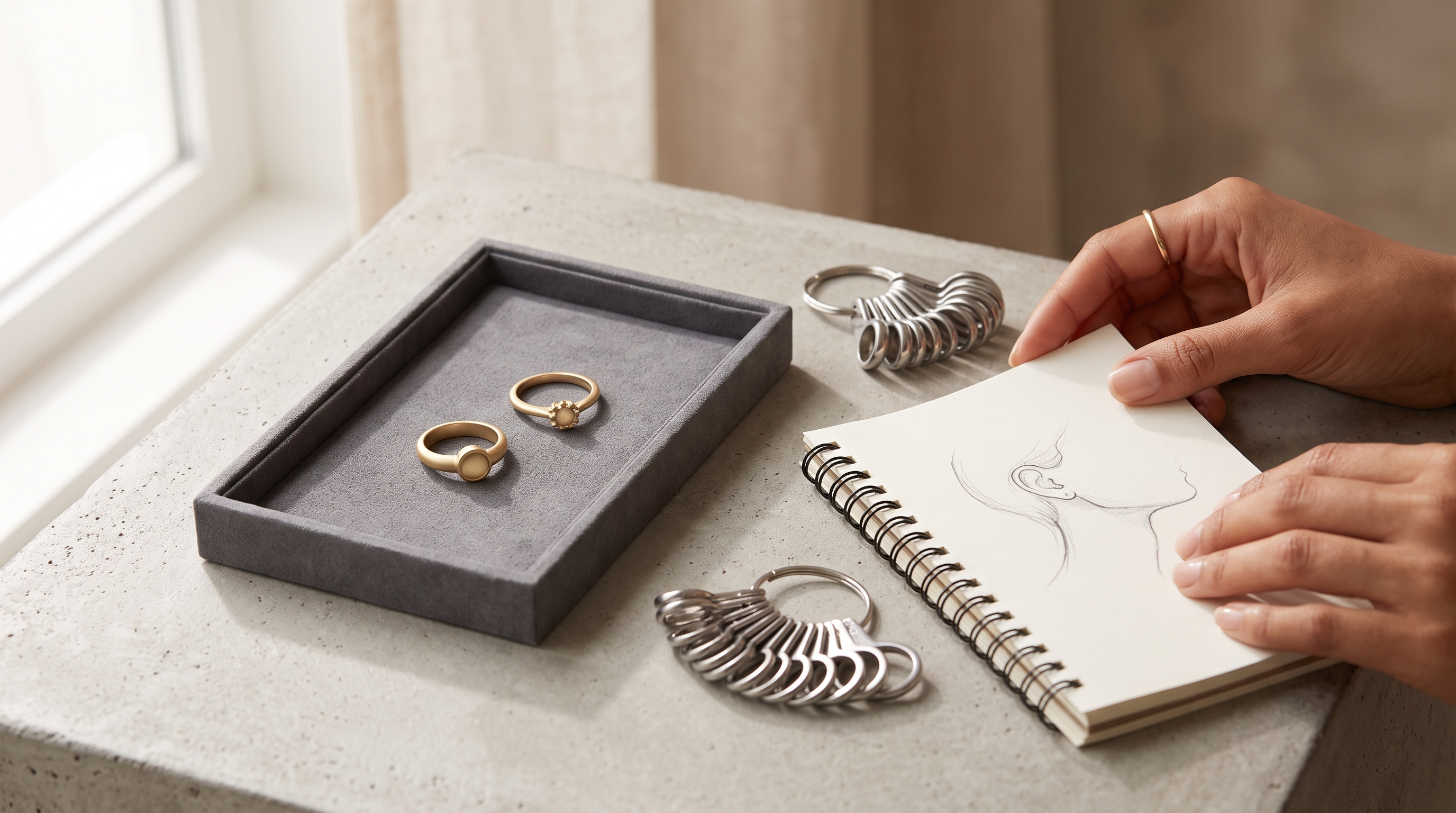
Define how you intend to wear the ring
Start with three decisions: will the wedding band be worn alone, stacked with an engagement ring or switched between both? Must the rings sit flush, or is a visible gap acceptable? Will they stay together all day, or will one be removed for work, exercise, caregiving or hobbies? These answers are more useful than choosing a silhouette from a screen.
Bring the engagement ring to the appointment when possible. If it cannot be present, bring clear side-profile photos and any reliable dimensions or product documents you already have. A top-view photo does not show the height of the head, prong exposure or whether the shank changes width near the setting.
Diamond2Deal currently provides owned women's wedding ring and diamond ring collection routes. Use them to create a visual shortlist, but confirm every specification for the exact product rather than carrying a collection-level impression into the purchase.
Check the geometry of the two-ring stack
View the rings from above, from the side and on the palm side. A straight band may meet an engagement ring's basket before the two shanks sit together. A curved or notched band may nest around that obstacle, but the fit can be specific to one engagement-ring shape. An open band can create clearance, yet the opening and end settings still need to align safely.
Look for contact points. Diamond edges, prongs or decorative surfaces that rub another ring can affect wear over time. Ask whether a spacer is advisable and what the trade-off would be. Also check whether the wedding band prevents access needed for cleaning or inspection of the engagement ring.
Flush is a preference, not a universal quality mark. A deliberate gap may protect settings or make each ring visually distinct. The right answer is the one that is understood before purchase and works with the actual ring pair.
| Compatibility check | What to observe | Question to record |
|---|---|---|
| Side profile | Basket height, prongs and band height | What touches first? |
| Top view | Curve, gap and alignment | Is the spacing intentional? |
| Palm side | Combined width and thickness | Can the finger bend comfortably? |
| Rotation | Whether one ring pushes the other | Does the stack stay aligned? |
| Service access | Prongs, galleries and surfaces to inspect | Can both rings be checked separately? |
Match the setting to real daily wear
List the contact your hands experience in an ordinary week: gloves, tools, keyboards, gym equipment, cleaning products, childcare, gardening or frequent handwashing. The goal is not to label one design universally durable. It is to identify exposed details, cleaning needs and removal habits before they become surprises.
Try the ring long enough to notice pressure between the fingers, not only the first few seconds. Compare the wedding band alone and in the full stack. A combined width can feel tighter than either ring by itself. Temperature, activity and time of day can affect finger size, so a single quick fit is only one data point.
Ask how the setting should be inspected and maintained, and obtain care instructions for the exact ring and metal. If you plan to solder two rings together, first understand how that may affect independent wear, future sizing, service and the ability to separate them. Do not assume the procedure is appropriate for every design.
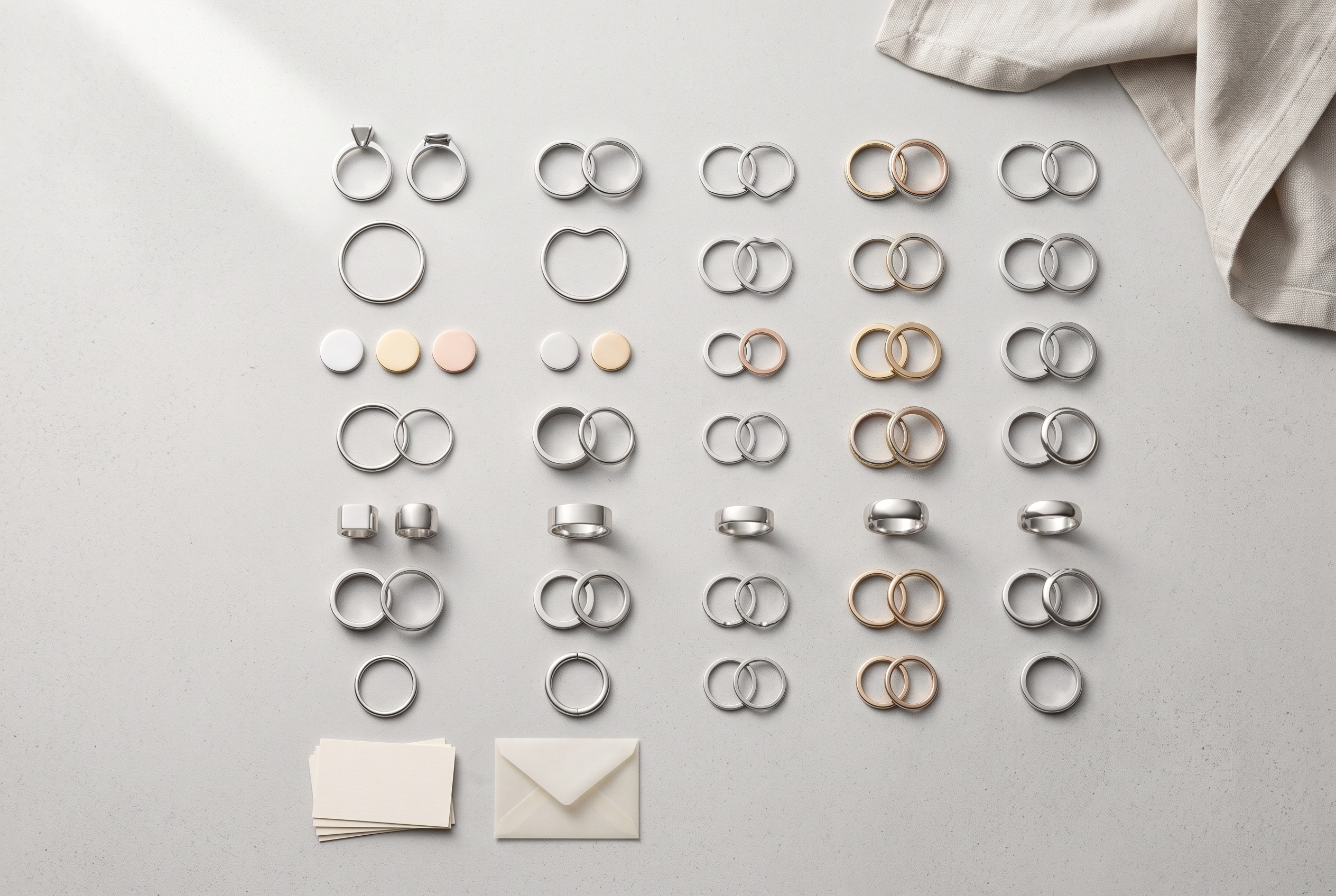
Compare metal and construction as written specifications
Ask for the metal and fineness of the exact band in writing. A general colour description such as white, yellow or rose does not identify composition, finish or maintenance expectations. If you are matching an engagement ring, compare colour and surface finish in the same lighting, while recognizing that two rings can wear differently because of their construction and use.
Construction details matter too. Ask how stones are set, where prongs or beads are exposed, whether the design continues around the full circumference and whether there is a plain sizing area. Full-eternity, patterned, multi-metal and intricate designs may have different resizing constraints from a simple band. Obtain the current resizing options and limitations for the exact piece before selecting size.
Do not rely on a generic promise that a metal or setting is “best.” The useful comparison is between the documented construction, your wearing pattern and the service options available for that ring.
Verify what laboratory-grown means for the exact ring
Laboratory-grown and simulated do not mean the same thing. The U.S. Federal Trade Commission's Jewelry Guides summary says sellers of laboratory-created diamonds should clearly disclose that the stones are not mined. It also distinguishes laboratory-created diamonds from simulated or imitation products. Read the product description closely and ask for clarification where terminology is vague.
Ask what documentation accompanies the exact ring or stones, who issued it and what it covers. A report for a centre stone is not automatically a report for every small stone in a band. GIA's Laboratory-Grown Diamond Report information explains that its reports can identify laboratory-grown material and may state growth method and post-growth treatment. That does not mean every wedding band has a GIA report; verify rather than assume.
Match any report number or inscription only with appropriate professional help and the seller's documentation. Save the sales description, receipt, specifications, size and written policies together. The paper trail should describe what you actually bought, not a category in general.
Use a compatibility matrix before making the decision
- Photograph each finalist from top, side and palm views with the engagement ring.
- Record whether the gap is flush, deliberate or caused by contact.
- Note pressure, rotation and finger movement after a realistic try-on.
- Write down metal, fineness, width, profile and setting construction as stated.
- Record laboratory-grown disclosure and the documentation included.
- Ask for current resizing limits and the route for future inspection or service.
- Save written return, exchange, warranty and special-order terms.
- Choose only after the same fields are complete for every finalist.
If a field is blank, do not convert it into an assumption. Mark it “confirm.” A complete comparison may reveal that a less dramatic design is a better daily partner for the engagement ring—or that the intended dramatic gap is exactly what you want.
Questions to ask before buying
- Does this exact band contain laboratory-grown diamonds, simulated stones or another material?
- What metal, fineness, dimensions and setting construction are documented?
- Will this band contact any exposed part of my engagement ring?
- Can I try both rings together from multiple angles?
- What size is being ordered and how was it determined?
- What are the current resizing limits for this exact design?
- What stone or ring documentation will I receive?
- What inspection and care routine is recommended?
- Which return, exchange, special-order and warranty terms apply in writing?
- What should I confirm again before approving the final order?
Common lab grown wedding ring mistakes to avoid
- Shopping without the engagement ring. The stack cannot be evaluated from memory alone.
- Forcing a flush look. Contact can matter more than eliminating a gap.
- Confusing laboratory-grown with simulated. Read the disclosure and exact product description.
- Assuming documentation covers every stone. Ask what the report or record identifies.
- Choosing size from one quick try-on. Consider combined width and normal finger changes.
- Leaving resizing until later. Some construction patterns can limit alteration options.
- Relying on verbal policies. Save the current written terms tied to the exact order.
Frequently asked questions
Do lab grown wedding rings need to match the engagement ring metal?
Not necessarily. Matching can create visual continuity, while a deliberate contrast can be part of the design. Confirm the exact metals and discuss contact, wear and care for the two-ring combination.
Should a wedding band sit flush with an engagement ring?
Only if that is your preference and the rings can do so without unwanted contact. A visible gap can be intentional and may be the better fit for some settings.
Can every lab grown diamond wedding band be resized?
No universal rule applies. The design, metal, setting coverage and construction affect options. Ask for the resizing limits of the exact band in writing.
Does every lab grown wedding ring include a grading report?
No. Documentation varies by product and seller, and a report may apply to a particular stone rather than every stone in a band. Confirm exactly what is included.
Book a compatibility review with Diamond2Deal
Shortlist designs from Diamond2Deal's wedding ring collection and compare them beside the engagement ring whenever possible. Use the owned appointment route to ask about current product specifications, laboratory-grown disclosure, band compatibility, sizing, documentation, availability and written after-sale terms. Approve a selection only after those details are tied to the exact ring.
General jewelry-selection information only. Product identity, specifications, grading, reports, stock, sizing, serviceability, price, value, warranties, returns, availability and delivery must be confirmed for the exact current selection.