

Classic Diamond Rings: Timeless Engagement Styles in 2026
Classic diamond engagement rings are enduring designs—solitaire, three-stone, halo, and pavé—that balance beauty, durability, and everyday comfort. From our Manhattan address at 420 Madison Ave, Rm 500, New York, Diamond2Deal helps you choose a certified center stone and a timeless setting that fits your hand, lifestyle, and love story.
By Mit Trivedi, President — Diamond2Deal
Last updated: June 20, 2026
Above-Fold: Hook & Table of Contents
This complete guide walks you through classic engagement ring styles, the 4Cs, metal choices, and matching bands—plus local tips for Manhattan proposals. Use it to quickly shortlist shapes and settings, compare lab-grown versus natural diamonds, and prepare for a confident, joyful yes.
Here’s what you’ll learn at a glance:
- What makes a diamond ring “classic,” with quick definitions you can repeat
- How shapes, settings, and the 4Cs work together to create sparkle
- Which metals suit your skin tone and daily wear
- When lab-grown diamonds make sense—and how to verify certification
- How to pair a wedding band for a flush, comfortable fit
- Smart shopping steps in Manhattan and greater New York County
What Are Classic Diamond Engagement Rings?
Classic diamond engagement rings feature enduring silhouettes—think round solitaire, three-stone, and elegant halos—crafted for lifetime wear. They emphasize balance, secure settings, and clean proportions so the center diamond remains the hero, pairing beautifully with wedding bands for decades.
In our experience, “classic” means you’ll still love the ring in 20 years. The designs are balanced, easy to wear, and flattering on many hand shapes. You’re choosing a silhouette as enduring as the promise it represents.
Core traits of a classic ring
- Timeless center shapes: Round brilliant, oval, princess, cushion, and emerald are perennial favorites.
- Secure settings: Four- or six-prong solitaires, cathedral shoulders, classic halos, and bezel variations built for daily wear.
- Comfort-first bands: Tapered or uniform shanks with thoughtful height so the ring doesn’t snag.
- Effortless pairing: Designed to sit flush or near-flush with wedding bands to avoid gaps.
Round brilliant diamonds typically have 57–58 facets that maximize return of light. A classic six-prong solitaire lets more light enter the stone while keeping the profile low enough for everyday life.
Why Classic Styles Matter
Classic designs age gracefully, pair well with wedding bands, and protect your center stone. They hold up to daily wear, look great in photos, and stay in style—supporting lifelong value and sentimental durability.
Choosing a timeless ring reduces second-guessing. Trends shift, but core proportions—balanced prongs, even shoulders, and a flattering width—keep the ring elegant on every occasion, from workdays to formal events.
Benefits you feel every day
- Photogenic from every angle: Symmetry and proportion keep the ring radiant under phone cameras and studio lights.
- Pairs with everything: Classic solitaires and pavé bands layer with eternity or anniversary rings seamlessly.
- Protection built in: Thoughtful prong placement shields the girdle; bezel accents can further reduce chipping risk.
- Future-friendly: Easy to resize, upgrade, or add a matching guard wrap as your stack grows.
Carat is measurable at 0.2 grams per carat, but perceived size also depends on shape and table spread. That’s why two one-carat stones can look different on hand—cut precision and outline matter as much as weight.
How an Engagement Ring Works (Construction & 4Cs)
A classic engagement ring combines a center diamond, a secure setting, and a comfortable band. Sparkle depends on the 4Cs—cut, color, clarity, and carat—while setting height, prongs, and shank width control durability, comfort, and how the ring stacks with bands.
Understanding the 4Cs helps you balance look and longevity:
- Cut: Drives brilliance and fire. Round brilliant targets often include a 34–35° crown angle and 40.6–41° pavilion angle for strong light return.
- Color: Near-colorless grades pair beautifully with white metals; warmer grades glow in yellow or rose gold.
- Clarity: Eye-clean inclusions are typically invisible to the naked eye; prioritize security over invisible paper upgrades.
- Carat: Visual size is affected by the outline and table; a well-cut 0.90 ct can face up like some heavier stones.
We recommend starting your research in the Diamond2Deal engagement ring guide, then shortlisting shapes and settings that match your lifestyle. If you’re weighing lab-grown versus natural, our lab-grown engagement rings overview explains certifications and care.
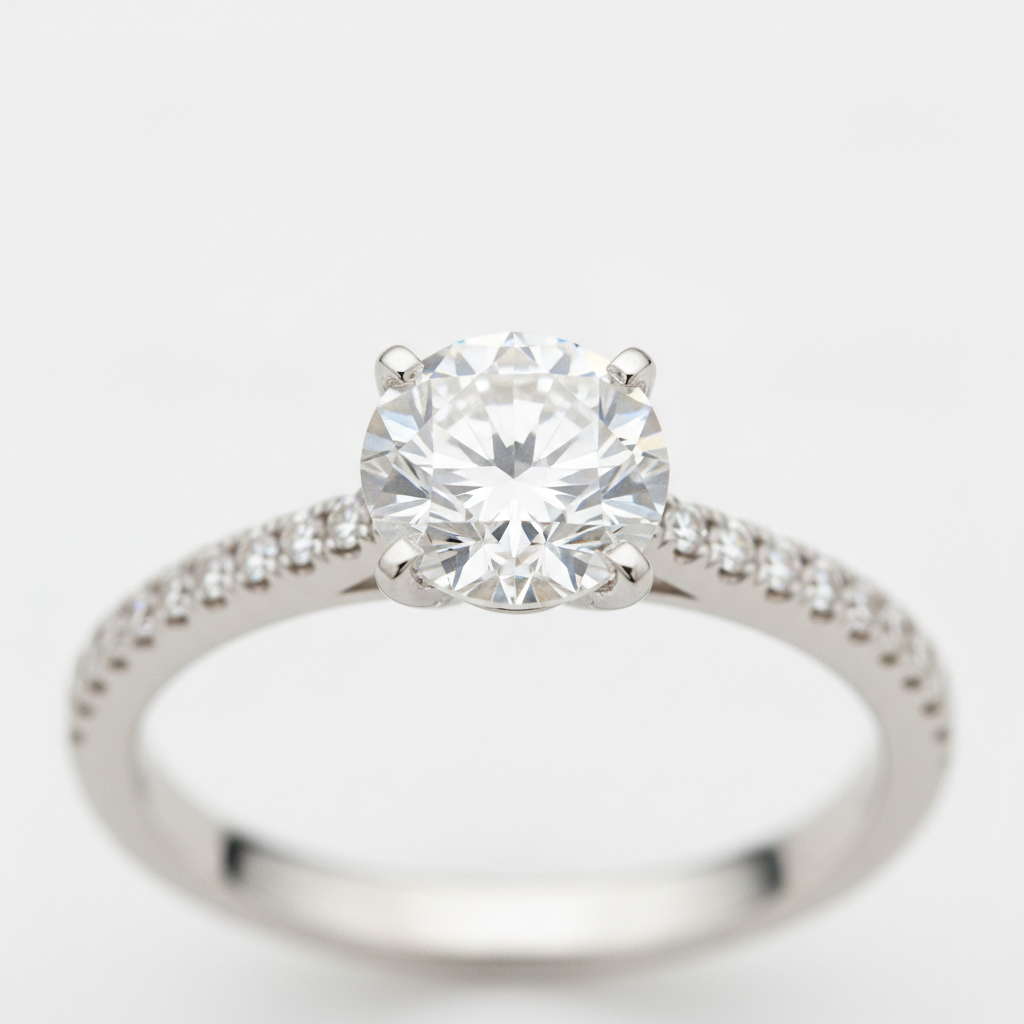
Anatomy and comfort
- Prongs: Four prongs maximize stone visibility; six prongs add redundancy for active wearers.
- Gallery and height: Lower profiles reduce snagging; cathedral shoulders add support without extra height.
- Band width: 1.8–2.2 mm feels delicate but sturdy; 2.5–3.0 mm offers more heft and stability.
- Metal choice: 14K gold is durable for daily wear; 18K offers richer color; platinum has superior density and scratch pattern.
Round brilliants often show the strongest “scintillation” (on/off sparkle) because of facet patterning. Ovals and cushions elongate the finger; emerald cuts emphasize clean lines and clarity. Each shape tells a different design story.
Types of Classic Diamond Engagement Rings
The most classic engagement styles include solitaire, pavé, halo, and three-stone rings. Each frames the center diamond differently—minimalist, sparkling, or accented—so you can match personality and lifestyle without sacrificing timeless appeal.
Use this section to compare styles and quickly build a shortlist you’ll love trying on.
Core styles explained
- Solitaire: Pure center focus; four or six prongs. Easy to clean and pairs with any band.
- Pavé: Small diamonds on the shank add sparkle without overwhelming the center stone.
- Halo: A surrounding ring of diamonds increases visual spread and adds vintage glamour.
- Three-stone: Side stones accentuate the center; symbolism of past, present, future.
- Bezel or half-bezel: Metal rim protects the girdle; sleek and modern while still classic.
| Style | Why It’s Timeless | Best For | Band Pairing |
|---|---|---|---|
| Solitaire | Uncluttered focus on the center diamond | Minimalists; easy daily wear | Plain, pavé, or eternity bands |
| Pavé | Refined sparkle along the shank | Extra shimmer without height | Matching pavé or slim eternity |
| Halo | Boosts visual size and brilliance | Glam lovers; vintage nod | Plain band or delicate pavé |
| Three-stone | Balanced, symbolic design | Storytellers; symmetry fans | Contoured band for flush fit |
| Bezel | Sleek protection for daily wear | Active lifestyles | Straight or soft-contour bands |
For halo and three-stone rings, matching proportions are everything. Side stones typically range from ~10–30% of the center’s width to keep balance. For pavé, bead sizes must be even so the shank feels smooth against the finger.
When you’re ready to explore, see our education-first take in the lab-grown diamond jewelry guide and browse style inspiration in our diamond eternity rings style guide.

Best Practices for Choosing a Classic Ring
Start with shape, then choose a setting that fits your lifestyle. Confirm a reputable diamond certificate, check ring height and comfort, and try band pairings early. Document care habits from day one for long-term brilliance and peace of mind.
We guide clients to narrow four decisions in this order: shape, size, setting, and metal. It keeps choices focused and reduces overwhelm.
Actionable steps
- Pick your shape: Round maximizes sparkle; oval elongates; emerald is sleek; princess is crisp and modern.
- Right-size the carat: Try-on visuals matter. Many hands look best in a 7–8 mm spread, regardless of weight.
- Match the setting to lifestyle: Six-prong or bezel for active wear; pavé for extra shimmer; halo for presence.
- Choose the metal: White metals for icy brilliance; yellow or rose for warmth and skin-tone synergy.
- Test the stack: Pair with a straight, contour, or notched band to avoid gaps and twisting.
- Confirm certification: Review the grading report and laser inscription if applicable.
If you’re choosing lab-grown, our lab-grown engagement ring primer explains how lab-grown diamonds are chemically and optically identical to mined stones, with the same Mohs hardness of 10. Always confirm the certificate details match the stone.
Local considerations for Manhattan
- Plan try-ons around Midtown foot traffic—early weekday appointments near Rockefeller Center are calmer and faster to navigate.
- Holiday proposals? Secure your ring a few weeks ahead to avoid seasonal rushes and allow time for any last-minute sizing.
- Transit-friendly pickups near Grand Central simplify discreet timing and reduce travel stress before your moment.
Tools & Resources to Shop Smart
Use a step-by-step checklist, a 4Cs education hub, and appointment support to make confident choices. Shortlist 3–5 styles, compare certificates side by side, and test real band pairings so your stack feels seamless from day one.
Diamond2Deal emphasizes education-first shopping, fast fulfillment, and human guidance. Here’s how to put that to work.
Your practical toolkit
- Education hub: Start with the engagement ring guide to learn the 4Cs and popular settings.
- Style shortlist: Save 3–5 rings you’d say “yes” to—solitaire, halo, three-stone—to compare side profiles and height.
- Band rehearsal: Try a pavé, a straight band, and an eternity to see which stacks flush and feels best now.
- Care routine: Schedule cleanings every few months; at home, use mild soap, warm water, and a soft brush.
- Appointment support: Prefer guided shopping? Book an expert session to review certificates and on-hand options.
For broader inspiration on style families and gifting-ready classics, scan our diamond jewelry guide. You can also explore third-party style examples from established jewelers for perspective—browse a curated lab-grown engagement ring collection or read a general diamond ring buying guide to compare language and features.
Need a second set of eyes? Bring your top three picks and we’ll help you evaluate cut parameters, setting height, and band fit. Our education-first approach makes the decision calm and confident.
Start with our step-by-step engagement ring guide and come prepared with screenshots or notes.
Real-World Examples from New York Shoppers
In Manhattan, we often match classic shapes to active, city lifestyles—six-prong solitaires for daily wear, low-profile halos for gloves and coats, and contoured bands for flush stacks. These brief scenarios show how small choices create big comfort.
Here are three quick scenarios that mirror common decisions:
- The commuter’s solitaire: A 6-prong round on a 2.0 mm shank with a straight pavé band. Low height resisted snagging on winter knits.
- The gallery-glam halo: An oval halo with micro-pavé, set slightly lower so it slid easily into gloves during cold walks.
- The symmetry lover: An emerald-cut three-stone with tapered baguettes; a soft-contour band kept the stack tight and balanced.
For stacking later, many couples add a diamond anniversary ring at year one or five. If you’re planning ahead, read our eternity rings style guide to visualize future pairings.
For outside perspective on proposal planning, skim this seasonal proposal ring guide as a cross-check against your own plan, then consolidate your notes back into our process so your selection remains consistent.
Overview
Classic rings keep the center diamond front and center, protect it with a practical setting, and pair cleanly with a wedding band. Focus on shape, height, and certificate first, then confirm comfort and stack. That order makes choosing faster and calmer.
Remember these quick truths:
- 57–58 facets on a round brilliant are engineered for light return; cut precision drives sparkle more than weight alone.
- Band width changes feel. A 2 mm shank feels airy; 2.5–3 mm adds stability for larger spreads.
- Pavé needs smooth beads and uniform spacing so neighboring rings don’t scratch during stacking.
Frequently Asked Questions
These clear answers address the questions we hear most about timeless engagement ring styles—covering shapes, certificates, metal choices, and daily wear. Use them to finalize your shortlist and prep for a confident try-on.
What makes a diamond ring “classic” rather than trendy?
Classic rings emphasize balanced proportions and time-tested silhouettes like solitaire, halo, pavé, and three-stone. They sit well with wedding bands, use secure prongs or bezels, and avoid extreme shapes or heights that can date quickly or snag during daily wear.
Are lab-grown diamonds good for classic engagement rings?
Yes. Lab-grown diamonds are chemically and optically identical to mined diamonds and pair beautifully with timeless settings. Confirm the grading report and laser inscription, then focus on cut and setting height so the ring looks brilliant and wears comfortably every day.
Which metal is most durable for daily wear?
14K gold offers an excellent durability-to-beauty balance for most lifestyles. Platinum is denser and develops a soft patina many love. 18K gold has a richer hue but is slightly softer than 14K. Choose based on look, feel, and how hard you are on your hands.
How do I make my engagement ring stack sit flush?
Check the ring’s gallery and prong flare, then test bands: straight, contoured, or notched. Contour bands accommodate halos and three-stone rings, while straight bands often pair best with solitaires. Try stacks during your appointment to confirm comfort and alignment.
What’s the simplest care routine for long-term sparkle?
At home, soak in warm water with mild soap, brush gently under prongs, rinse, and pat dry with a lint-free cloth. Schedule professional checkups a few times a year to inspect prongs and refresh polish, especially if you wear your ring during active days.
Conclusion
Choose a classic ring by prioritizing shape, cut quality, and a secure, comfortable setting. Confirm certification, rehearse your wedding band stack, and commit to a simple care routine. This sequence preserves beauty, comfort, and confidence for the long run.
-
Key Takeaways
- “Classic” means balanced proportions, secure settings, and easy stacking.
- Cut drives sparkle; shape and height drive hand feel and presence.
- Plan your wedding band now so the set sits flush and feels great.
- Education-first shopping makes a lifelong piece easier to choose.
-
Next steps
- Review the Engagement Ring Guide.
- Shortlist 3–5 styles and compare side profiles.
- Bring your stack ideas and questions to a guided appointment.
Related Articles (for deeper learning)
Reinforce your shortlist with focused reads on lab-grown diamonds, custom design, and stacking bands. Skim one at a time, then come back to your notes so the decision stays clear and calm.
If you’re planning a lab-grown center, compare pros and care tips in our lab-grown engagement rings primer. Thinking about a bespoke tweak? And when you start envisioning your future stack, the eternity rings guide will help you pair bands with confidence.