

Engagement Rings: Know Quality Before You Buy in 2026
Engagement rings quality is the combined standard of diamond grading (the 4Cs), metal integrity, craftsmanship, and independent documentation. In the USA, a high-quality ring sparkles vividly in varied light, feels comfortable for daily wear, and comes with a recognized grading report plus supportive policies. Use these checks to compare brands confidently.
By Mit Trivedi, President at Diamond2Deal
Last updated: 2026-06-29
Overview
Engagement ring quality rests on objective diamond grades and visible craftsmanship. Start with the 4Cs, inspect prongs and finish, confirm an independent lab report, and review service policies. This complete guide shows you how to evaluate, compare, and choose—faster and with more confidence.
Choosing an engagement ring should feel exciting, not stressful. This practical guide explains what quality really means, which details matter most, and how to evaluate rings online or in person. We’ve helped shoppers across the USA do this quickly and calmly using a simple, repeatable approach.
- Understand the 4Cs, metal choices, and setting types in plain English
- Use a step-by-step quality check for diamonds and ring build
- Learn what grading reports include and how to read them
- See real examples from solitaires, halos, and three-stone rings
- Tap education-first tools and expert appointments when you need them
For deeper background on designs and terminology, our in-depth Engagement Ring Guide covers styles, settings, and tips you can apply right away.
What Is Engagement Ring Quality?
Engagement ring quality is a measurable standard across the diamond (4Cs), the metal, and the craftsmanship that holds it all together. It’s validated by independent lab reports and reinforced by service policies, ensuring lasting sparkle, durability, and comfort in everyday wear.
Quality isn’t a single trait—it’s a stack of signals you can verify:
- Diamond 4Cs: Cut, color, clarity, and carat weight determine brightness, fire, and apparent size. A round brilliant typically has 57–58 facets engineered for light return.
- Metal integrity: Karat composition drives strength and color. 14k gold is about 58.5% pure gold; 18k is about 75% gold with a richer hue.
- Setting craftsmanship: Even prongs, secure seats, smooth galleries, and balanced shanks protect the stone and improve comfort.
- Documentation: Grading reports detail the 4Cs, measurements, and clarity map. Laser inscriptions often tie stone to report.
- Service ecosystem: Warranty and returns reduce risk; access to a diamond expert speeds confident decisions.
Concrete anchors help: diamond is 10 on the Mohs scale; one carat equals 0.2 grams; a 1.00 ct round often measures near 6.4–6.5 mm in diameter when well proportioned. These numbers make comparisons less abstract and more practical.
Why Quality Matters for Your Engagement Ring
Quality affects beauty, durability, and peace of mind. Stronger metals and precise prongs protect the stone; better cut unlocks more sparkle; clear documentation ensures what you buy matches what you receive—critical for a ring worn every day.
Here’s why quality work up front saves time later:
- Brilliance that holds up: Proportions and polishing govern light return. A well-cut stone shows balanced brightness and scintillation under daylight and indoor LEDs.
- Daily-wear comfort: Smooth inner edges, low-snag prongs, and balanced weight reduce spinning and catching on fabrics.
- Stone security: Proper seat depth and consistent prong tension keep the diamond from rocking or shifting during activity.
- Metal longevity: 14k’s alloy mix resists wear in active lifestyles; 18k’s richer tone suits gentler use while remaining serviceable.
- Confidence from records: A report with measurements (diameter, depth %, table %) and a matching inscription improves traceability.
Because engagement rings live on your hand, small build details compound over months and years. Crisp prong tips, an even shank (often ~1.7–2.2 mm thick for comfort), and a polished under-gallery all reduce maintenance and keep sparkle lively after routine cleanings.
How to Evaluate Engagement Rings Quality Step by Step
Evaluate quality in four passes: verify the lab report, inspect the diamond’s cut and eye-cleanliness, examine setting and finish, and confirm service policies. Document report numbers and measurements so comparisons stay apples-to-apples across retailers.
- Verify a grading report: Confirm the 4Cs, measurements, and any laser inscription. Keep the report number in your notes.
- Prioritize cut: For rounds, look for lively, even brightness and crisp scintillation. Fancy shapes benefit from side-by-side video to check for bow-tie and dark zones.
- Judge color face-up: View on a white background. In white metals, near-colorless stones often appear icy; in yellow or rose gold, slightly warmer grades can look harmonious.
- Confirm eye-clean clarity: Assess at ~6–8 inches. Inclusions near edges can be masked by prongs; center inclusions are harder to ignore.
- Understand carat vs. size: Carat is weight. Face-up diameter varies with depth and cut. Two 1.00 ct stones can differ by ~0.2 mm or more in spread.
- Inspect prongs and seats: Tips should be even and smooth. The diamond must not rock in its seat; under a 10x loupe, look for clean contact.
- Check shank and finish: A consistent profile (often ~1.7–2.2 mm) balances strength with comfort; edges shouldn’t snag a microfiber.
- Test fit and balance: The ring should sit flat and resist excessive spinning; a comfort-fit inner curve can help.
- Review policies: Favor warranties and straightforward returns; ensure access to an expert for questions and post-purchase care.
- Record details: Note diameter (mm), table (%), depth (%), and report number for each stone you compare.
| Area | What to Check | Quality Signal |
|---|---|---|
| Cut | Even brightness; lively scintillation | Consistent sparkle in daylight and LEDs |
| Color | Minimal face-up tint | Neutral look in chosen metal |
| Clarity | Eye-clean at ~6–8 inches | No visible inclusions unaided |
| Prongs | Even tips; snug seat | No rocking; smooth edges |
| Shank | Uniform thickness | Balanced comfort and strength |
| Docs | Respected grading report | Report numbers match any inscription |
Want a deeper dive into the fundamentals? Our internal diamond 4Cs guide explains each characteristic with visuals and plain-language examples you can apply in minutes.
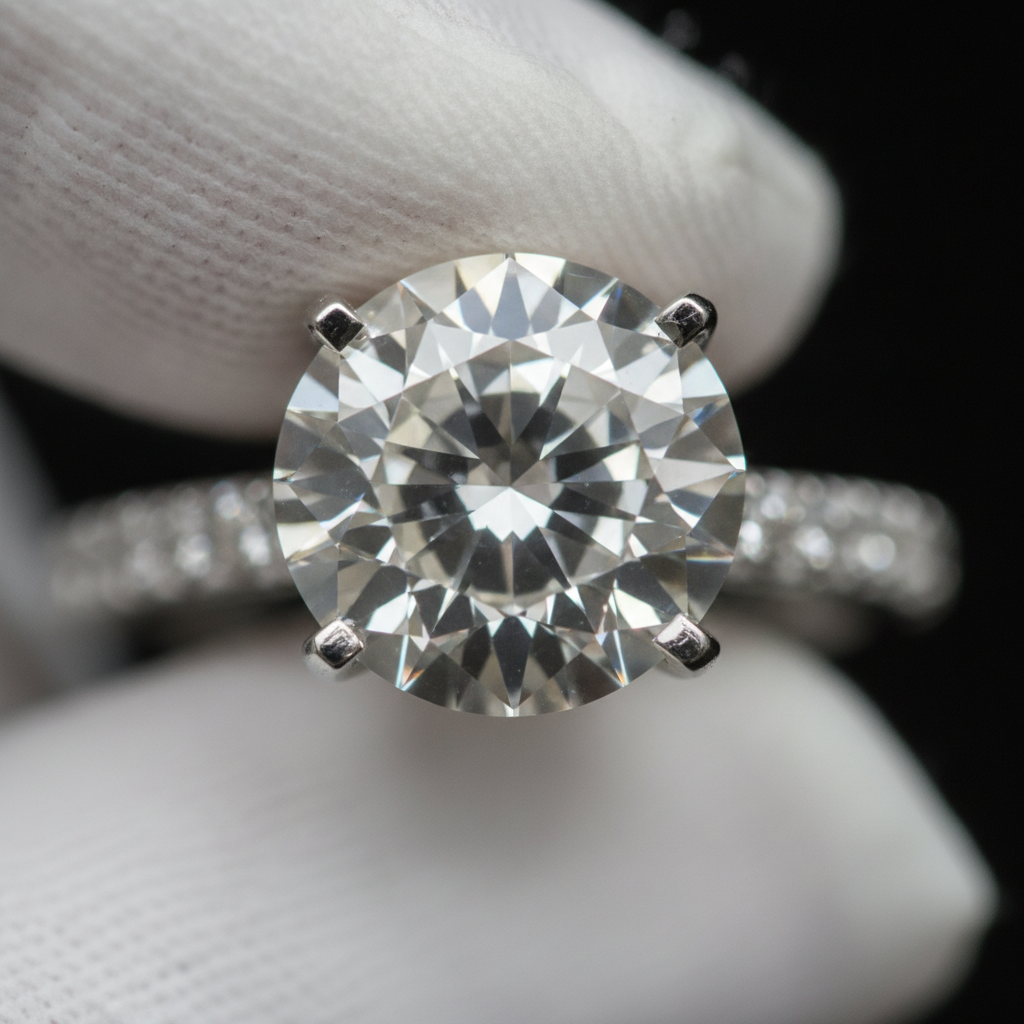
Types of Quality Factors: Diamonds, Metals, Settings, Certifications
Quality spans the diamond (4Cs), the ring’s metal and setting, and the documents that verify claims. Inspect light performance and eye-cleanliness, choose the right karat gold, look for precise prong work, and insist on an independent report to tie it all together.
Diamond 4Cs in Practice
- Cut: The biggest driver of beauty. Rounds with balanced proportions show vivid fire and contrast. Fancy shapes (oval, pear, emerald) require side-by-side viewing to spot bow-tie or windowing.
- Color: Near-colorless stones often look icy in white metals; warmer tones can pair beautifully with yellow or rose gold. Small differences (one or two grades) can vanish once set.
- Clarity: Prioritize eye-clean. Typical inclusions include crystals, feathers, or needles. Edge inclusions can hide under prongs; central inclusions may remain visible.
- Carat: One carat equals 0.2 grams. Face-up spread depends on depth and cut; note mm measurements on the report.
Metal Choices and Durability
- 14k gold (≈58.5%): Everyday durability with a bright appearance; excellent for active wearers.
- 18k gold (≈75%): Richer hue and premium feel; slightly softer than 14k but still durable in well-built settings.
- Finishing: Comfort-fit inner edges, polished galleries, and even shank thickness improve long-term wearability.
When comparing metals and finishes, reference this primer on choosing your ring metal for a quick refresher on properties and care.
Setting Architecture and Craftsmanship
- Prongs: Four- or six-prong solitaires highlight the center; halo micro‑pavé demands crisp bead work; three‑stone rings require symmetric alignment.
- Seat precision: The stone should rest fully supported with no gaps. Under 10x, look for clean, even contact.
- Security features: Under‑galleries and crossbars can add stability without bulk, especially in higher-set designs.
Cut and craftsmanship go hand in hand. For a sense of how evaluators talk about light performance, see this explainer on diamond cut quality scores.
Best Practices to Buy With Confidence
Prioritize cut, confirm eye-cleanliness, pick a metal that fits your lifestyle, and keep documentation organized. Compare stones under multiple lights, request macro imagery of prongs and seats, and verify return and warranty terms before you finalize.
Do First: Lock in the Fundamentals
- Start with cut quality: It delivers the biggest visual upgrade at normal viewing distances.
- Check color in context: View face‑up in the metal you like; tiny grade shifts may disappear once set.
- Confirm eye-clean clarity: Evaluate at 6–8 inches; ask for 10x photos or video around the table and girdle.
Inspect the Build
- Prongs and pavé: Even tips and neat beads signal careful workmanship; micro‑pavé often uses ~1.0–1.3 mm melee that should sit uniformly.
- Shank profile: A comfortable everyday thickness is often ~1.7–2.2 mm with smooth inner edges.
- Balance and height: Higher heads showcase the stone but can snag more; choose based on lifestyle.
Organize Your Proof
- Keep report numbers: Note diameter (mm), table (%), depth (%), and inscription (if any).
- Document comparisons: Create a small table for each contender so trade‑offs stay clear.
- Lean on expertise: A short appointment can resolve weeks of indecision.
For shoppers exploring stone‑first paths, this loose diamonds guide outlines how to shortlist candidates before choosing your setting.
Tools and Resources
Pair independent grading reports, magnification, and trusted education hubs with transparent store policies. Add a brief appointment with a diamond expert to compare stones live and confirm you’re happy with the trade‑offs before you click buy.
- Independent grading reports: Confirm the 4Cs, measurements, and clarity plot; match report and inscription where present.
- Loupe or macro video: 10x magnification reveals prong work, inclusions, and finishing details.
- Education hubs: Learn fast in our Engagement Ring Guide and education articles.
- Expert appointments: Book a no‑pressure walkthrough to review stones side‑by‑side and finalize your setting.
- Customer‑first policies: Diamond2Deal backs purchases with a 1‑year warranty, 30‑day returns, and responsive support.
When you want hands‑on comparisons, our education‑first approach pairs beautifully with next‑day shipping on thousands of in‑stock styles, so your decision turns into delivery—fast.

Case Studies and Real Examples
Seeing quality applied in common scenarios makes choices easier. These short examples show how cut, color, clarity, metal, and build come together to deliver sparkle, security, and comfort—across classic solitaires, halos, and three‑stone designs.
Classic Solitaire, Everyday Wear
A USA‑based customer chooses a lab‑grown round brilliant in 14k white gold. They focus on cut for brightness and eye‑clean clarity. The four‑prong head shows even tips and clean seats under 10x. The ring ships the next day with a grading report and feels comfortable through work and workouts.
Halo Sparkle, Secure Micro‑Pavé
Another buyer prefers halos. They select a near‑colorless center with crisp micro‑pavé surrounding it. Each bead is neat; there’s no excess solder visible under magnification. The shank stays ~2.0 mm for sturdiness without losing elegance. Routine cleanings keep the look vivid week after week.
Three‑Stone Symbolism, Balanced Proportions
In a three‑stone, side stones should echo the center’s color tone and align symmetrically. Here, the seats line up perfectly and the gallery feels smooth against the skin. A simple at‑home cleaning kit (soft brush, mild soap, lint‑free cloth) keeps the ensemble bright in minutes.
If you’re comparing shapes or planning a future stack, our diamond eternity rings style guide explores width, profile, and how bands pair with solitaires and halos.
Schedule a no‑pressure appointment with a Diamond2Deal diamond expert to compare stones live, review reports, and finalize your setting with confidence. Prefer ring‑first browsing? Explore an IGI‑certified lab‑grown ring to see how reports map to real sparkle.
How Diamond2Deal Helps You Judge Quality Faster
We combine wholesale‑rooted expertise with an education‑first process: clear 4Cs explanations, macro imagery, expert appointments, and customer‑first policies. Next‑day shipping on thousands of in‑stock styles turns decisions into fast delivery without compromising build quality.
- Education first: Plain‑language resources and side‑by‑side comparisons reduce guesswork.
- Macro visibility: High‑resolution photos and videos highlight prongs, seats, and finish.
- Expert guidance: Book an appointment when you want tailored recommendations.
- Service support: 1‑year warranty, 30‑day returns, free gift packaging, and responsive post‑purchase care.
- Fast fulfillment: Thousands of styles ship the next day, so you can move from shortlisting to unboxing quickly.
If you’re designing from scratch, our internal overview of custom engagement rings outlines how to align diamond specs, metal choice, and setting architecture for a cohesive result.
Frequently Asked Questions
Most questions focus on what drives sparkle, how to judge eye‑cleanliness, which metal to choose, and how to spot careful craftsmanship. These concise answers help you evaluate rings quickly at home or during an online appointment.
What matters most for sparkle?
Cut quality drives light performance. A well‑cut diamond returns light efficiently, creating brightness and fire. Color and clarity matter too, but cut often delivers the biggest visual upgrade at typical viewing distances.
Are lab‑grown diamonds real diamonds?
Yes. Lab‑grown diamonds share the same crystal structure and hardness as mined diamonds, are graded on the same 4Cs, and can be laser‑inscribed with report numbers for verification.
Should I choose 14k or 18k gold?
Pick based on lifestyle and color preference. 14k (about 58.5% gold) balances strength and shine for daily wear. 18k (about 75% gold) offers a richer hue with a slightly softer feel. Both are excellent in well‑built settings.
How do I know if a ring is well made?
Check prong symmetry, secure stone seating, smooth finishing, and balanced shank thickness. The diamond shouldn’t rock in its seat, and edges should feel comfortable against the finger.
Conclusion and Next Steps
Focus on measurable 4Cs, visible craftsmanship, and documented support. Compare under multiple lights, request macro imagery, and keep report details handy. When you want clarity fast, book a short expert session and decide with confidence.
Key Takeaways
- Engagement rings quality blends 4Cs, metal integrity, and careful craftsmanship.
- Cut quality often creates the biggest visual difference minute‑to‑minute.
- Eye‑clean clarity, secure prongs, and even finishing improve daily comfort.
- Independent reports, warranty, and returns protect long‑term satisfaction.
When you’re ready to compare, start with one diamond spec you love, then test two close alternatives in side‑by‑side video. Keep your notes, confirm policies, and choose the ring that looks beautiful to you in everyday light. If you’d like a guided walkthrough, our diamond experts are here to help.