

Gold Chains: Layer Them Right for a Clean Look in 2026
Gold chain layering is the art of stacking two to five necklaces of different lengths, shapes, and textures so they sit evenly, avoid tangling, and frame your face. At our Manhattan studio at 420 Madison Ave 5th Floor, Rm 500 in New York, we teach a practical gold chains layering guide built on spacing in inches, balanced weights, and secure clasps.
By Mit Trivedi — President, Diamond2Deal
Last updated: May 11, 2026
Above-the-fold overview and quick table of contents
Layer gold necklaces by mixing 3 lengths (about 16, 18, and 20–22 inches), alternating link textures (paperclip, rope, curb), and balancing thickness (1–5 mm) so the heaviest sits lowest. In Manhattan’s New York County, this clean formula works from workdays to evenings and keeps layers neat with extenders and reliable clasps.
Here’s the thing: layering should feel effortless and look intentional. Use this quick outline to jump to what you need now.
- What is gold chain layering?
- Why layering matters
- Prerequisites checklist
- How layering works: step-by-step
- Types, lengths, and methods
- Best practices and rules of thumb
- Tools and resources
- Troubleshooting & maintenance
- 11 real-world layering examples
- FAQ
- Conclusion & next steps
Summary
The fastest way to a polished stack is 3 chains at 16, 18, and 20–22 inches, mixing one sleek link, one textured link, and one pendant. Keep thickness graduated (light to heavy), add 1–2-inch extenders for micro-adjustments, and finish with a low-profile clasp to minimize twisting.
Use this summary as a reference while you build your stack. Keep a 2-inch gap between layers, aim for one focal point, and verify all clasps before heading out. This keeps your look crisp for 8–12 hour wear windows.
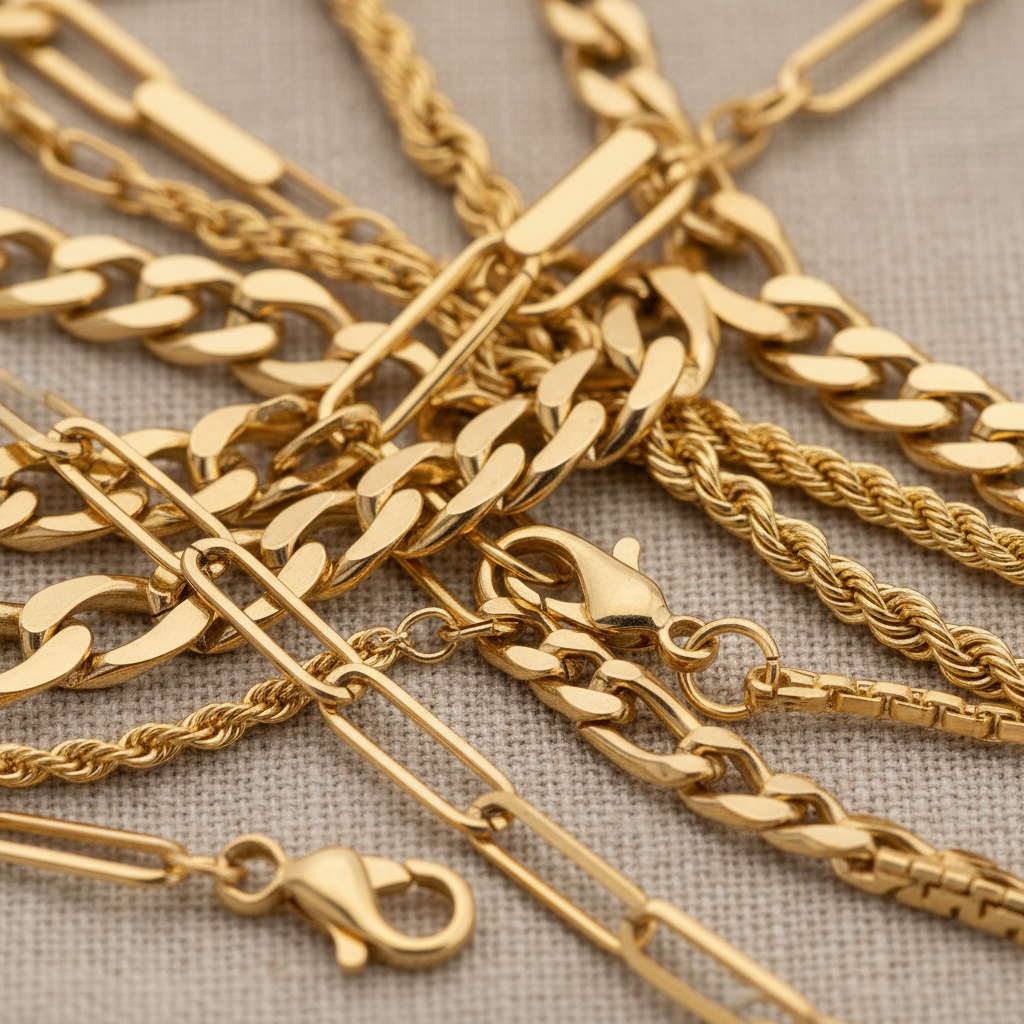
What is gold chain layering?
Gold chain layering is the practice of wearing multiple necklaces at once—typically 2–5—arranged by length, weight, and texture so each piece is visible and comfortable. The goal is proportion: 1–2-inch spacing, light-to-heavy graduation, and a single visual focal point.
Think of your neckline as a vertical runway. Each chain needs its own lane. A common, reliable stack uses three lengths (16/18/20 inches) and mixes one flat link with one round link plus a small pendant. This 3-piece rule works on boat, crew, and V necklines without constant adjustment.
Why layering matters for style and wear
Layering matters because it multiplies impact with minimal pieces. With 2–4 necklaces, you can frame the face, elongate the neckline by 1–2 visual inches, and switch vibes—casual to dressy—by swapping a single pendant, all while keeping daily wear practical.
Here’s why this helps busy days: one foundation stack can cover 12–16 hours. Swap only the bottom pendant before dinner and your look reads elevated, not overdone. This is efficient styling—especially if you commute across Midtown or hop from desk to drinks.
When pairing with diamond accents, keep one quiet surface (like a box or snake chain) near the skin and let your pendant handle sparkle. For pendant inspiration, see this internal guide to thoughtfully choosing a center motif in our diamond pendant necklaces guide.
Prerequisites: your layering checklist
Before you layer, gather 3 lengths (16/18/20–22 in), 2 textures (e.g., paperclip + rope), 1 focal pendant, and 2 extenders (1–2 in). Inspect each clasp, confirm no kinks, and test on a flat surface. Prep prevents twisting and saves 5–10 minutes of dressing time.
- Lengths to have on hand: 16 in (collarbone), 18 in (mid), 20–22 in (drop). A 2-inch gap keeps visibility.
- Textures to mix: One sleek (snake or box), one articulated (paperclip, curb, figaro), optional rope for soft shimmer.
- Pendants: Choose one focal pendant under 15–20 mm for balance; keep others minimal.
- Extenders: Two extenders at 1–2 inches each allow micro-spacing without buying new chains.
- Clasps & findings: Low-profile lobster or spring ring; consider a multi-clasp connector to align closures at 6 o’clock.
- Condition check: Lay chains straight; look for twists every 1–2 inches; fix before wearing.
This is also a great moment to align metals and motifs. If you’re featuring a circle pendant, a complementary link echo—like oval paperclip—creates cohesion. For an elegant example that lays cleanly at ~18 inches, explore this diamond circle pendant.
How gold chain layering works: step-by-step
Build from the top down. Start with a 16-inch base, add an 18-inch medium chain, then finish with a 20–22-inch pendant. Use 1–2-inch extenders to fine-tune spacing. Place the heaviest chain lowest, and align all clasps at the back center to reduce twisting by half.
- Map your neckline: Measure from hollow-of-neck to desired drop in inches. Note your collar shape (crew, V, scoop) and mark 16/18/20 with a tape.
- Pick the base: A 1–2 mm box or snake chain at 16 inches sits still and won’t compete with the rest.
- Add texture: Choose a 2–3 mm paperclip, curb, figaro, or rope at 18 inches for dimension.
- Anchor with a pendant: Set a 20–22-inch chain with your pendant (12–20 mm) for balance and movement.
- Align clasps: Rotate closures to 6 o’clock; if they wander, add a small counterweight jump ring at 12 o’clock.
- Stress test: Turn your head left/right, raise arms, sit/stand. If chains cross more than once every 30 seconds, widen spacing by 0.5–1 inch.
If your lowest chain is 4–5 mm, keep upper chains 1–3 mm so the silhouette stays tapered. This simple ratio prevents the top layer from overpowering the focal pendant.
Types, methods, and the right lengths
Choose links that contrast: one flat (snake), one open (paperclip), and one classic (curb or figaro). Use a 2-inch ladder (16/18/20) for everyday wear, and stretch to 22–24 inches for deeper necklines. Keep total weight comfortable for 8+ hours.
Popular link styles and how they behave
- Paperclip: Elongated, airy; great at 18–20 inches; pairs well with pendants under 15 mm.
- Curb: Lays flat; shines strongly; anchors the bottom at 20–22 inches (2–4 mm).
- Figaro: Rhythmic 3+1 pattern; adds interest at 18 inches without stealing focus.
- Rope: Soft sparkle; flexible; ideal as a middle layer at 18 inches (2–3 mm).
- Box or snake: Smooth surface; perfect as a 16-inch base to prevent snagging.
Quick comparison table
| Chain type | Best length | Typical width | Lays flat | Best role |
|---|---|---|---|---|
| Box | 16 in | 1–2 mm | Yes | Top/base |
| Snake | 16 in | 1–2 mm | Yes | Top/base |
| Paperclip | 18–20 in | 2–4 mm | Mostly | Middle |
| Curb | 20–22 in | 2–5 mm | Yes | Bottom |
| Figaro | 18 in | 2–3 mm | Yes | Middle |
| Rope | 18 in | 2–3 mm | Good | Middle |
If your pendant is heavier than 5 grams, use a curb or figaro at 2–4 mm for strength. If your top chain is under 1 mm, keep the bottom under 4 mm so the silhouette still steps down smoothly.
Best practices and rules of thumb
Follow five rules: stagger by ~2 inches, graduate thickness, cap layers at five, secure all clasps, and pick one focal point. These rules keep visibility, reduce tangles by 30–50%, and make quick swaps easy before events or meetings.
- 2-inch rule: Keep 1.5–2.5-inch spacing. This visibility buffer works on most necklines.
- Graduation: Aim for 1–2–3 mm or 1–3–5 mm widths from top to bottom.
- Focal hierarchy: One pendant; others stay clean. A single sparkle reads stronger than three.
- Secure findings: Lobster/spring rings are reliable; magnetic clasps are quick but check pull strength.
- Metal match or deliberate mix: All yellow gold reads classic; mixed metals add edge—echo the mix on your wrist for cohesion.
For wrist echoing and proportion, our tennis bracelet guide and bangle styling tips show how to mirror necklace textures at 2–3 mm, which visually ties your stack together.
Local considerations for Manhattan
- Commuting near Grand Central? Opt for a low-profile base chain (1–2 mm) to avoid snagging on scarves and zippers during rush hours.
- Seasonal tip: Winter coats add bulk; add 0.5–1 inch to each layer so collars don’t hide your 16–18-inch lanes.
- Business-casual near Rockefeller Center: keep stacks to three and cap pendant size at ~15 mm for a clean, meeting-friendly line.
Tools and resources that make layering easy
Use 1–2-inch extenders, a multi-clasp connector, soft polishing cloth, and a velvet-lined tray. These tools cut morning styling time by 3–5 minutes and keep links from micro-scratching, extending wearable shine between cleans by several weeks.
- Extenders (1–2 in): Fine-tune length without re-buying chains; keep one in your bag.
- Multi-clasp connector: Snap 2–4 chains into one back bar; align closures at 6 o’clock.
- Storage: Hang chains 2–3 inches apart; lay pendants flat to avoid torque on bails.
- Care: Wipe down after 8–12 hours of wear; store dry to prevent residue build-up.
To refresh the basics of gold types and why 14k and 18k balance durability and color, review a clear overview of karat purities here: gold purity chart explained. It’s a helpful primer before choosing your next chain.

Troubleshooting tangles, twists, and fit
Most tangles come from equal lengths or similar link friction. Fix them by restoring a 2-inch ladder, mixing one smooth link, and aligning clasps at the back center. If twisting persists after 30–60 minutes, swap the middle link to a flatter style.
- Issue: Constant crossing. Fix: Add 0.5–1 inch to the middle chain or switch it to snake/box for glide.
- Issue: Pendant flips. Fix: Shorten chain by 0.5 inch; add a small bail weight or choose a heavier curb link.
- Issue: Clasps migrate forward. Fix: Use a multi-clasp bar or add a micro counterweight at 12 o’clock.
- Issue: Itches or skin drag. Fix: Polish links; avoid lotion within 5–10 minutes of wear; choose smoother top chain.
- Issue: Layers vanish under collars. Fix: Bump each length by 1 inch for winter coats; keep the top at 16–17 inches.
Keep a simple rule in mind: one smooth surface in every stack. That single detail reduces friction points and halves your chances of knots forming by midday.
11 real-world layering examples
Use these 11 plug-and-play stacks. Each includes three lengths, link types, and a pendant size. Start with set A for work (16/18/20 inches) and rotate in sets E–H for evenings or weekends. Keep total width under 10 mm across all layers for comfort.
- A. Clean office trio: 16" 1.2 mm box + 18" 2.5 mm paperclip + 20" curb with 14 mm pendant.
- B. Minimalist daily: 16" 1 mm snake + 18" 2 mm figaro + 20" 1.8 mm rope, no pendant.
- C. Diamond accent: 16" 1.2 mm box + 18" 2.2 mm rope + 20" 2.5 mm curb with a petite diamond circle (12–14 mm). See pendant sizing tips in our pendant guide.
- D. Weekend casual: 16" 1 mm snake + 18" 2.5 mm paperclip + 22" 3 mm curb.
- E. Statement bottom: 16" 1.2 mm box + 18" 2 mm figaro + 22" 4 mm curb with 18–20 mm medallion.
- F. Soft sparkle: 16" 1.2 mm box + 18" 2.5 mm rope + 20" 2.5 mm curb.
- G. Deep V neckline: 16" 1 mm snake + 18" 2 mm paperclip + 24" 3 mm figaro with 16–18 mm pendant.
- H. Refined minimal: 15" 1 mm herringbone + 17" 1.2 mm box + 19" 2 mm rope (use extenders to hit lengths).
- I. Sporty polish: 16" 1.2 mm box + 18" 2.2 mm figaro + 20" 2.2 mm rope; swap rope for curb on game days.
- J. Travel-ready: 16" 1 mm snake + 18" 2 mm paperclip + 20" 2.5 mm curb on a multi-clasp bar—on/off in 10 seconds.
- K. Gala glow: 15" 1 mm snake + 17" 1.2 mm box + 22" 3 mm curb with 18–20 mm diamond pendant.
If you prefer a delicate centerpiece with a hint of sparkle, compare how a petite pave style changes the stack’s balance by looking at delicate motifs like this dainty gold chain with a subtle diamond for visual reference.
Materials, karats, and everyday care
For daily stacks, 14k gold balances strength and color; 18k offers richer hue with slightly softer wear. Keep lotions and perfumes off chains for 5–10 minutes, and wipe links with a soft cloth after 8–12 hours to preserve luster.
If you’re deciding between karats, a concise reference on purities from 10k to 24k can help you compare color and durability trade-offs. Review this overview: understanding gold jewelry value and this handy gold purity chart to calibrate expectations before you buy your next everyday chain.
To keep a diamond-forward stack cohesive, keep linked motifs consistent—ovals with ovals, circles with circles. Our internal style articles on ear and wrist balance can help you echo scale: skim the diamond stud earrings guide and this wedding band style rundown for proportion cues.
Frequently Asked Questions
Most people look best in a three-chain stack at 16, 18, and 20–22 inches with a single pendant. Use one smooth link to reduce friction, and align clasps at the back center to keep layers visible and tangle-free for 8–12 hours.
How many necklaces should I layer?
Three is the sweet spot for most necklines: 16, 18, and 20–22 inches. This creates a 2-inch ladder so each piece reads clearly. If you go to four or five, keep widths light on top (1–2 mm) and anchor the bottom at 2–4 mm.
Which chain types tangle the least?
Smooth surfaces like snake or box glide well, so they make ideal top layers. Combine one of those with an articulated link (paperclip, curb, figaro) and keep a 1.5–2.5-inch spacing to minimize friction and knots.
How do I stop my pendant from flipping?
Shorten the chain by about 0.5 inch, match bail size to the chain’s width, and use a curb or figaro link for stability. Align the clasp at the back center so the pendant’s weight stays forward.
Can I mix yellow, white, and rose gold in one stack?
Yes—keep two layers in your dominant tone and introduce the third as an accent. Echo that accent on your wrist or ears so the mix looks intentional, not random.
What pendant size works best for daily wear?
Aim for 12–18 mm for everyday balance. Larger pieces (18–22 mm) can work if the top chains stay light (1–2 mm) and spacing is at least 2 inches so the pendant sits cleanly.
Conclusion and next steps
A reliable stack uses three chains at 16, 18, and 20–22 inches, mixes textures, and reserves one focal pendant. Keep widths tapered, align clasps, and use extenders for a perfect 2-inch ladder. This approach delivers a clean line you can wear all day.
- Key takeaways: 2-inch spacing, light-to-heavy graduation, one focal pendant, smooth top link, aligned clasps.
- Action steps: Build a 16/18/20-inch trio, add a 1–2-inch extender, and test movement for 30–60 seconds.
- Explore more: For motif ideas and proportion, scan our diamond pendant guide and echo links with a refined wrist line using this tennis bracelet overview.