

How Gold and Diamonds Work Together in Fine Jewelry
How Gold and Diamonds Work Together in Fine Jewelry
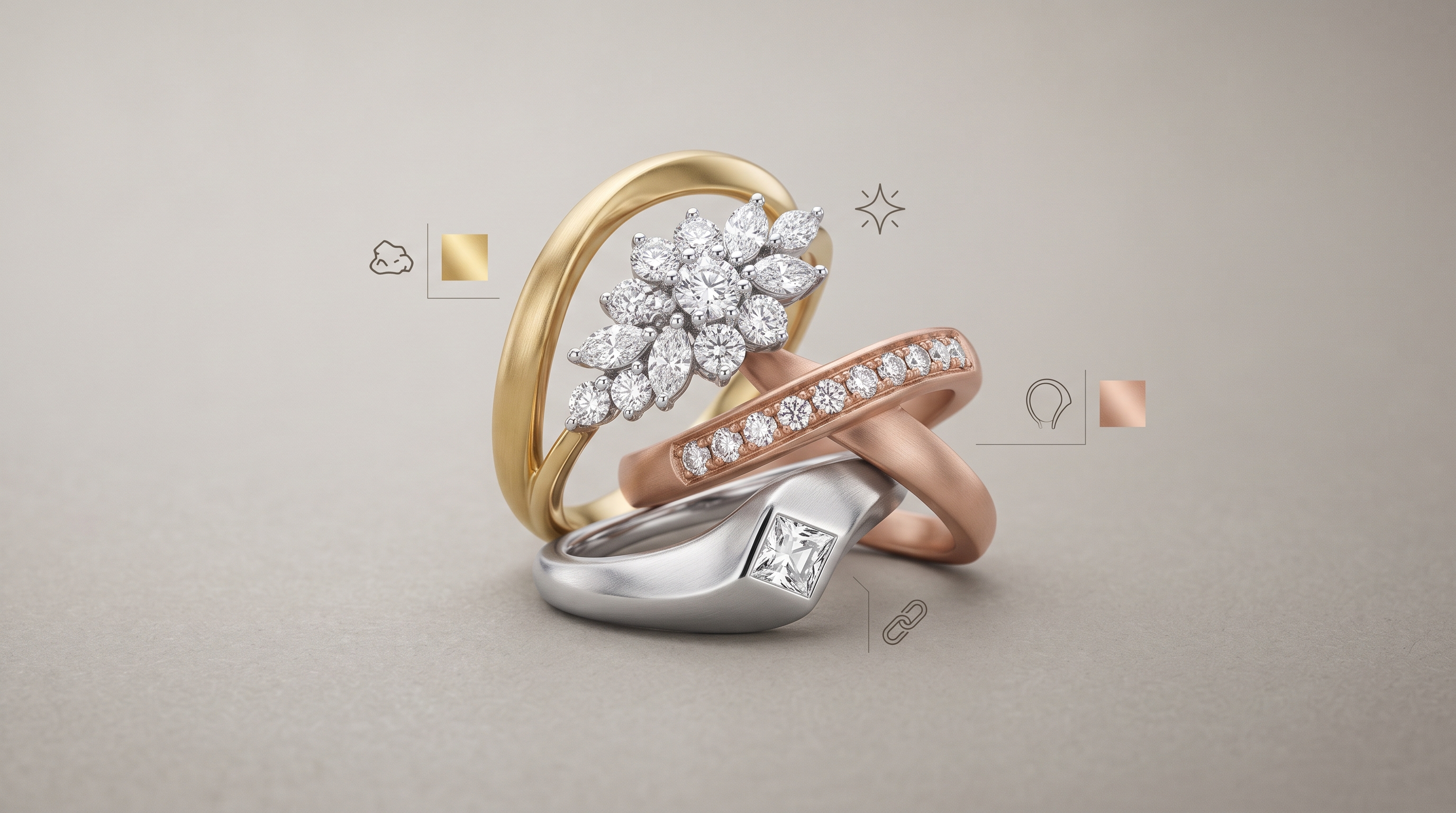
Gold and diamonds perform different jobs in fine jewelry. Gold forms the structure, color and contact surface; diamonds contribute light, shape and visual emphasis. The finished piece succeeds only when metal, stones, setting, proportions and wearer routine work together. A strong product description should let you identify each part without confusing similar-sounding terms.
Diamond2Deal publishes a diamond education route and a diamond ring route. They can help with orientation, but this guide does not verify the specifications or availability of any current item.
Understand what gold and diamonds each contribute
In a ring, earring, pendant or bracelet, the metal carries loads, holds stones and shapes the way the piece sits. Diamonds may form one focal point, repeat around a surface or act as accents. A design with many small stones asks different maintenance questions than a solitaire. A tall profile behaves differently from a low one. Start with use: daily wear, occasional wear, gifting, a milestone or a piece intended to pair with existing jewelry.
| Element | What to verify | Why it matters |
|---|---|---|
| Gold | Fineness, color, construction and marks | Defines material and much of the structure |
| Diamond | Origin, treatment, weight, measurements and reporting | Defines disclosed stone characteristics |
| Setting | Style, profile, contact points and security | Connects the stones to the metal |
| Fit | Size, dimensions, edges, closure and pairing | Determines practical wear |
| Policy | Return, resize, repair, care and exclusions | Defines the ownership process |
Separate gold karat from diamond carat
Gold karat is a fineness expression. Because pure gold may not provide the desired color or working properties for every design, jewelry gold is commonly alloyed with other metals. A higher karat designation means a higher proportion of gold, but it does not automatically make a finished design more suitable for every wearer. Alloy composition, construction, thickness, setting and use also matter.
Diamond carat is a weight measurement. It does not directly state face-up diameter, cut quality, color, clarity, origin or price. In a multi-stone item, “total carat weight” can combine all diamonds. Request the centre or principal diamond weight separately, the number of other stones and the scope of any stated grades.
Choose gold color as a design and wear decision
Yellow, white and rose appearances come from different alloy and finishing choices. Color can change how the eye reads a diamond and how the piece coordinates with other jewelry. White-toned metal may create a lower-contrast transition around colorless-looking stones; yellow or rose tones can make the metal itself more visible in the composition. These are design effects, not proof of diamond quality.
Ask whether the color comes from the alloy, a surface finish or both, and what maintenance the seller recommends. People with known metal sensitivities should request the actual composition and seek appropriate professional advice; broad labels such as “hypoallergenic” should not replace material disclosure.
Read solid, plated and constructed metal descriptions carefully
A color word does not establish how an item is made. Confirm whether the description represents gold alloy throughout the stated component, a gold layer over another metal, or another construction. Look for a fineness statement, seller identity and item-specific documentation. Marks can be useful, but they should be read together with the written description and receipt rather than treated as a complete independent test.
- Identify the stated metal for each major component, including posts, backs, clasps or chains.
- Record the fineness and whether a finish or plating is disclosed.
- Ask whether sizing, polishing or repair can change the surface appearance.
- Confirm weight and dimensions only when they are material to your comparison.
- Keep the final item description with the receipt.
Read diamond origin, treatment and weight disclosures
Ask whether the diamonds are natural or laboratory-grown and whether any treatment is disclosed. A grading report, when represented, should be identifiable through its issuer and match the offered stone. Reports describe characteristics within their scope; they do not replace a sales contract, appraisal or seller policy. Accent stones in a finished piece may be described as a group rather than individually reported.
For a multi-stone piece, separate the principal stone, side stones and total. Compare measurements and design distribution. If a product page presents a color or clarity range, ask which stones it covers and how substitutions are handled. The FTC’s Jewelry Guides make truthful material, quality, weight, origin and treatment descriptions a useful baseline for questions.
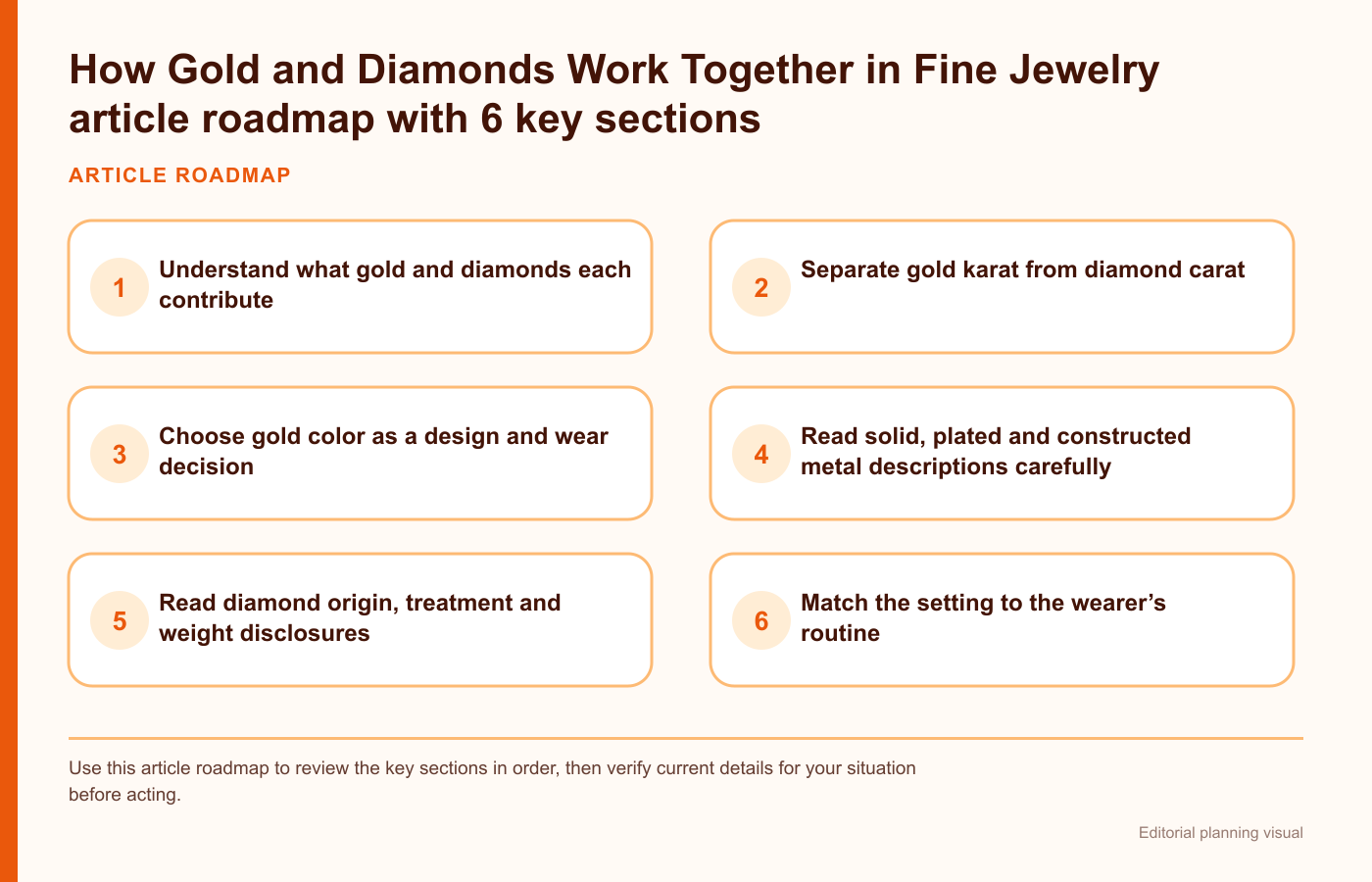
Match the setting to the wearer’s routine
Prongs, bezels, channels and pavé-style work create different appearances and contact points. No setting is maintenance-free. A setting with exposed edges may highlight a stone while being more likely to meet clothing or equipment. Numerous small stones create a detailed surface and more individual setting points to inspect. Height affects pairing, snagging and how the piece feels.
| Wear question | Design feature to inspect | Seller question |
|---|---|---|
| Frequent hand use | Profile, exposed edges and comfort | What activities require removal? |
| Pairing with another ring | Gallery, width and contact points | Will the pieces sit together without harmful rubbing? |
| Small accent stones | Alignment and setting points | What inspection and repair process applies? |
| Earrings or pendants | Back, clasp, bail and chain | Which components are included and what metals are they? |
| Known sensitivity | All components touching skin | What is the complete material composition? |
Plan care before purchase
Request care instructions specific to the metal, finish, setting and stones. Household cleaners, ultrasonic equipment, abrasives and polishing methods are not interchangeable. Ask how often the seller recommends inspection, what signs should stop wear, and whether third-party work affects service terms. Photograph the item and record its condition before sending it for repair.
Store pieces so diamonds and metal surfaces do not scrape each other. Remove jewelry when activities create impact, chemical or loss risk according to professional guidance. Care cannot guarantee that a stone will never loosen or a surface will never change, but an explicit routine makes ownership less reactive.
Use a product page and consultation checklist
- Who will wear the piece, how often and with what other jewelry?
- What metal, fineness, color and construction are stated?
- Are any coatings or finishes disclosed?
- Are diamonds natural or laboratory-grown, and are treatments disclosed?
- What are the centre weight, total weight and measurements?
- Which report or grading statement applies to which stone?
- What setting style, profile, size and component details are given?
- What return, alteration, care, repair and warranty terms apply?
- What changes if the item is sized, engraved or made to order?
- Which unanswered facts will appear on the final receipt?
Common gold and diamond jewelry mistakes
- Confusing karat and carat: one describes gold fineness and the other gemstone weight.
- Assuming color proves composition: request the metal and finish description.
- Comparing total weight as one stone: ask how weight is distributed.
- Extending one grade to every diamond: confirm the scope of each statement.
- Ignoring profile and contact points: design affects comfort and upkeep.
- Treating marks as the whole record: keep the written description and receipt.
- Assuming all cleaners are safe: follow material-specific guidance.
- Skipping policy details: modifications may change eligibility.
Frequently asked questions
Is higher-karat gold always better for diamond jewelry?
No. Higher karat means a higher gold proportion, but design, alloy, construction, wear and preference determine fit. Ask for the complete specification.
Does diamond carat describe visible size?
Carat is weight. Shape, cut and proportions affect face-up dimensions and appearance.
Can white, yellow and rose gold hold the same design?
Many designs may be produced in different colors, but availability, alloy, finish and construction are item-specific. Confirm the exact option rather than assuming.
What should I keep after purchase?
Keep the receipt, final item description, report references, disclosures, policies, care instructions and records of any alteration or repair.
Move from browsing to item-specific questions
Write down the intended wear, desired metal color, acceptable profile, diamond disclosure needs, total budget and policy questions. Use that list to compare exact items rather than broad categories.
Sources reviewed
- FTC guidance on buying gemstones and diamonds — karat and carat distinction, disclosures and reports.
- FTC Jewelry Guides — truthful metal and gemstone representations.
- GIA diamond grading services — report and 4Cs context.