

How to Compare Luxury Diamonds Beyond the Price Tag
How to Compare Luxury Diamonds Beyond the Price Tag
Luxury diamond jewelry is easiest to compare when the word “luxury” is treated as a design and service promise to investigate, not as a gemological grade. Two pieces can carry similar price tags while differing in diamond documentation, visual emphasis, setting complexity, metal specifications, finish, service terms and long-term upkeep. A useful comparison starts by deciding what the piece should do for the wearer, then applies the same evidence checklist to every option.
Diamond2Deal publishes a diamond education page and a diamond ring collection route. Use those pages for orientation, then confirm the current product details and policies attached to the exact item you are considering.
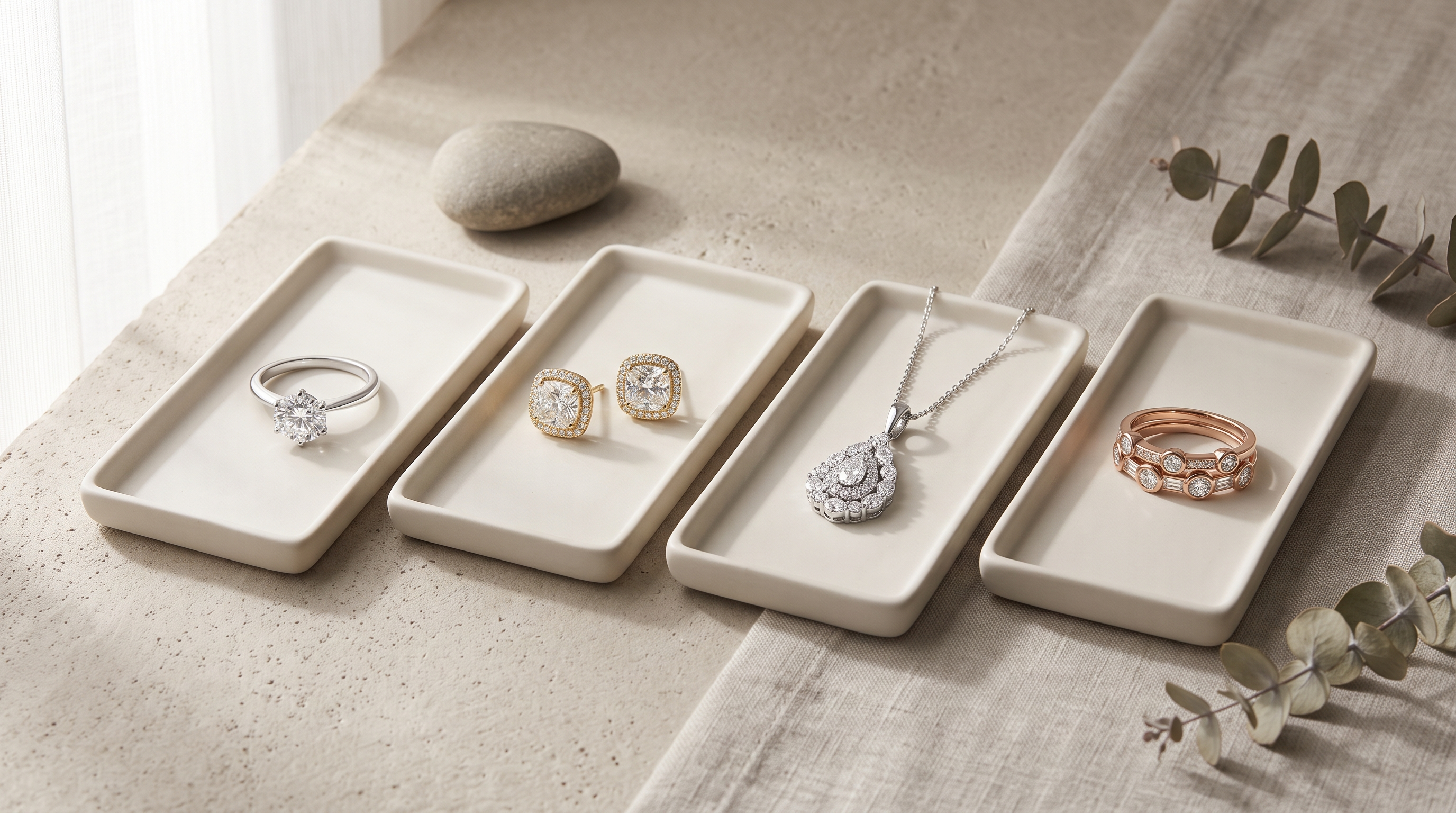
Compare four luxury diamond approaches side by side
Begin with the design role rather than a product label. A stone-led statement piece directs attention to one principal diamond. A matched or multi-stone design depends on how several stones relate. A design-led pavé or accent piece creates texture through many smaller stones and setting work. A made-to-order project, when a seller actually offers one, adds approvals, milestones and change control. None is universally superior.
| Approach | What drives the look | Evidence to prioritize | Best fit |
|---|---|---|---|
| Stone-led statement | One visual focal point | Item-specific report or disclosure, measurements, setting security | Buyer who values a clear centre of attention |
| Matched or multi-stone | Balance among stones | Matching criteria, individual versus total weight, replacement plan | Buyer who values symmetry or repeated sparkle |
| Design-led accent work | Surface detail and setting pattern | Metal and setting description, inspection and repair terms | Buyer who values texture and design coverage |
| Made-to-order project | Personal specifications | Drawings, approvals, deposits, changes, delivery and final acceptance | Buyer with a defined brief and time to review |
Apply the same budget boundary and evidence standard to every row. If one option supplies detailed item facts and another relies on adjectives, the difference in evidence is itself part of the comparison.
Separate diamond documentation from luxury language
Ask whether a diamond is natural or laboratory-grown, whether it has been treated, which independent report applies, and whether the report number and measurements match the offered stone. GIA explains that its natural-diamond grading reports assess the 4Cs and record identifying characteristics. Laboratory-grown reporting may also describe origin-related details. The presence of a report is useful evidence, but it is not an appraisal, price guarantee or promise of future value.
- Request the report issuer and number before purchase when a report is represented.
- Check the report through the issuer’s official verification channel.
- Match shape, measurements and item description rather than relying on a screenshot.
- Ask which diamonds in a multi-stone piece are individually documented.
- Record origin and treatment disclosures on the order or receipt.
The FTC’s Jewelry Guides focus on truthful claims about type, grade, quality, weight, origin, treatment, price and value. That is a useful consumer lens: every specific claim should be clear enough to verify and should apply to the exact item.
Distinguish a centre stone from total diamond weight
Carat is a unit of gemstone weight, not a direct measurement of visible size, beauty or quality. In jewelry with several diamonds, a stated total weight may be distributed across a centre stone, side stones, halos or pavé. Two pieces with the same total can look very different because proportions, setting and distribution change what the eye sees.
Ask for the centre-stone weight separately from the total, the number and type of accent stones, and whether weights are exact or represented within an allowed range. Then compare face-up dimensions, not carat alone. Cut quality, shape and setting height influence appearance and wear. Avoid multiplying a grading statement for one diamond across every smaller stone unless the description explicitly does so.

Assess design, metal and setting as a complete piece
A diamond can be well documented while the finished piece is still a poor match for the wearer. Confirm the metal type and fineness, setting style, profile height, edge and prong feel, closure or gallery, sizing limits and any care restrictions. Look for even alignment, secure stones, clean finishing and a design that does not snag or press uncomfortably during ordinary movement.
Setting complexity affects inspection and repair. Small accent stones may create an intricate surface, but the buyer should know how missing stones are handled and whether routine checking is recommended. An exposed setting may show more of a stone while requiring greater care. A lower profile may suit frequent wear but change the visual effect. These are fit decisions, not rankings.
Compare written service and aftercare terms
Service can be part of a luxury purchase, but only written terms count. Compare return eligibility and timing, resizing scope, maintenance, repair authorization, shipping responsibility, loss exclusions, warranty conditions and what documentation must accompany a claim. Confirm whether policies differ for sale, altered, engraved, sized or made-to-order items.
| Policy area | Question to ask | Record to keep |
|---|---|---|
| Return | What makes this exact item eligible or ineligible? | Dated policy and receipt |
| Resize or alteration | Which changes are possible and who approves them? | Written scope and measurements |
| Maintenance | What inspection or cleaning is recommended? | Care instructions |
| Repair | How are estimates, parts and shipping authorized? | Intake condition and approval |
| Warranty | What is covered, excluded and required? | Current complete terms |
Build a decision-ready shortlist
Choose two or three candidates, then score each from the same information set. Write the intended occasion, frequency of wear, preferred visual focus, metal preference, size, delivery constraint and total budget. Attach product details, report references, policy pages and unanswered questions. If one item cannot be compared because basic facts are missing, pause rather than filling the gap with assumptions.
- Define the wearer and use case.
- Set a complete budget including taxes, sizing and expected service.
- Compare item-specific documentation and disclosures.
- Inspect dimensions, profile, setting and comfort.
- Read policies for that item and modification status.
- Resolve discrepancies in writing before payment.
- Keep the final description, receipt and reports together.
Common luxury diamond comparison mistakes
- Treating luxury as a grade: it is not part of the 4Cs.
- Comparing only total carat weight: distribution and dimensions change appearance.
- Assuming every stone shares one grade: verify what each statement covers.
- Using a report as a valuation: grading and market value are different questions.
- Ignoring the finished setting: comfort, security and care affect ownership.
- Relying on verbal policies: return and service terms need written confirmation.
- Forgetting modifications: sizing or custom changes may affect eligibility.
- Using generic images as proof: confirm the exact item and description.
Frequently asked questions
Does a higher price prove a better diamond?
No. Price can reflect many inputs and does not independently prove grade, rarity, origin, construction, service or future value. Compare evidence and fit.
Is total carat weight the same as centre-stone weight?
No. Total weight can combine several diamonds. Ask for the distribution and measurements that apply to the exact piece.
Should every luxury diamond have a grading report?
Reporting varies by stone and product. If a report is represented, verify its issuer, number and match to the offered diamond. Ask how smaller accent stones are described.
How many pieces should I compare?
Two or three well-documented candidates are often more useful than a long list. Use the same scorecard and keep unresolved questions visible.
Turn the comparison into a purchase brief
Write a one-page brief covering wearer, design approach, documentation, metal, dimensions, service terms, timing and budget. That brief makes a consultation more specific and reduces the chance that visual excitement displaces a material question.
Sources reviewed
- GIA diamond grading services — grading report scope and 4Cs context.
- GIA laboratory-grown diamond services — origin and reporting context.
- FTC Jewelry Guides — truthful representation of jewelry claims.
- FTC diamond buying advice — consumer questions about reports, treatment and policies.