

Pearl Jewelry Care: Keep Shine and Avoid Damage 2026
Pearl jewelry care is the routine of cleaning, storing, and handling pearls to protect their nacre and keep their soft luster. From our Manhattan location at 420 Madison Ave, 5th Floor (Rm 500), Diamond2Deal helps you build a simple, repeatable routine so your strands, studs, and bracelets look luminous for decades.
By Mit Trivedi • Last updated: May 14, 2026
Summary
Care for pearl jewelry by wiping after every wear, avoiding chemicals and ultrasonic cleaners, storing pieces flat and separate from harder gems, and restringing strands when knots loosen. This prevention-first approach protects nacre, maintains luster, and keeps heirloom pearls secure for everyday and formal wear.
Use this complete, expert guide to confidently maintain every pearl you own. In a few minutes, you’ll learn the essentials and the nuances—plus how Diamond2Deal’s education-first approach makes care easy.
- What pearl jewelry care is and why it matters
- Step-by-step maintenance schedule you can follow
- Safe cleaning versus common mistakes to avoid
- Storage and travel methods that prevent scratches
- When to book a professional inspection or restringing
What Is Pearl Jewelry Care?
Pearl jewelry care is a set of preventive habits—gentle cleaning, chemical avoidance, soft storage, and periodic restringing—that protect pearls’ nacre. Because pearls are softer than most gems, consistent low-effort care prevents dullness, etching, and abrasion better than occasional deep cleaning ever can.
Pearls are organic gems built from nacre layers. They’re elegant—and delicate compared to diamonds and sapphires. That’s why “care” is mostly about prevention. The fewer harsh exposures and physical bumps your pearls get, the longer they’ll glow.
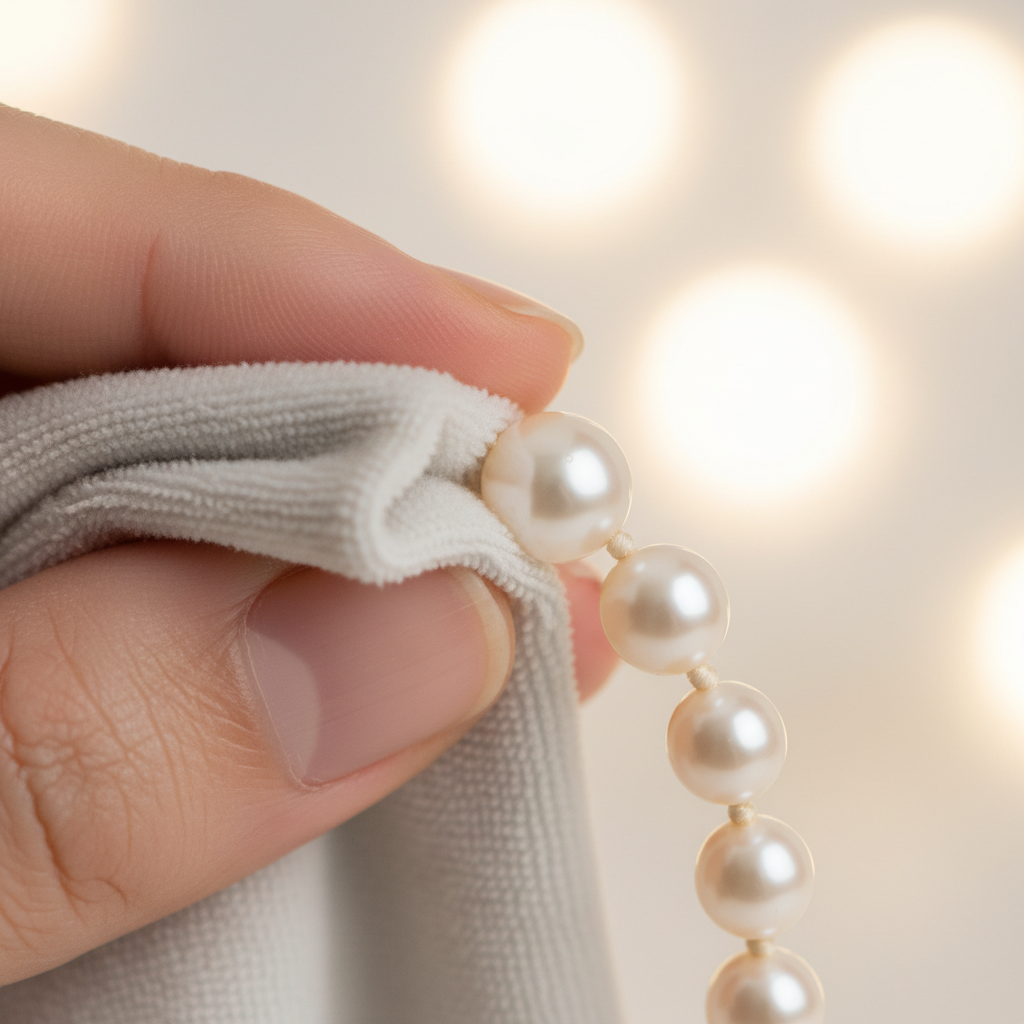
- Gentle wipe-downs: A soft, slightly damp cloth removes oils, perspiration, and cosmetic residue that cloud luster.
- Put pearls on last: Apply fragrance and hairspray first; then wear your pearls to avoid chemical contact.
- Soft, separate storage: Fabric-lined compartments prevent metal edges or harder stones from scuffing nacre.
- Restringing cadence: Silk stretches with wear; timely restringing restores drape and security.
Think of pearl care like skincare—consistent, gentle, and protective. The payoff is immediate shine and long-term durability.
Why Pearl Care Matters
Pearls are vulnerable to abrasion and common chemicals. Smart daily choices—separation from harder gems, wipe-downs after wear, and flat storage—preserve luster and prevent strand failure. In Manhattan and across New York County, these habits keep pearls ready for work, weddings, and travel.
We often see two avoidable issues: hairline scratches from contact with harder jewelry and dull spots from fragrance or skincare. Both build up over time. Avoiding those exposures is simpler than reversing the damage later.
- Longevity: Micro-scratches accumulate; a clean, separate home keeps pearls looking new.
- Reliability: Silk knots loosen subtly; scheduled checks prevent sudden strand breaks.
- Confidence: A secure clasp and even drape feel great at the collarbone—no fuss, no worry.
In our experience helping bridal clients and everyday commuters, consistent pearl jewelry care is the difference between “fine” and “flawless.”
How Pearl Care Works: Step-by-Step
Follow a light-touch routine: wipe pearls after wearing, do a brief lukewarm water rinse with a drop of mild soap monthly, dry flat on a towel, store separate from harder gems, and schedule periodic inspections and restringing. Prevention beats aggressive cleaning every time.
Daily (after you wear them)
- Wipe: Slightly dampen a soft cloth; gently wipe each pearl and the clasp. Air-dry flat on a towel.
- Last on, first off: Put pearls on after hair and makeup; remove before changing outfits to avoid snags.
- Avoid heat: Don’t leave pearls on a sunny sill, radiator, or car dashboard.
Weekly to monthly
- Quick clean: Swish pearls briefly in a small bowl of lukewarm water with a drop of mild soap. Rinse quickly.
- Dry and settle: Lay flat on a soft towel so moisture doesn’t pull through the silk; do not hang-dry.
- Visual check: Look for gaps between knots, darkened silk near the clasp, or a stretched shape at the drape point.
Seasonal
- Inspection: Have a jeweler evaluate knots, clasp tension, and overall strand alignment before big events.
- Restringing plan: Frequent-wear strands benefit from routine restringing before silk shows fatigue.
- Storage refresh: Replace worn cloths; vacuum dust from trays and cases.
Types of Pearls and Settings: Care Differences
All pearl types need gentle handling, but wear patterns differ. Strands overstress silk if hung; studs risk cosmetic buildup; bracelets get more contact with desks and bags. Match care to the piece: wipe routinely, store flat, and inspect clasps and knots specific to each design.
By jewelry type
- Necklace strands: Most vulnerable to silk stretch. Always lay flat; avoid hanging on hooks.
- Stud earrings: Backs collect cosmetics; wipe posts and cups regularly. For complementary styling, see our diamond stud earrings guide.
- Hoop or drop earrings: Movement increases contact; check closures and wipe after wear. Explore styling ideas in our diamond hoop earrings guide.
- Bracelets: Desk edges and bags add abrasion; wipe more often and store in a rigid case. Our tennis bracelet guide covers secure wear strategies that translate to pearls, too.
- Pendants: Less silk to stretch; still keep away from perfumes and use soft pouches. Learn pendant layering in our pendant necklace guide.
By wearing context
- Daily wear: Commit to fast wipe-downs; build the habit with a cloth in your top drawer.
- Special events: Do a visual check the day before. Lay strands flat overnight.
- Travel: Use a suede-lined case with dividers; keep pearls separate from diamond rings, bangles, and watches. For compact organization, our bangle styling tips include packing insights.
Design details change risks. A simple routine adapts: wipe, separate, lay flat, then inspect closures and knots periodically.
Safe Cleaning Methods—and What to Avoid
Use lukewarm water, a drop of mild soap, and a soft cloth. Avoid ultrasonic machines, steamers, bleach, ammonia, acids, baking soda, and abrasives. Pat dry between towels, then lay strands flat to finish. Never hang-dry or use heat tools on pearl jewelry.
Safe at home
- Water first: If sweat or makeup is visible, rinse gently under a low stream of lukewarm water.
- Drop of mild soap: In a small bowl, swish briefly; keep the clasp above water if possible.
- Pat-dry: Press between two clean towels; finish drying flat on a soft surface.
What to skip (even if social media suggests it)
- Ultrasonic and steam: These can stress nacre and weaken silk.
- Household chemicals: Bleach, ammonia, vinegar, and powders may etch or pit the surface.
- Abrasive cloths: Rough fibers create micro-scratches that dull shine.
For general gemstone education on hardness and why abrasives are risky, industry resources like this overview of the 4Cs and durability and a primer on what affects sparkle explain why harder stones scratch softer materials.
Storage and Travel
Store pearls flat in soft, fabric-lined compartments away from harder gems and metals. For travel, use a rigid, suede-lined organizer with dividers. Avoid airtight plastic; a little airflow helps pearls maintain a comfortable moisture balance.
- Separate spaces: Keep pearls apart from diamond studs, eternity bands, and watches; hardness differences cause scratches.
- Lay flat: Prevent silk stretch by resting strands flat; avoid hooks and hangers.
- Breathable pouches: Fabric is better than plastic; slight airflow is friendlier to organic gems.
- Travel smart: Choose a rigid organizer with dividers; place pearls in their own section.
- After events: Wipe, dry, then store—don’t seal moisture into cases.
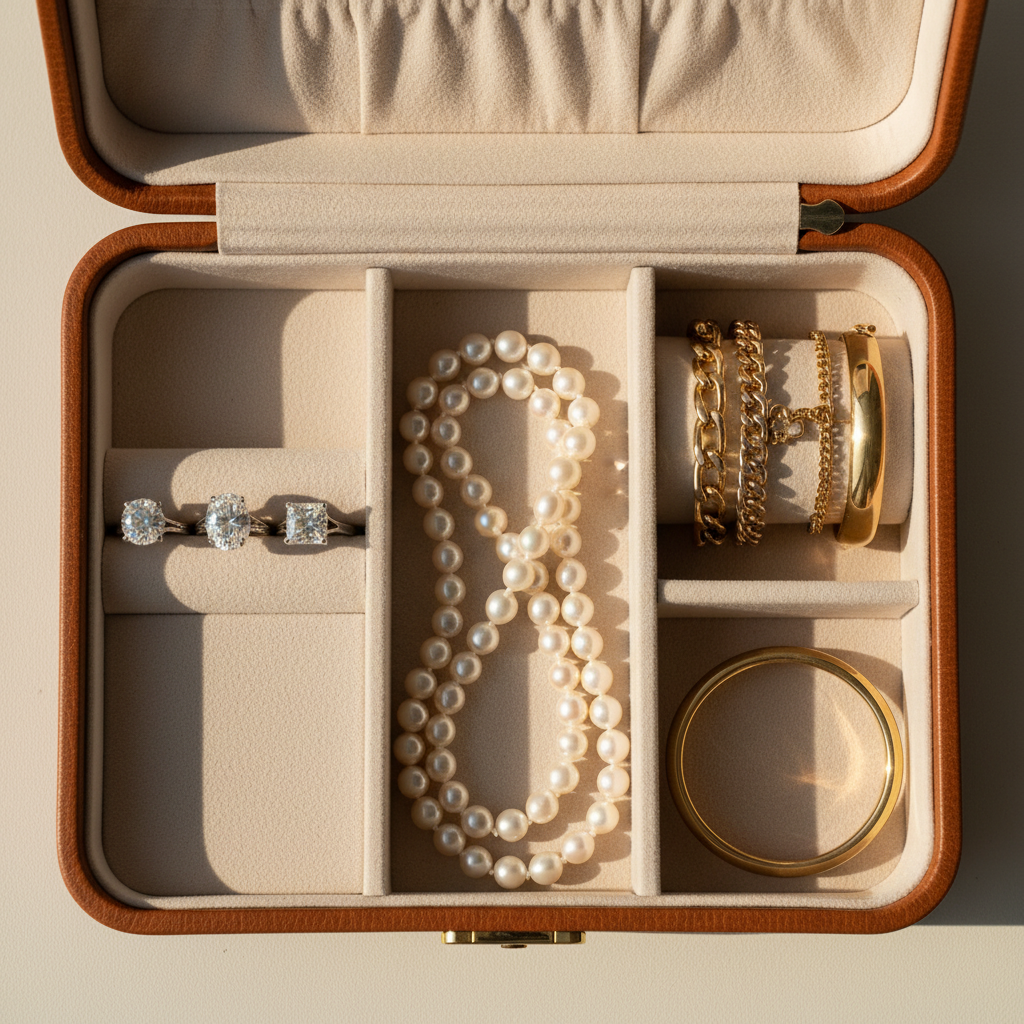
Building a capsule jewelry wardrobe? Our gold pendant gift guide and birthstone jewelry overview share storage-friendly styling ideas that pair beautifully with pearls.
Best Practices Checklist
Adopt these habits: put pearls on last, wipe after wear, keep them separate, avoid heat and chemicals, lay strands flat, and schedule restringing when knots loosen. These consistent, low-effort moves protect nacre and keep pearls luminous year after year.
- Last on, first off: Sprays and lotions go on before jewelry—pearls come last, and off first.
- Mind the Mohs: Diamonds and sapphires are harder; separate storage prevents scratches.
- Flat storage: Never hang-dry strands; support the natural drape.
- Regular wipe-downs: Keep a cloth in your vanity and travel kit.
- Scheduled checks: If you notice gaps between knots or fraying silk, plan a restringing.
Tools and Resources
A pearl-safe kit includes a soft microfiber cloth, a small bowl, mild soap, and a suede-lined case. Pair those basics with reputable education and a periodic professional inspection to keep strands secure and luminous without guesswork.
- Soft cloths: Keep one at home and one in your travel case.
- Mild, fragrance-free soap: Use a single drop for occasional cleaning.
- Storage: Fabric-lined trays and zippered suede pouches with dividers.
- Education: General gemstone resources on hardness and durability—start with this gemstone durability overview.
- Gift planning: For inspiration and packing-friendly designs, see this seasonal holiday jewelry gift guide.
Have questions about your strand? Schedule a quick conversation with a Diamond2Deal jewelry specialist for a storage or restringing plan before your next big event. Prefer studs? Explore our in-stock freshwater pearl studs or delicate pearl hoop earrings.
Case Studies and Real-World Examples
Light, consistent care outperforms infrequent deep cleans. Clients who wipe, store flat, and restring on schedule preserve luster and avoid emergency repairs. Here are three snapshots that show how small habits protect beauty and sentiment.
- Manhattan bridal set: A bride paired pearl studs with a diamond pendant. Separate storage prevented diamond-to-pearl scuffs; a pre-wedding inspection caught a loosening earring back—fast fix, flawless photos.
- Everyday office strand: A client commuting near Grand Central wipes her strand after warm days; no discoloration at the collar-point despite daily wear and summer humidity.
- Heirloom bracelet: A vintage piece with worn silk regained its graceful drape after timely restringing, avoiding a near-loss of three pearls at the clasp.
Local considerations for Manhattan
- Busy commutes: If pearls share a bag with work gear, use a rigid, fabric-lined case; jostling near Grand Central can cause scuffs.
- Seasonal swings: Hot, humid summers call for quick wipe-downs after outdoor events; in winter, avoid leaving pearls near heating vents by Bryant Park–area offices.
- Event-heavy weeks: During gala or fashion weeks, plan a mid-week visual check and lay strands flat overnight to protect silk.
Maintenance Schedule at a Glance
Use this quick schedule to prevent most issues: daily wipe-downs, monthly gentle cleans, seasonal inspections, and restringing when knots loosen. Matching frequency to wear level keeps nacre bright and strands secure with minimal effort.
| Task | Why it matters | Frequency |
|---|---|---|
| Wipe with soft cloth | Removes oils and perspiration that cloud luster | After every wear |
| Brief soap-and-water clean | Clears buildup without stressing nacre or silk | Monthly (or after heavy use) |
| Flat, separate storage | Prevents scratches and silk stretch | Always |
| Visual knot/clasp check | Catches early signs of failure | Seasonally and before events |
| Professional inspection/restringing | Restores drape, secures strand | As needed when knots loosen |
Pearl Jewelry Care FAQ
Most pearl care questions center on safe cleaning, storage, and when to restring. The answers below are short and definitive: be gentle, avoid chemicals, lay strands flat, and separate pearls from harder gems. Consistency prevents problems.
Can I clean pearls with soap and water?
Yes—use lukewarm water and a drop of mild, fragrance-free soap. Swish gently, rinse quickly, then pat dry and lay flat on a towel. Avoid soaking strands for long periods, and never use ultrasonic cleaners or steam.
How often should I restring a pearl necklace?
If you wear it often, plan on yearly inspections and restringing when knots loosen, gaps appear, or silk near the clasp darkens. Infrequently worn heirlooms may go longer, but schedule a check before weddings or travel.
Can I wear pearls every day?
Absolutely. Daily wear is fine if you wipe pearls after use, avoid direct sprays and harsh cleaners, and store them flat and separate from harder gems. Consistency prevents micro-scratches and keeps luster bright.
Are pearls safe in a jewelry box with diamonds?
Only if pearls live in their own soft-lined compartment. Diamonds are much harder and will scratch nacre on contact. Use dividers or pouches to keep pearls separate from rings, studs, and watches.
Key Takeaways
Protect nacre with simple, repeatable habits: wipe after wear, avoid chemicals and heat, store flat and separate, and restring on schedule. These steps keep pearls luminous, secure, and ready for milestones without last-minute repairs.
- Gentle prevention beats aggressive cleaning.
- Flat, fabric-lined storage protects silk and nacre.
- Separate from harder gems to avoid scratches.
- Book inspections before big events.
Conclusion
Pearl care is simple: be gentle, be consistent, and store pearls apart from harder jewelry. With quick wipe-downs, flat storage, and timely restringing, your pieces will shine for decades and be ready for every occasion.
Need personalized guidance for a family heirloom or an upcoming Manhattan event? Our education-first team at Diamond2Deal will help you map a fast, low-effort routine so your pearls—and the memories they carry—stay beautiful.
Related Reads from Diamond2Deal
Build a versatile jewelry wardrobe that plays well with pearls. Explore these guides for styling and storage ideas, and choose complementary pieces with confidence.
For layering inspiration, see our practical gold pendant tips. If you love minimal sparkle, our diamond stud overview and pendant guide show easy pairings. Bracelet fans can review our tennis bracelet guide and bangle styling ideas for travel-friendly setups.