

Solitaire Rings: Pick a Style That Fits You in 2026
Solitaire ring styles are the different setting, shape, and metal combinations that showcase a single center stone. At Diamond2Deal in New York (420 Madison Ave, 5th Floor, Rm 500), we guide you to match shape, prongs, and band profile to your lifestyle for lasting brilliance. This complete guide explains popular solitaire options, selection steps, and care.
By Mit Trivedi — President, Diamond2Deal
Last updated: 2026-04-27
Above-Fold Guide: Hook + Table of Contents
Choose your center stone shape first, then select a secure setting and a comfortable band. Use this table of contents to jump to definitions, style comparisons, best practices, and tools. In minutes, you’ll know which solitaire fits your day-to-day routine and long-term stacking plans.
- Quick Summary
- What Is a Solitaire Ring?
- Why Solitaire Rings Matter
- How Solitaire Settings Work
- Types of Solitaire Ring Styles
- Best Practices for Choosing
- Tools and Resources
- Case Studies and Style Examples
- Frequently Asked Questions
- Conclusion and Next Steps
Quick Summary
The right solitaire balances diamond cut quality with a setting that protects the stone and fits your lifestyle. Decide on shape, confirm prong or bezel security, pick a comfortable band, and match metal to your wardrobe. Prioritize proportion, security checks, and future band stacking.
Solitaire ring styles stay timeless because they highlight the center stone. They pair with almost any wedding band, remain easy to clean, and adapt to desk jobs and active routines alike.
- Shape impacts spread: Round, oval, emerald, pear, and princess are most common.
- Setting drives security: Four prongs, six prongs, and bezels offer different protection levels.
- Band affects comfort: Many daily-wearers prefer 1.6–2.2 mm widths with comfort-fit inner curves.
- Metal sets the mood: Yellow, white, and rose gold shift color contrast and warmth.
- Maintenance cadence: Plan quick checks every 6–12 months and clean weekly at home.
What Is a Solitaire Ring?
A solitaire ring is a band that holds a single featured gemstone—most often a diamond—without side stones. The minimalist design spotlights the center stone’s cut, size, and sparkle, making it the most classic engagement ring style across generations.
At Diamond2Deal, solitaires span traditional prongs to sleek bezels and modern east-west orientations. Our selection includes certified lab-grown diamonds in 14K or 18K yellow, white, and rose gold, plus natural diamonds when desired.
- One center stone only: No side stones or accents on the shank—clean and iconic.
- Cut quality shines: Symmetry, polish, and proportions drive visible brilliance.
- Flexible stacking: Pairs with straight, contour, or guard-wrap wedding bands.
Want a refresher on the 4Cs that matter most for solitaires? See our internal diamond grading guide and our diamond certification overview for clarity on how cut, color, clarity, and carat work together.
Why Solitaire Rings Matter
Solitaire rings matter because they maximize diamond visibility, simplify wedding band pairing, and remain stylish for decades. The look reads clearly in photos, cleans quickly, and emphasizes cut quality—the biggest driver of perceived sparkle in daily light.
People choose solitaires to avoid trend fatigue and keep the focus on the gem. The silhouette works across styles—from minimal wardrobes to bold, layered jewelry.
- Timeless appeal: Minimal lines have felt current for 100+ years and still do today.
- Photogenic clarity: One center stone reads cleanly in close-ups and full-length shots.
- Band freedom: Straight, contour, and guard bands all complement a solitaire face.
- Low maintenance: Fewer crevices than multi-stone rings speed up weekly cleaning to minutes.
- Upgrade path: Settings can be remade later to accommodate a shape or size change.
Need help aligning style and sustainability? Explore our perspective in lab-grown engagement insights and lab-grown sustainability notes—both popular with couples weighing their options.
How Solitaire Settings Work
A solitaire setting holds the gemstone with prongs or a continuous bezel and raises it just enough to admit light. Height, prong count, and seat shape determine brilliance, snag risk, and long-term security. Aim for the lowest profile that still shows your stone beautifully.
The mechanics are straightforward: keep the diamond safe while letting it perform. The engineering details differ by style.
- Prong settings: Four or six metal claws grip the girdle; the prong tips are rounded or clawed.
- Bezel settings: A thin metal rim surrounds the edge, offering top-tier protection and smooth edges.
- Cathedral shoulders: Arched metal sweeps up to frame the stone—classic from the side view.
- Baskets/trellis: Cross-over arms cradle the stone and add lateral strength to the head.
- Peg head vs. integrated: Replaceable head on a peg versus a head built into the shank.
Practical checks pay off. A quick at-home “tap test” monthly—tapping the ring lightly near your ear—helps catch rattles. Annual professional inspections verify prong tightness, head alignment, and band integrity. These brief checks help preserve your investment for decades.
Types of Solitaire Ring Styles
Popular solitaire ring styles include classic four- or six-prong, bezel, cathedral, knife-edge, tension-inspired, and east-west orientations. Pair them with round, oval, emerald, pear, or princess diamonds in yellow, white, or rose gold to tune both performance and personality.
Below are the most requested options we see at Diamond2Deal—each with use-case guidance and pairing notes.
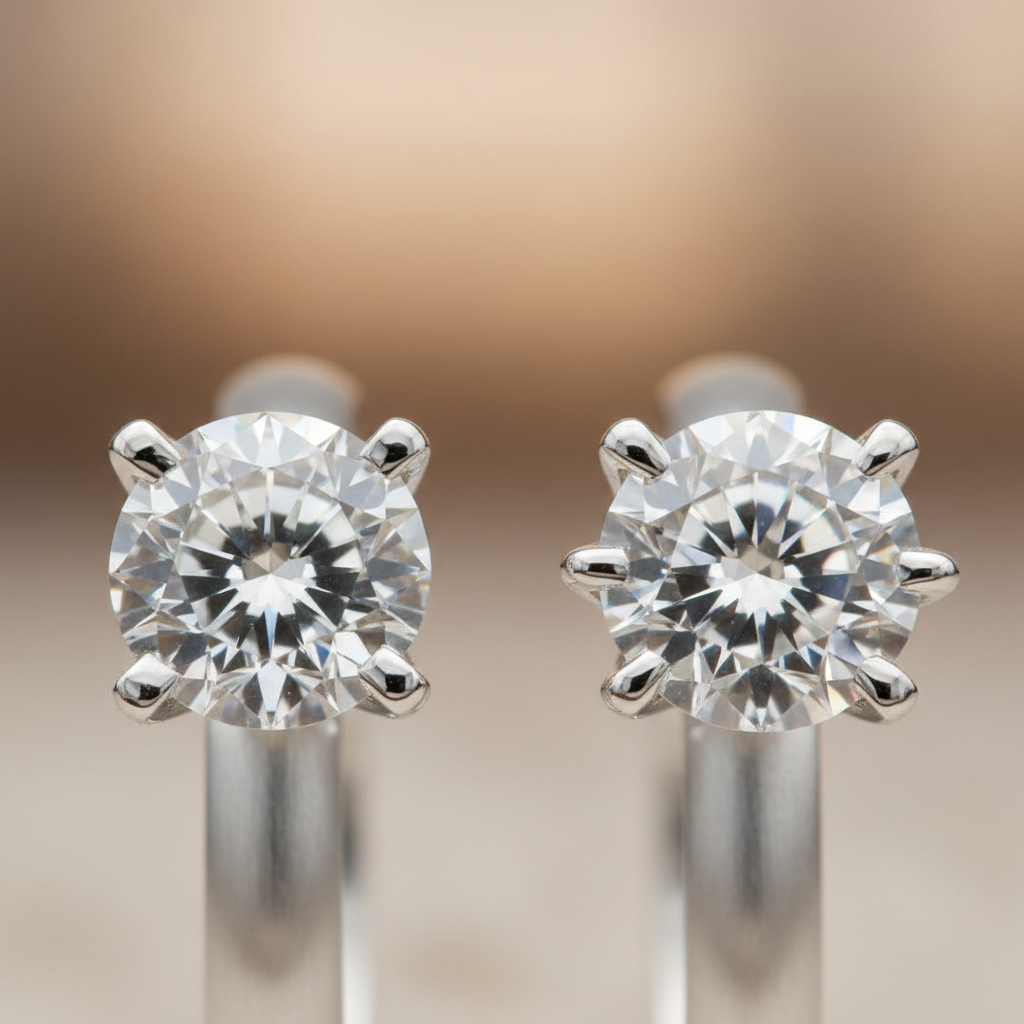
- Four-prong classic: Minimal metal with high light return; easy weekly cleaning with warm water and mild soap.
- Six-prong classic: Extra redundancy for round stones; creates a slightly rounder top outline.
- Bezel: Best edge protection; sleek, modern vibe; choose excellent cut to maximize brightness.
- Cathedral: Elegant arches elevate the stone; consider glove use and stacking clearance.
- Knife-edge shank: Faceted ridge adds crisp lines; comfort-fit inner curve reduces pinch.
- Tension-inspired: Modern negative space; requires expert engineering and precise sizing.
- East-west: Horizontal oval, marquise, or emerald for a fresh twist on a classic.
- Hidden halo (subtle): Tiny stones under the crown add sparkle without changing the solitaire face.
Want to visualize these differences? See a true-to-life solitaire example in our lab-grown solitaire showcase and compare head styles against a round brilliant four-prong for light return and profile height.
Best Practices for Choosing
Decide shape first, then validate cut quality, setting security, and band comfort. Align profile height with your daily routine and match metal to your wardrobe. Try on multiple profiles, perform a quick rattle check, and test wedding band fit before finalizing.
Step-by-step selection checklist
- Pick your shape: Round for classic fire; oval to elongate; emerald for clean, mirror-like flashes.
- Confirm cut quality: Favor top cut grades; symmetry and polish ratings should be high.
- Choose prongs or bezel: Four or six prongs for open light; bezel for the smoothest edges.
- Set profile height: Lower heads slip under gloves and sleeves; higher heads add drama.
- Select band width: Many find 1.6–2.2 mm comfortable; test 0.2 mm increments if sensitive.
- Match the metal: White gold reads bright and neutral; yellow feels warm; rose adds a blush tone.
- Stacking plan: Low heads sit closer to straight wedding bands; cathedrals may prefer a contour.
- Inspection rhythm: 6–12 month professional checks; weekly at-home cleaning.
Common mistakes to avoid
- Over-prioritizing carat alone: Without strong cut, larger stones can look dull from arm’s length.
- Ignoring profile clearance: Tall settings can snag sweaters or bump against keyboards.
- Skipping the wedding band test: Ensure your chosen band stacks flush or accept a contour band plan.
- Neglecting comfort-fit: A gentle inner curve reduces pinch during 10,000+ daily hand movements.
Prefer a guided path? Our engagement ring guide distills these decisions into focused steps you can review in 10–15 minutes, then revisit during an appointment.
Free expert help, on your schedule: Bring one or two favorite solitaire ring styles, plus a wedding band you plan to stack. In our experience, 30–45 minute sessions are ideal for side-by-side comparisons and profile height tests.
Tools and Resources
Use a diamond education hub, certification basics, and a brief consultation to validate cut, color, clarity, and setting engineering. Combine try-at-home visuals with return and warranty policies to decide confidently—without pressure or guesswork.
Diamond2Deal emphasizes education-first shopping. You get next-day shipping on thousands of in-stock styles, a 1-year warranty, and 30-day returns—backed by family-owned support since 1998.
- Start with our concise 4Cs explainer to see how cut quality drives sparkle in solitaires.
- Review our take on lab-grown engagement rings to compare benefits and styles.
- For eco-minded shoppers, skim our sustainability overview and factor in daily wear and care.
- Check a real product example to visualize proportions: 0.93 ct lab-grown solitaire.
- Prefer round brilliance? See a 1 ct four-prong round solitaire for a classic benchmark.
Local considerations for Manhattan
- Plan appointments near Grand Central to fit commute windows, and bring any stacking bands to test flush fit with your solitaire.
- During peak holidays, leave extra time for sizing and engraving. New York winters mean gloves—favor a lower head if you wear them daily.
- For evening photos around Rockefeller Center, high-polish white gold reads bright under lights. Schedule a same-day clean and inspection beforehand.
Case Studies and Style Examples
Match lifestyle to engineering for the best results: active hands lean bezel or six prongs; office wearers gravitate to four-prong classics; medical pros often choose low heads that slide under gloves. Balance sparkle, security, and comfort—it’s the winning trio.
These composites reflect common goals we hear from Diamond2Deal shoppers.
- The commuter: Oval in a low cathedral with six prongs and a 1.8 mm comfort-fit band—slides under winter gloves and dodges snags during rush hour.
- The creative: East-west emerald on a knife-edge shank in yellow gold—graphic lines, bold presence, easy to stack with midi rings.
- The minimal traditionalist: Round brilliant, four-prong, 1.7 mm band—timeless outline; pairs with a straight pavé wedding band later.
- The hands-on professional: Bezel-set round in white gold—smooth edges for daily wear; weekly 2–3 minute clean keeps it bright.
Looking for proposal timing ideas, seasonal photo inspiration, or ring-shopping milestones? For general inspiration, browse these overviews: a Valentine’s proposal guide, reasons many start with loose diamonds before setting, and a holiday jewelry gift roundup.
Frequently Asked Questions
Most solitaire questions focus on prong count, bezel trade-offs, and band pairing. Choose the shape you love, then match setting height and prongs to daily wear. Confirm comfort and stacking before you finalize your choice.
Is a six-prong setting more secure than four prongs?
Usually yes for round stones. Six prongs distribute pressure evenly and offer redundancy if one prong loosens. Four prongs show more of the diamond and still hold securely when well-made. Have prongs inspected every 6–12 months and after any hard impact.
Which diamond shape looks largest in a solitaire?
Ovals and pears often appear larger face-up than rounds of similar weight due to elongated dimensions. However, cut quality and length-to-width ratios affect perceived size. Try on several shapes to see which spread looks best on your finger.
Do bezels reduce sparkle compared with prongs?
A bezel covers the stone’s edge, which can limit some side light, but a well-cut diamond still looks bright. Bezels trade a bit of side flash for superb protection and snag resistance—ideal for active lifestyles and glove wearers.
What band width is comfortable for daily wear?
Many find 1.6–2.2 mm comfortable for all-day wear with a comfort-fit inner curve. Wider bands can feel more stable but may call for a half-size adjustment. Always test for pinch points and consider how your wedding band will stack.
Conclusion and Next Steps
Pick the solitaire that fits your shape preference, daily routine, and stacking plans. Confirm cut quality, check prong or bezel security, and choose a comfortable band. When in doubt, compare two to three profiles on your hand with a quick expert session.
- Key takeaways: Shape first, then setting height and prongs; prioritize comfort-fit bands; plan for stacking and maintenance.
- Action steps: Shortlist 2–3 favorites, schedule a quick expert review, and test with your intended wedding band style.
Ready to move from research to shortlisting? Start with our concise engagement ring guide, then mark two product benchmarks—such as this lab-grown solitaire and this four-prong round—to compare profiles, prongs, and stacking clearance.