

1 Carat Diamond Wedding Rings: What to Know in 2026
A 1 carat diamond wedding ring is a bridal ring featuring a center diamond weighing approximately 1.00 carat, set for daily wear. At Diamond2Deal in New York (420 Madison Ave, 5th Floor, Rm 500), we guide you through lab-grown and natural options, settings, metals, and certification so you can choose confidently.
By Mit Trivedi, President • Last updated: June 15, 2026
Thinking about a one-carat diamond for your wedding ring? Here’s the complete, expert-backed playbook. You’ll quickly learn how 1.00 ct actually looks on hand, which settings protect it, what affects sparkle and durability, and how Diamond2Deal’s education-first approach shortens your decision from weeks to days.
At a Glance
A 1 carat wedding ring centers on a ~6.4–6.6 mm diamond (round) with balanced 4Cs for everyday wear. Choose a secure setting, match metal to lifestyle, and verify grading. Diamond2Deal offers certified lab-grown diamonds, next-day shipping on many styles, and one-on-one guidance for fast, confident decisions.
Here’s the short version for quick decisions and voice answers. It highlights size reality, protection, quality checks, and how our Manhattan-based team supports you with education and in-stock styles.
- Face-up size: A well-cut 1.00 ct round typically measures about 6.4–6.6 mm across.
- Daily-wear fit: Low-set solitaires or bezel/halo settings reduce snags and add protection.
- Certification: Prioritize reputable grading for clarity and color consistency across pieces.
- Metal choices: 14k or 18k gold (yellow/white/rose) and platinum each trade off hardness, weight, and patina.
- Fast fulfillment: Diamond2Deal provides next-day shipping on thousands of in-stock styles and appointment booking for expert help.
What Is a 1 Carat Diamond Wedding Ring?
A 1 carat diamond wedding ring features a center diamond weighing about 0.98–1.05 carats, commonly measuring ~6.4–6.6 mm in round shapes. It’s engineered for daily wear, balancing cut, color, clarity, and a secure setting. Pair it with a contour, pavé, or eternity band for a cohesive bridal stack.
A 1 carat diamond wedding ring is a daily-wear bridal ring anchored by a ~1.00 ct center diamond. In round brilliant, expect roughly 57–58 facets and a diameter near 6.5 mm when proportions are optimized. Other shapes (oval, cushion, princess) deliver different face-up spreads and finger coverage.
- Cut drives sparkle: Light return depends on angles and symmetry; strong cut grades make a 1.00 ct stone look lively and often larger.
- Color and clarity: Many buyers favor near-colorless ranges and eye-clean clarity for balanced beauty and value.
- Setting function: Prongs showcase height and light; bezels add protection; halos amplify presence by 1–2 mm visually.
- Stack strategy: Pair with a slim pavé band or an eternity ring to frame the center diamond and stabilize rotation.
At Diamond2Deal, couples often compare lab-grown and natural options in our education hub before booking an appointment. We maintain thousands of in-stock designs so you can see classic solitaires, three-stone rings, and eternity bands side-by-side without waiting.
Why 1 Carat Matters
One carat is a benchmark size that balances presence, wearability, and selection. It fits most hands, pairs well with slim wedding bands, and offers broad style options. Because 1 ct sits at a classic milestone, choosing the right cut and setting greatly influences appearance and longevity.
One carat carries cultural weight in bridal jewelry—large enough to notice, refined enough for daily life. On many size 5–7 fingers, a 6.5 mm round reaches close to the width of the finger’s top segment, creating a centered, proportionate look without overwhelming the hand.
- Wearability: At ~6.4–6.6 mm, a round 1.00 ct clears most gloves and pockets when set low, reducing snags by design.
- Design range: From hidden halos to cathedral shoulders, the setting ecosystem for 1 ct is extensive, making customization straightforward.
- Matching bands: 1.5–2.0 mm wedding bands often align visually with a 1 ct solitaire, while 3.0 mm bands give bolder contrast.
- Upgradability: Choosing a robust head (e.g., six-prong or bezel) provides a platform for future upgrades or alternate center stones.
We’ve seen that couples who start with clear priorities—sparkle style, profile height, and maintenance comfort—decide faster and enjoy their rings more. Our team in Manhattan streamlines that process with side-by-side comparisons and clear education.
How a 1 Carat Ring Is Built
A 1 carat ring integrates a proportioned center diamond, a secure head (prong or bezel), and a balanced shank in 14k/18k gold or platinum. The build optimizes light return, hand comfort, and long-term serviceability with replaceable prongs and refinishing options for decades of wear.
Think of the ring as an engineered system: center stone, head, gallery, and shank all interact. The goal is consistent sparkle and comfort through daily tasks—typing, washing, commuting—without constant adjustments.
- Center stone: A well-cut 1.00 ct round exhibits strong brightness, contrast, and fire; elongated shapes (oval, marquise) trade compactness for finger coverage.
- Head and prongs: Four prongs maximize visibility; six add redundancy; bezels shield edges from impact and reduce chip risk.
- Shank geometry: 1.6–2.2 mm widths keep weight comfortable while supporting future resizing and setting maintenance.
- Metal science: 14k gold is ~58.3% gold with alloyed hardness; 18k is ~75% gold, warmer in tone; platinum gains heft and develops a soft patina over time.
- Serviceability: Expect occasional prong tightening and professional inspections every 6–12 months; home cleanings weekly keep brilliance high.
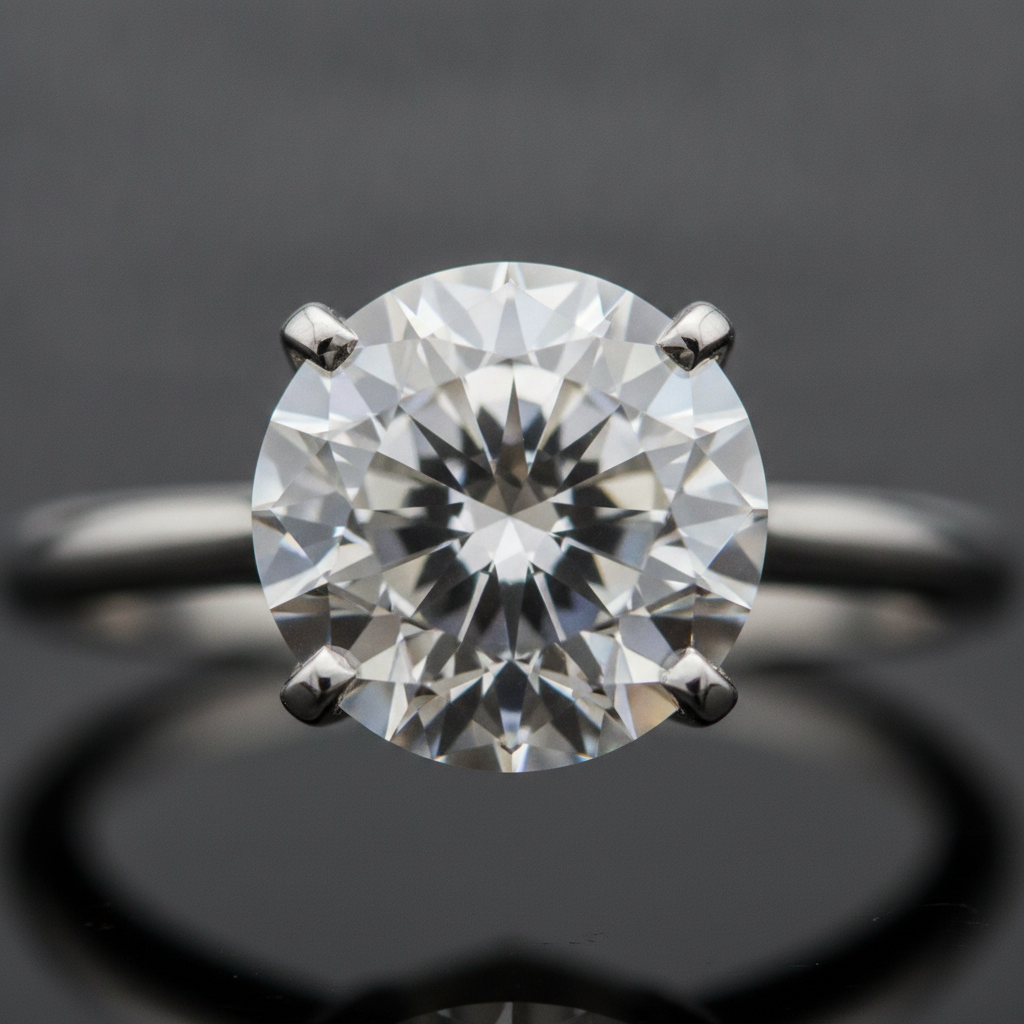
In our experience, low-profile solitaire or bezel heads ride smoothly under winter gloves and jackets—important for Northeast commutes. If you prefer a halo, ask for a compact halo diameter to keep snag risk low while gaining the 1–2 mm visual boost.
Shapes, Settings, and Approaches
Choose a 1 carat diamond wedding ring by pairing the shape you love with a setting that fits your lifestyle. Round maximizes sparkle; ovals elongate the finger; princess feels modern. Match prongs or bezel to activity level and pair with slim pavé or eternity bands for balance.
Shape drives personality; setting dictates protection and profile. Here’s a practical comparison to visualize a 1 ct across styles and to plan a cohesive stack.
| Shape | Typical face-up (mm) | Apparent size | Sparkle style | Durability notes | Pairs well with |
|---|---|---|---|---|---|
| Round Brilliant | ~6.4–6.6 | Balanced | Fire + scintillation | Edge protected; 4–6 prongs | 1.5–2.0 mm pavé band |
| Oval | ~7.6×5.6 | Larger coverage | Brilliant with bow-tie variance | Bezel or 6-prong reduces chip risk | Thin eternity ring |
| Princess | ~5.5×5.5 | Compact square | Sharp contrast pattern | V-prongs protect corners | Channel-set band |
| Cushion | ~6.0×6.0 | Softened outline | Crushed-ice to chunky | Double-claw prongs add romance | Vintage-inspired band |
| Emerald | ~7.0×5.0 | Elongated | Hall-of-mirrors | Bezel/prongs protect step edges | Slim plain gold band |
- Settings to consider: Solitaire (prong or bezel), halo (classic or hidden), three-stone (balanced side stones), cathedral (arched shoulders), low-profile (everyday comfort).
- Stacks that work: Eternity bands add uniform sparkle; contour bands hug solitaires; guard wraps stabilize spinning.
- Lab-grown vs natural: Both are real diamonds with the same carbon crystal structure; lab-grown expands access to higher color/clarity combinations at like-for-like carat weight.
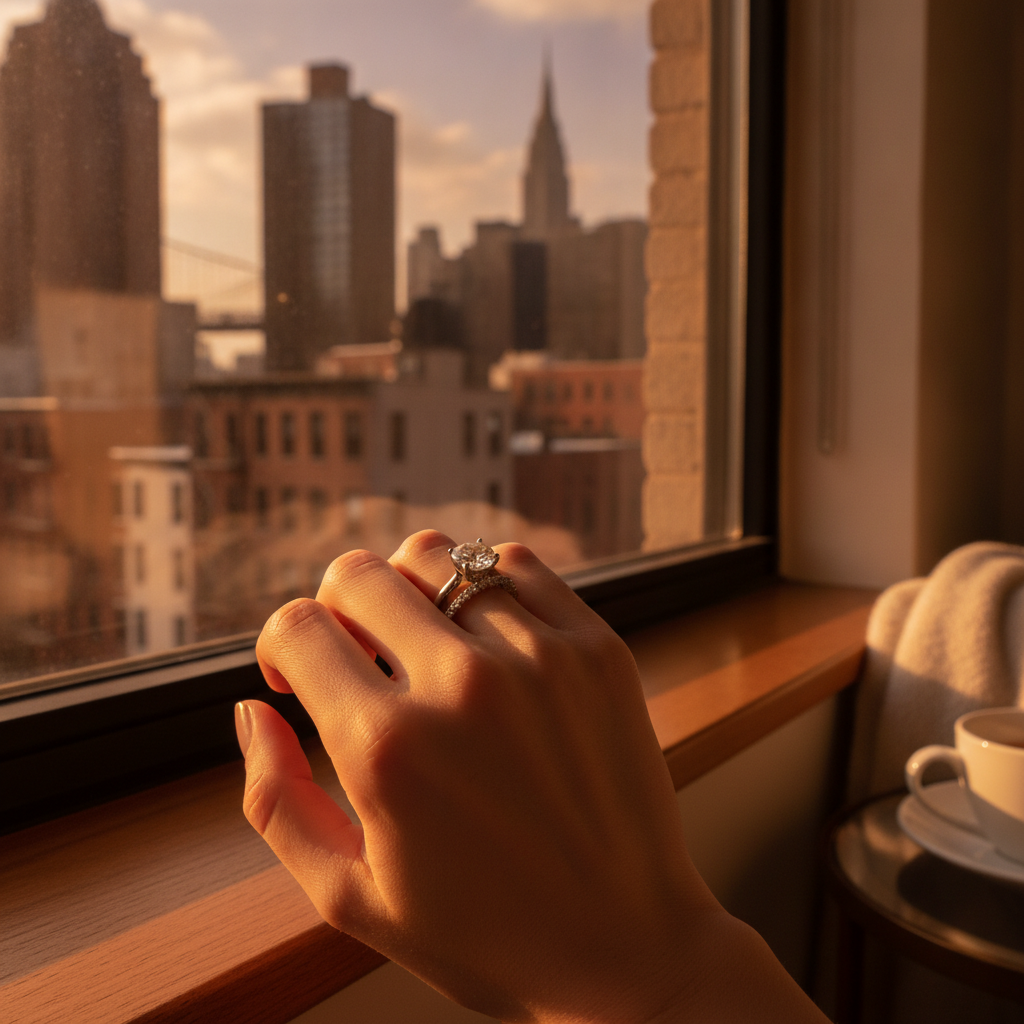
For deeper shape dives, our 1 carat princess cut guide explores corner protection, face-up spread, and stack ideas.
Price Factors for 1 Carat Rings (No Pricing)
Value for a 1 carat diamond wedding ring depends on cut precision, color and clarity choices, shape, setting complexity, metal type, and lab-grown vs natural origin. Optimize cut and eye-clean clarity first, then choose a protective setting and durable metal that aligns with your lifestyle.
We won’t list prices. Instead, here’s how to think about value and trade-offs so you can align design, performance, and longevity.
- Cut precision: Superior symmetry and proportions boost brightness; tiny angle shifts can change light return noticeably.
- Color/clarity balance: Near-colorless ranges and eye-clean clarity feel harmonious in daylight and soft indoor light.
- Shape dynamics: Rounds often appear slightly larger per mm; elongated shapes deliver finger coverage without more weight.
- Setting complexity: Halos, pavé, and custom galleries add labor and micro-setting work; bezels require precise machining.
- Metal selection: 14k (~58.3% gold) trades luster for toughness; 18k (~75% gold) offers richer hue; platinum adds density and patina.
- Origin choice: Lab-grown increases selection in higher color/clarity at the same carat; both origins are real diamonds.
For a fast orientation on 4Cs and sustainability, see this general overview on lab-grown vs natural diamonds. It summarizes how both share physical properties and how supply affects availability.
Best Practices for Selecting and Wearing
Prioritize cut quality and a secure setting, then size your band for comfort and longevity. Schedule professional inspections every 6–12 months and clean weekly at home. Plan a low-profile build for active lifestyles, and align wedding-band width with your engagement ring for a stable, elegant stack.
Practical steps shorten your path from browsing to unboxing. Here’s a proven checklist we use with couples at our Manhattan showroom and online across the U.S.
- Define sparkle goals: Brightness vs fire vs contrast—round for blend, emerald for clarity, oval for elongation.
- Lock cut first: Optimize light performance; it’s what your eyes notice from 2–4 feet away.
- Confirm eye-clean: View at 8–12 inches in daylight; rotate to check facets and inclusions.
- Pick protection: Six-prong or bezel for high activity; halos for presence with added side-stone security.
- Choose metal: Match skin tone and routine—14k for toughness, 18k for richness, platinum for heft and hypoallergenic comfort.
- Size precisely: Most U.S. women’s sizes fall between 5–7; confirm with a sizer and test during afternoon (hands slightly larger).
- Plan maintenance: Weekly gentle cleaning; pro checkups biannually; tighten prongs proactively before travel or big events.
- Build the stack: Start with the engagement ring; mirror band width within ±0.5 mm for a clean, locked-in look.
If you’re comparing origins, our overview on lab-grown engagement rings and this carat size guide can speed up shortlisting by day two of your search.
Tools and Resources
Leverage Diamond2Deal’s education hub, wedding ring guide, and appointment booking to confidently select a 1 ct ring. Use shape-specific guides, carat-size explainers, and lab-grown comparisons to narrow choices, then review in-stock rings with next-day shipping for fast, risk-reduced decisions.
We make learning and selection straightforward, whether you shop online or visit us in Manhattan.
- Read our in-depth wedding ring guide to align metals, widths, and finishes.
- Explore shapes with the 1 carat princess cut guide for square aesthetics and corner security.
- Compare origins in the lab-grown engagement rings overview and lab-grown diamonds buying tips.
- Understand sizing and visual impact with our carats of diamonds guide.
- Planning something unique? See our custom ring guide to map a made-for-you design.
Local considerations for Manhattan
- Schedule weekday appointments to avoid peak commuter hours near Grand Central and maximize hands-on time with our diamond experts.
- Winter gloves and jackets snag more—favor low-profile settings from November to March for hassle-free wear in New York County.
- For proposals or ceremonies near Rockefeller Center, ask for an inspection and ultrasonic clean 24–48 hours beforehand for peak brilliance.
For seasonal gifting, our in-stock promise and next-day shipping often mean you can finalize a design midweek and have it in hand before the weekend.
Case Studies & Examples
Real shoppers choose differently based on lifestyle: commuters pick low profiles; creatives favor halos or three-stone symmetry. By aligning cut, setting, and metal with daily routines, they achieve durable, beautiful results. These brief scenarios show how Diamond2Deal turns preferences into confident purchases.
Stories help translate specs into lived experience. Here are three quick composites drawn from our appointments and online consultations.
Example 1: The daily subway commuter
- Goal: Classic look with minimal snag risk.
- Build: 1.00 ct round, six-prong low-profile solitaire in 14k white gold; 1.8 mm pavé band.
- Why it worked: Low height slid under gloves; six prongs added redundancy; weekly home cleanings kept brilliance high.
Example 2: The creative professional
- Goal: Distinct silhouette with vintage cues.
- Build: 1.00 ct cushion in a halo with double-claw prongs; 18k yellow gold; slim contour band.
- Why it worked: Halo lifted visual size by ~1–2 mm; rich metal color complemented the cushion’s soft outline.
Example 3: The athletic weekend warrior
- Goal: Secure, sweat-friendly wear.
- Build: 1.00 ct oval in a full bezel on a 2.0 mm platinum shank.
- Why it worked: Bezel shielded edges; platinum’s density and hypoallergenic nature suited an active, sensitive-skin lifestyle.
Across these scenarios, the common thread is clarity about daily routines and a build that matches. That’s the fastest path to long-term satisfaction.
Frequently Asked Questions
The most common 1 carat ring questions focus on size appearance, durability, certification, and maintenance. A round measures ~6.5 mm, secure settings protect edges, reputable grading supports consistency, and weekly cleanings with semiannual inspections keep sparkle strong for years of daily wear.
How big does a 1 carat diamond look on hand?
A well-cut round 1.00 ct averages about 6.4–6.6 mm in diameter. On many size 5–7 hands, it covers much of the finger’s top segment, creating balanced presence. Elongated shapes (oval, emerald) look larger because they spread lengthwise across the finger.
Is a bezel or prong setting better for everyday wear?
Both work well. Prongs maximize light and keep the stone airy; six prongs add security. Bezels surround the edge for extra protection and reduced snagging. Active lifestyles or winter glove season often favor low-profile bezels, while classic solitaires shine with prongs.
Should I choose lab-grown or natural for a 1 carat ring?
Both are real diamonds with the same crystal structure and optical properties. Lab-grown often expands access to higher color and clarity at a given carat weight, while natural appeals to those who prefer geological origin. Focus on cut quality, then choose the origin that fits your goals.
How do I keep my 1 carat wedding ring sparkling?
Clean gently at home weekly and schedule a professional inspection every 6–12 months. Remove your ring for heavy lifting, lotions, and chlorine. Before major events or travel, ask for a quick ultrasonic clean and prong check to ensure peak brilliance and security.
Key Takeaways
Lock in cut quality, pick a protective setting that suits your routine, and align metal with comfort. Verify grading, check sizing in afternoon light, and plan simple maintenance. Use Diamond2Deal’s education hub and in-stock selection to finalize your 1 ct ring efficiently and confidently.
- Cut and setting decisions drive appearance more than any other choices.
- Low profiles help with gloves, pockets, and active days; halos add visual size.
- 14k is ~58.3% gold for toughness; 18k is ~75% for richer tone; platinum adds weight and patina.
- Weekly cleaning and biannual inspections keep brilliance and security on track.
- Diamond2Deal supports you with next-day shipping on many styles and appointment-based guidance.
Conclusion
A 1 carat diamond wedding ring delivers classic presence with everyday practicality. When you match cut, shape, setting, and metal to your lifestyle, you’ll love the look for decades. Our Manhattan team and online education make the process clear, quick, and genuinely enjoyable.
Choosing a 1 carat diamond wedding ring should feel exciting—not overwhelming. If you want a quick start, browse our education guides, shortlist a few in-stock styles, then book a conversation with a diamond expert. We’ll help you compare options side-by-side and finalize a ring that fits your life now and later.
Related Articles
Explore deeper shape guides, wedding band pairing strategies, and lab-grown diamond education within our resource library to build the perfect bridal stack.
Prefer personal guidance? Book a one-on-one with our diamond experts in Manhattan or virtually. We’ll translate preferences into a durable, beautiful 1 ct bridal set—fast.
Many of our most popular designs qualify for next-day shipping, so you can move from decision to delivery with confidence.
For a quick seasonal proposal planning note, this Valentine’s proposal guide offers timing ideas, while this lab-grown vs natural summary and a general engagement ring choosing guide provide additional perspectives.