

1 Carat Princess Cut Diamond: Spot Best Value 2026
A 1 carat princess cut diamond is a square brilliant weighing one carat that typically faces up around 5.4–5.7 mm. At Diamond2Deal in Midtown Manhattan (420 Madison Ave), our experts help you compare sparkle, symmetry, and settings so your 1 ct princess cut looks bigger, brighter, and secure for everyday wear.
Summary
A 1 carat princess cut diamond balances bold scintillation with a modern square silhouette. To maximize beauty, prioritize light performance, protect the corners, and choose a complementary setting. Verify certification, review table/depth, inspect clarity near points, and match metal color for a crisp, eye-clean look.
This complete guide is written for couples and gift buyers who value certified quality, education-first guidance, and fast delivery. You’ll learn how to judge light return, read measurements, compare shapes, and choose settings that boost perceived size—using examples from Diamond2Deal’s lab-grown and fine gold collections.
- Understand measurements, facet pattern, and anatomy
- Identify cut indicators that enhance brightness and fire
- Pick clarity/color ranges that stay eye-clean at 1 ct
- Compare princess vs. round and oval at equal weight
- Select settings that protect corners and add spread
- Decide between lab-grown and mined with confidence
At a glance: what this guide covers
- What is a 1 carat princess cut diamond?
- Why the 1 ct size matters for style and durability
- How to evaluate cut without a universal grade
- Real size appearance, mm ranges, and ratios
- Clarity, color, and fluorescence priorities
- Shape comparisons and setting strategies
- Lab-grown vs. mined: what stays the same
- Local Manhattan tips for faster, calmer shopping
Jump to a section
- What is a 1 ct princess cut?
- How to evaluate cut quality
- Real size & measurements
- Clarity, color, fluorescence
- Princess vs. round & oval
- Best settings
- Lab-grown vs. mined
- Value drivers beyond 4Cs
- Manhattan buying tips
- Tools & resources
- Selection checklist
- Case studies
- Best practices
- Key takeaways
What is a 1 carat princess cut diamond?
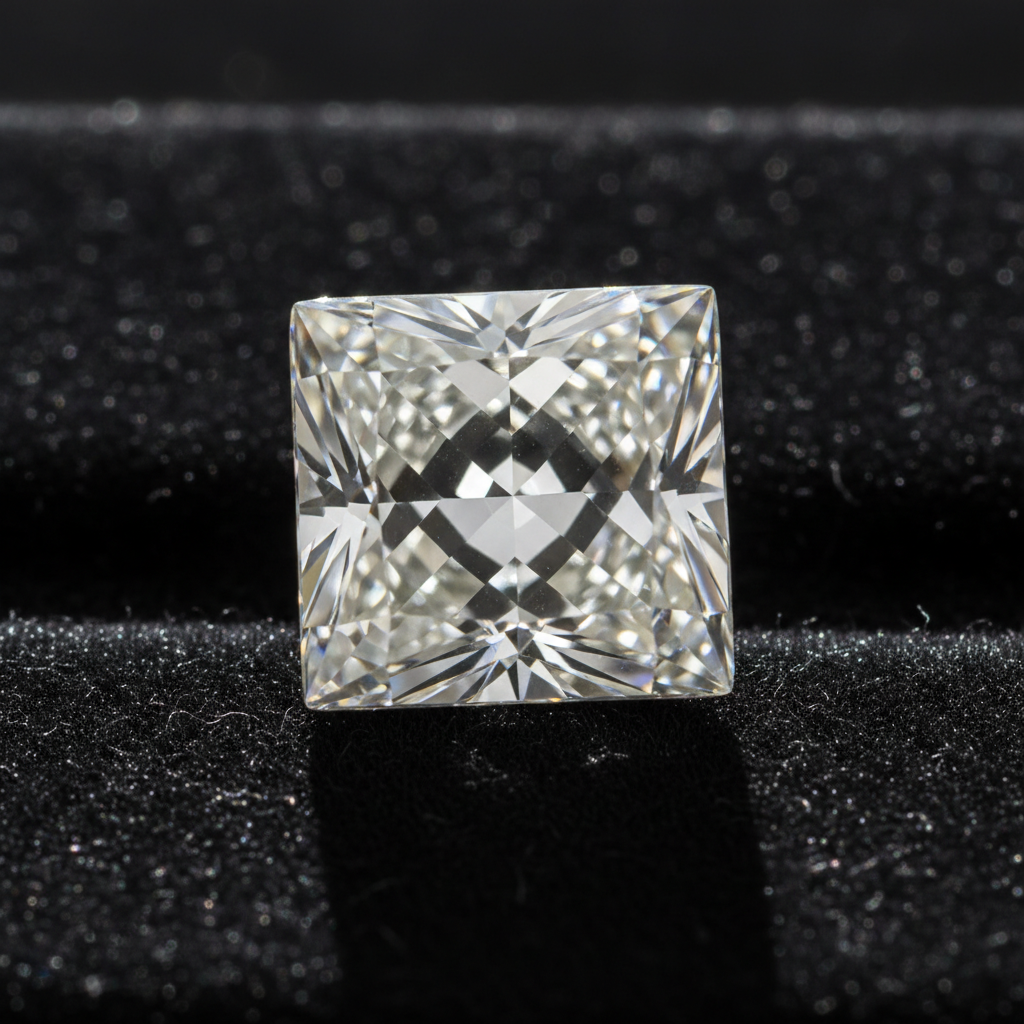
A 1 carat princess cut diamond is a square brilliant weighing 1.00 carat on a lab scale. Typical face-up size is ~5.4–5.7 mm, with depth near 68–75% and table near 68–75%. Sharp corners, chevron facets, and high scintillation define its modern, geometric sparkle.
The anatomy includes a square outline with four pointed corners, a table, crown, pavilion, girdle, and chevron facets that create on/off flashes. Square ratios close to 1.00 deliver the classic look. Slight rectangular ratios (around 1.02–1.05) can add presence in certain settings by lengthening one axis.
Shoppers often compare face-up size to rounds. Because princess cuts hold more weight in depth, they frequently face up smaller in millimeters versus a 1 ct round. Optimized proportions and reflective settings can close the perceived size gap by 1–2 mm without changing carat weight.
For shape context, see a high-level overview of diamond outlines in this shapes explainer. It summarizes how facet architecture drives the way each cut handles light and contrast.
Why the princess cut at 1 ct matters
A 1 ct princess cut balances size, sparkle, and durability. With protected corners and well-tuned proportions, you get bold scintillation in a compact outline. The shape suits solitaires, halos, and three-stone rings—where cut quality dictates whether it looks lively, symmetrical, and bright.
Three levers drive satisfaction: overall brightness, corner integrity, and color tone. Brightness hinges on symmetry and crown/pavilion angles. Corners need security via V-prongs or bezel elements. Color appears stronger in areas of leakage; pairing with white metals helps maintain a crisp face-up in the G–I neighborhood.
In our experience, clients who prioritize cut quality (evenly lit table, minimal windowing, balanced chevrons) report stronger first impressions on unboxing and better daily sparkle under mixed lighting. That’s why we start with light performance before comparing smaller paper-grade differences.
How to evaluate cut quality for princess diamonds
Judge cut by performance, not a single label. Look for even brightness across the table, defined scintillation when the stone tilts, and corners without extreme thinness. Useful ranges: table ~68–75%, depth ~64–75%, thin–medium girdle, and no obvious leakage under the table.
Unlike rounds, there’s no universal “Excellent” grade for princess cuts. Videos and light maps matter. You want crisp on/off flashes, not a flat glare patch. The table shouldn’t wash out; the center shouldn’t go dark. Corner durability correlates with girdle thickness at the points—avoid extremely thin tips or chipped corners.
Performance tools simplify this. ASET or Ideal-Scope images reveal where light returns (red/green) versus leaks (white). When available, prioritize stones with strong return and controlled leakage. For a quick refresher on the 4Cs and how they interact, review our internal diamond grading guide. It explains why cut influences brightness more than any other C.
For terminology and grading context, a clear summary of the 4Cs framework appears in this 4Cs overview. It shows how color, clarity, and carat interact with cut to shape what you actually see.
Size appearance and measurements at 1 carat
Most 1 ct princess diamonds measure roughly 5.4–5.7 mm across. Depth and table control “spread.” Excess depth hides weight where you can’t see it. Balanced proportions and high-contrast scintillation make a stone read larger, especially with reflective settings or halos that add 1–2 mm of apparent width.
Why two 1 ct stones look different: depth distribution and cut. A deeper stone can face up closer to 5.3 mm; a better-spread one might reach 5.7 mm. Tracking length × width in millimeters makes size comparisons objective. Quick reference: a 1 ct round often faces up ~6.3–6.5 mm; princess runs smaller due to depth.
Carat weight remains a mass measure. Perceived size is visual. A succinct primer on mass vs. millimeters appears in this carat weight guide. When you read a report, confirm dimensions against the table/depth—those two numbers predict spread better than carat alone.
Clarity, color, and fluorescence: what to prioritize
At 1 ct, eye-clean clarity commonly falls in VS–SI depending on inclusion type and placement. Inspect corners first: feathers near points pose more risk than tiny crystals under the table. Pair G–I color with white metals for a crisp face-up; medium fluorescence is usually neutral-to-helpful outdoors.
Corner stress is real for pointed shapes. We scrutinize grading plots and magnified videos to avoid vulnerable feathers or notches at the tips. Eye-clean SI stones can deliver excellent value when inclusions hide in facet junctions—especially beneath strong scintillation that masks tiny features.
Color perception changes with setting and light. White gold or platinum keeps G–I looking bright; yellow gold flatters warmer tones. Fluorescence often brightens near-colorless grades in daylight. We evaluate each diamond under varied lighting to ensure the face-up impression matches your expectations at home and outdoors.
Princess vs. round and oval at 1 ct
Princess cuts deliver square, high-contrast sparkle; rounds maximize spread; ovals elongate the finger. Expect a 1 ct princess to face up about 5–10% smaller than a 1 ct round, though optimized proportions and strategic settings minimize the difference and emphasize modern style.
What changes across shapes:
| Feature | Princess (1 ct) | Round (1 ct) | Oval (1 ct) |
|---|---|---|---|
| Typical L×W | ~5.4–5.7 mm | ~6.3–6.5 mm | ~7.5–8.5 × ~5.3–5.8 mm |
| Outline | Square with corners | Perfect circle | Elongated ellipse |
| Perceived Size | Compact, bold | Largest face-up | Longest finger look |
| Sparkle Style | High-contrast flashes | Balanced brilliance | Broad, rolling flashes |
| Setting Tips | V-prongs/halo | Any prong | East–west options |
Considering similar square styles? Our comparison with cushions (same weight, different facet style) is a good companion read in this 1 carat cushion cut guide. It shows how facet patterns trade sharp flashes for “pillowy” fire.
Settings that make a princess cut shine
Protect corners with V-prongs or semi-bezels, elevate brightness with reflective baskets, and add spread with petite halos. Cathedral and channel shoulders complement the square silhouette. Band width around 1.6–2.0 mm increases contrast so the 1 ct center reads larger without changing weight.
In Manhattan, we often size the head to your stone’s exact millimeters so corners center precisely. Small alignment changes affect perceived symmetry. Four-prong princess heads with V-tips blend security and light. Low-set solitaires reduce snag risk for active wear—while halos add 1–2 mm of apparent spread.
For a sense of how a certified solitaire presents in real photos, review this IGI-certified solitaire example from our shop. The model is round, but the certification and clean mounting illustrate what to expect in hand: see a certified solitaire layout.
Lab-grown vs. mined for 1 ct princess cuts
Lab-grown and mined diamonds are the same mineral—crystalline carbon—with identical optical and physical properties. Lab-grown options expand access to higher color/clarity at a target budget. Certification and performance imagery help you compare quality fairly across both origins.
Diamond2Deal specializes in certified lab-grown diamonds across engagement rings, studs, tennis bracelets, and pendants. Many clients choose lab-grown to prioritize size and sparkle, then invest in a premium setting. Others prefer mined for tradition and rarity. We support either path with education-first, no-pressure guidance.
If you’re exploring modern options, our overview on lab-grown engagement rings covers decision checkpoints, from certification to long-term wear: learn about lab-grown rings. It pairs well with an appointment so you can compare brightness and finger coverage in real time.
Want quick, expert guidance?
Book a short appointment with our diamond experts—virtual or in-person at 420 Madison Ave. Bring heirloom bands, preferred widths, and photos. We’ll narrow choices to 2–3 finalists and preview settings on your hand so you can decide confidently. Start here: Diamond2Deal home.
Value drivers beyond the 4Cs (not pricing)
Beyond the 4Cs, value shows up in proof of light performance, craftsmanship of the setting, brand support (warranty/returns), and delivery speed. These factors shape satisfaction for years and often matter more than a single grade difference on paper.
Documentation and support reduce risk. Our education hub, 1-year warranty, easy 30-day returns, and next-day shipping on thousands of items ensure you’re covered from selection to unboxing. Fit and finish—secure V-prongs, polished galleries, precise sizing—impact comfort and longevity every time you wear the ring.
For buyers who want to compare how different cuts look in real jewelry, practical cross-category pieces help train the eye. For instance, noting brightness in a bracelet line can clarify preferences for your center stone; see an example of consistent, certified sparkle in a line of stones here: lab-grown tennis bracelet example.
Local buying tips for Manhattan and New York County
In Manhattan, plan appointments to avoid peak midday crowds and bring any heirloom bands to match metal tone and width. Our Midtown location makes same-day comparisons easy—you can validate millimeter spread, sparkle, and setting comfort in a single visit or short virtual call.
Local considerations for Manhattan
- Time your visit near Grand Central in the morning or late afternoon; 10:00–11:00 AM often means calmer lighting and quicker side-by-side views.
- Holiday demand spikes from late November through February; book early to secure your preferred setting and turnaround.
- For photos around Bryant Park, white metals create a cooler winter tone; yellow gold warms skin tones in softer evening light.
Tools and resources to use
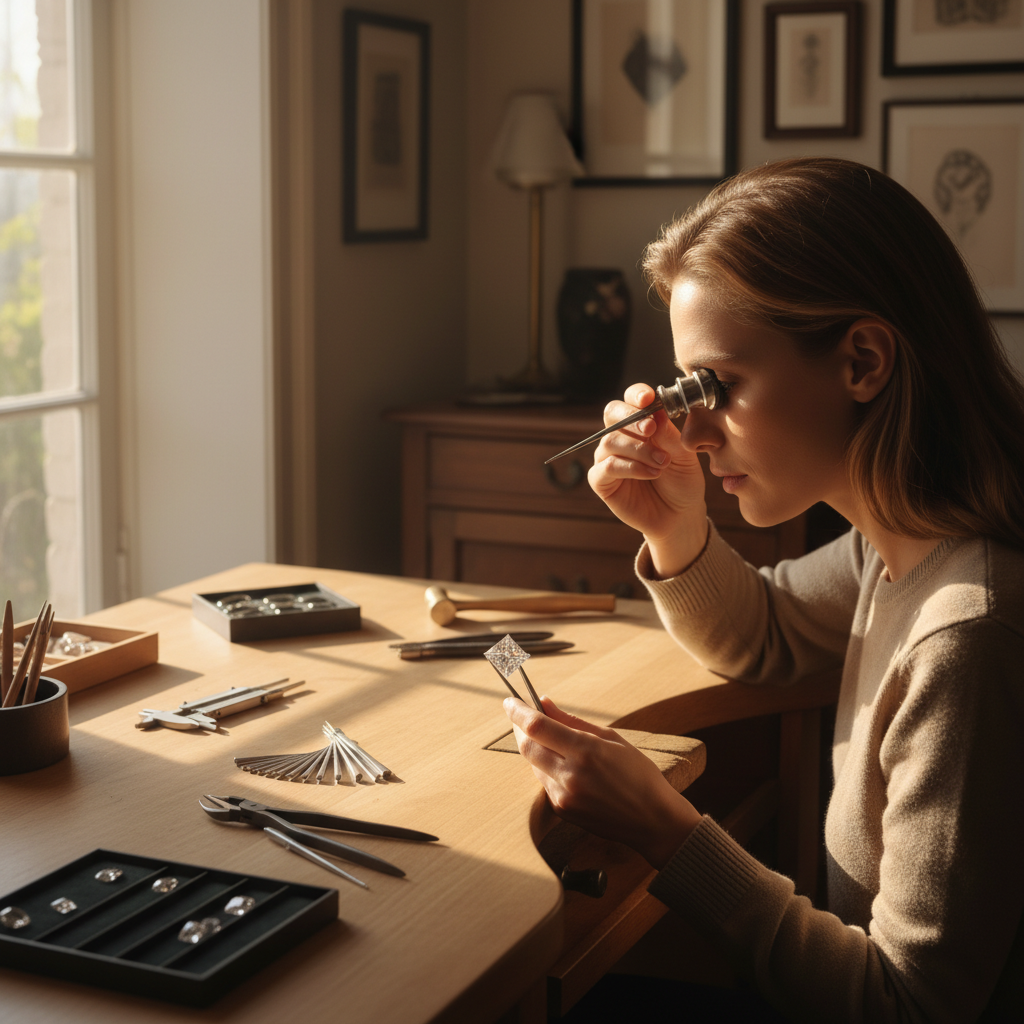
Use grading reports, high-resolution videos, and light maps (ASET/Ideal-Scope) to compare candidates. A ring sizer, millimeter ruler, and printable checklist make at-home evaluations consistent. Pair these with an education hub and a brief appointment to translate paper grades into real sparkle.
- Education hub: the 4Cs, metals, and sustainability—start with our diamond 4Cs guide.
- Lab-grown insights: benefits, certification, and wear—see lab-grown engagement ring guide.
- Custom fit: if your vision is unique, explore our custom rings overview.
- Shape comparisons: square vs. cushion in this 1 ct cushion cut article.
Step-by-step selection checklist
Follow a five-step path: define your look, shortlist certified stones, confirm light performance, choose a protective setting, and finalize fit. This sequence keeps the focus on what you’ll see daily—sparkle, shape, and comfort—rather than paper grades alone.
- Define style: solitaire, halo, three-stone, or a unique guard-wrap design.
- Shortlist certified stones: request videos, stills, and light maps for 3–5 candidates.
- Validate performance: check for even brightness and sturdy corners; avoid extremely thin tips.
- Choose the setting: V-prongs or semi-bezel for protection; reflective basket or halo for spread.
- Finalize fit: confirm ring size, band width (e.g., 1.6–2.0 mm), metal color, and height for comfort.
Case studies and real examples
Seeing stones side by side accelerates decisions. We regularly compare 1 ct princess candidates, then place them in your preferred setting for a live preview. Clients choose faster—and with more confidence—after observing brightness patterns, millimeter spread, and comfort on their own hand.
Example: Classic solitaire, lab-grown
A 1 ct lab-grown princess with crisp chevrons, set in 14K white gold with V-prongs, looked bright in office light and daylight. The client chose a 1.7 mm band for contrast. The center read larger without changing carat weight, thanks to higher edge-to-edge brightness.
Example: Petite halo for presence
A 1 ct mined princess in a petite halo gained roughly 1–2 mm of apparent spread. A reflective basket and channel-set band amplified on/off flashes—meeting the client’s request for evening sparkle without raising the profile height beyond daily comfort.
Example: Semi-bezel for active lifestyles
An athletic client selected a low-set semi-bezel that cradled corners while leaving the crown open. The result: snag-safe, glove-friendly wear with consistent brightness under gym lighting—proof that design details can matter as much as grades in day-to-day satisfaction.
Best practices for buying a 1 ct princess cut
Prioritize light performance, ensure durable corners, and tailor the setting to your lifestyle. Verify dimensions, seek eye-clean clarity, and pick metal tones that flatter your skin and wardrobe. Use videos and light maps to confirm the spark you want before anything is set.
- Start with cut: aim for even table brightness and lively scintillation when tilted.
- Guard the corners: V-prongs or semi-bezels reduce chip risk at pointed tips.
- Read the report: confirm mm, table/depth; avoid extremely thin girdle at points.
- Target eye-clean: VS–SI can be ideal at 1 ct depending on inclusion type and location.
- Match metals: G–I looks crisp in white metals; warmer tones flatter yellow/rose gold.
- Boost spread: halos and reflective baskets often add 1–2 mm of apparent width.
- Confirm comfort: low-set profiles resist snags; band width around 1.6–2.0 mm increases contrast.
- Use light maps: ASET/Ideal-Scope highlight leakage vs. return before you commit.
- Document support: prioritize warranty, returns, and fast fulfillment for peace of mind.
- Think long term: plan guard wraps or anniversary bands that stack cleanly beside your solitaire.
Key takeaways
A 1 ct princess cut can look striking and substantial with the right cut, corner protection, and setting. Validate performance with videos and light maps, confirm dimensions, and match metals to your style. These steps reliably increase perceived size and daily sparkle.
- Face-up size: ~5.4–5.7 mm at 1 ct; spread depends on depth/table.
- Protection first: V-prongs or semi-bezel for corner durability.
- Perceived size hacks: slim bands, reflective baskets, and petite halos.
- Clarity/color: eye-clean VS–SI; G–I stays bright in white metals.
- Process: shortlist, performance-check, protect, then finalize fit.
Frequently Asked Questions
Most buyers ask about size on the hand, ideal clarity, fluorescence, and whether lab-grown stones are “real.” Here are concise answers so you can move forward confidently with your shortlist and setting choice.
How big does a 1 carat princess cut look on the hand?
Most 1 ct princess cuts measure about 5.4–5.7 mm and read compact but bold. A slender band and bright corners make it appear larger. Halos and reflective baskets also increase perceived spread by roughly 1–2 mm without changing carat weight.
What clarity is best for a 1 ct princess?
Aim for eye-clean stones, often in the VS–SI range depending on inclusion type and placement. Watch for feathers at or near the corners, which can impact durability more than tiny crystals under the table. Always review magnified images and videos across lighting conditions.
Does fluorescence help or hurt?
Fluorescence is usually neutral to slightly helpful in outdoor light for near-colorless grades. Very strong fluorescence can make a few stones look hazy, but most medium levels are fine. Evaluate each diamond under multiple lighting conditions to be sure.
Are lab-grown princess diamonds real diamonds?
Yes. Lab-grown diamonds are chemically, physically, and optically identical to mined diamonds. Choose certified stones and review the same quality factors—cut, color, clarity, and carat—to compare options fairly. Many shoppers appreciate access to higher grades within their target budget.
Conclusion and next steps
Prioritize what you’ll see every day: bright performance, protected corners, and a setting that fits your style and routine. With a credible lab report and thoughtful design, a 1 ct princess delivers modern sparkle, comfort, and long-term confidence—lab-grown or mined.
Ready to compare finalists side by side? Book a quick appointment, bring heirloom bands, and preview settings in person or virtually. Start with our education hub, then narrow to two or three stones. We’ll help you translate paper grades into real-world sparkle—fast, friendly, and education-first.