

Custom Wedding Rings: The Complete Guide in 2026
Custom made wedding rings are individually designed bands that reflect your story, style, and everyday needs. At Diamond2Deal in Manhattan (420 Madison Ave, New York County), our team guides you from concept to finished piece using certified materials and expert craftsmanship. The result is a lifetime-fit ring that feels personal from day one.
By Mit Trivedi, President — Diamond2Deal | Last updated: May 31, 2026
Overview
This guide explains how to design custom wedding rings from first sketch to final polish. You’ll learn options for metals, diamonds, settings, timelines, sizing, and maintenance—plus Manhattan-specific tips. Use it to plan confidently, avoid missteps, and collaborate smoothly with Diamond2Deal’s experts.
Designing a ring should feel exciting—not overwhelming. In this complete guide, we organize every decision so you can move forward with clarity and confidence.
- What custom really means (and what it doesn’t)
- How the design process works, step by step
- Popular approaches: from made-to-order to fully bespoke
- Materials: metals, lab-grown diamonds, and accent stones
- Durability, comfort, and lifestyle best practices
- New York logistics: timelines, appointments, and shipping
Keep this page handy as a checklist. You’ll find examples from our Manhattan team, plus direct links to deeper resources like our wedding ring guide and engagement ring guide.
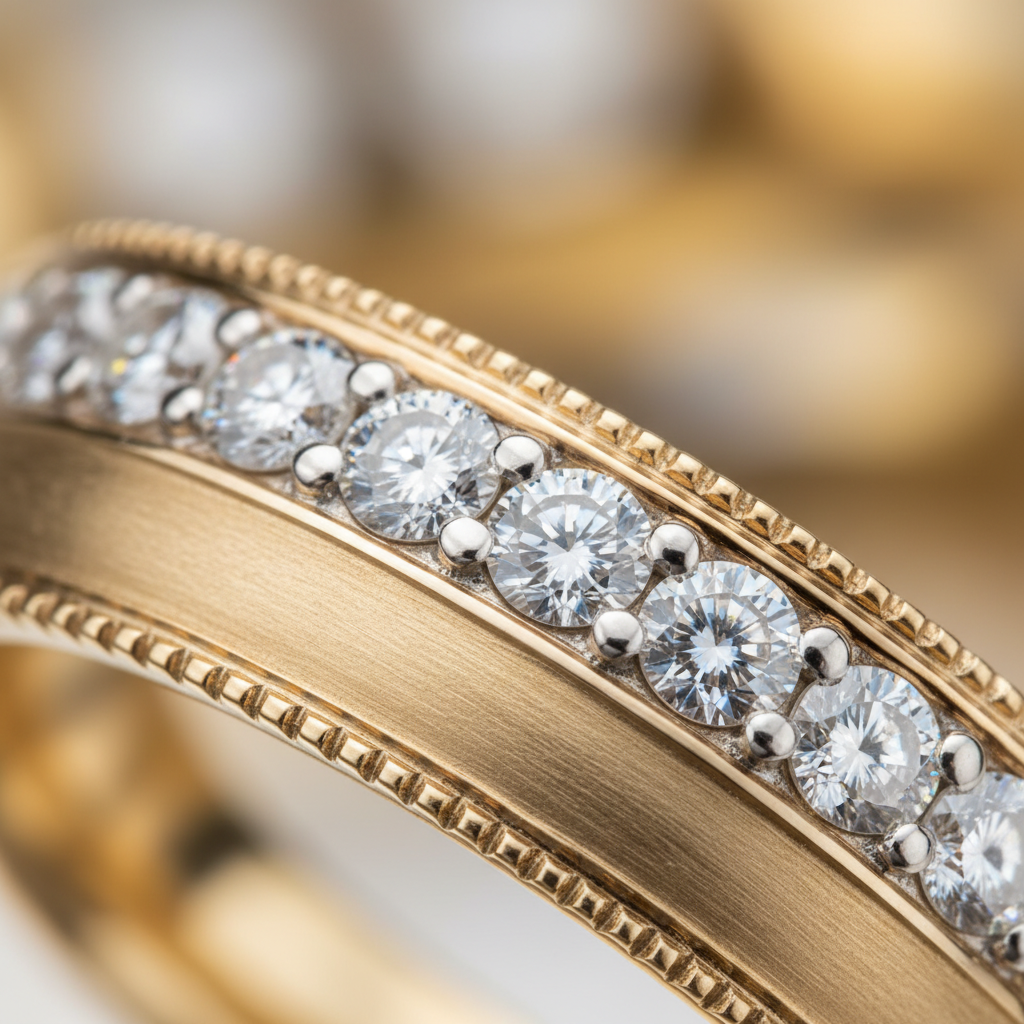
What are custom wedding rings?
Custom wedding rings are bands designed around your preferences—metal, profile, width, texture, and stones—then crafted to your exact size. Unlike off-the-shelf pieces, they’re tailored for comfort, durability, and meaning. At Diamond2Deal, you choose details, approve visuals, and receive a ring made just for you.
In plain terms, “custom” means your ring is built around your choices. It can range from personalizing an existing style to creating something entirely new from a sketch.
-
Personalization spectrum:
- Made-to-order: choose width, metal, finish, and stone specs on a proven design.
- Semi-bespoke: modify elements (shank shape, setting height, textures).
- Fully bespoke: start from concept or heirloom inspiration and build unique CAD.
- Fit-first build: your ring is sized, weighted, and balanced for everyday wear.
- Material control: select 14k/18k gold or platinum; add lab-grown diamonds or gemstones.
Not sure where to begin? Our lab-grown diamond engagement rings overview helps translate the 4Cs into real-life sparkle and practicality.
Why custom matters for your life and story
Custom rings align style, meaning, and lifestyle. You control comfort, metal choice, and stone security, while honoring personal milestones. The result is a ring that wears well daily, tells your story, and stays future-proof if you plan stackable bands or anniversary upgrades.
We’ve seen the difference this makes. When metal, profile, and setting match your routine, your ring looks better and lasts longer.
- Comfort you notice daily: choose a comfort-fit interior, curved edges, and the right weight.
- Symbolism that feels honest: engravings, birthstones, or design cues from your proposal or heritage.
- Future-ready design: plan for a guard wrap, eternity band, or anniversary ring to stack seamlessly. Explore stacking in our eternity ring styles.
- Ethical clarity: certified lab-grown diamonds pair beauty with traceable origin.
Custom is also practical. A low-sitting setting avoids snagging. Optimized prongs protect stones. Daily wear becomes worry-free.
How the custom design process works
A great custom process follows clear stages: discovery, design, visualization, approval, crafting, and delivery. At Diamond2Deal, you’ll review sketches or CAD, confirm materials and size, and track progress through finishing and quality checks before your ring ships or is picked up in Manhattan.
- Discovery: Share inspiration, lifestyle, and finger size. We align on look, fit, and future stacking plans.
- Design brief: We summarize specs: metal, width, profile, finish, setting style, stones, and engraving.
- Visualization: See drawings or CAD renderings for proportions and stone placement.
- Refinement: Tweak height, shank thickness, micro-prong counts, or pavé spacing.
- Approval: Confirm final specs and size.
- Crafting: Casting, setting, finishing, and polishing under expert quality control.
- Delivery: Pick up in Manhattan or receive insured shipping nationwide with our next-day options on qualifying pieces.
Want a deeper primer on engagement-ring anatomy before you begin? Visit our engagement ring guide to understand shanks, settings, and profiles.
Types of custom approaches
Custom approaches range from personalizing a proven design to building a one-of-a-kind heirloom. Choose made-to-order for speed, semi-bespoke for refined tweaks, or fully bespoke for original artistry. The right path balances timeline, uniqueness, and how specific your vision is.
Made-to-order (fastest path)
- Start with a known style; select width (e.g., 1.8–6 mm), metal, finish, and stone options.
- Ideal if you love a classic band but want a precise fit and thoughtful details.
- Pairs well with our education-first approach and wedding ring guide.
Semi-bespoke (signature refinements)
- Adjust shank profile, setting height, pavé layout, or add milgrain/hammered textures.
- Great for matching an existing engagement ring’s silhouette.
- Use engravings or accent stones for meaningful touches.
Fully bespoke (one-of-a-kind)
- Collaborate from concept to original CAD—perfect for heirloom remounts or symbolic motifs.
- Expect more design rounds to perfect proportion and wearability.
- Our team balances creativity with durability so the design wears beautifully every day.
Unsure which route fits? Book a diamond-expert appointment to review options and timelines side by side.
Choosing materials: metals, diamonds, and gemstones
Select metal for color and durability, then choose stones for brilliance and meaning. 14k or 18k gold and platinum lead for wedding bands. Lab-grown diamonds deliver certified sparkle with traceable origin. Balance the 4Cs with secure settings that fit your lifestyle.
Metals: color, strength, and feel
| Metal | Color | Everyday durability | Notes |
|---|---|---|---|
| 14k Gold | Yellow/White/Rose | Excellent | Balanced hardness; great for active wearers. |
| 18k Gold | Yellow/White/Rose | Very good | Richer color; slightly softer than 14k. |
| Platinum | Natural white | Outstanding | Heft and hypoallergenic; develops a patina many love. |
Diamonds and accents
- Lab-grown diamonds: same crystal structure and beauty as mined, with certification and traceable origin. See independent lab-grown vs natural guide for broader context.
- The 4Cs in practice: balance color and clarity for bright pavé; prioritize cut for center stones.
- Setting security: micro-prongs, channels, or bezels keep stones protected in daily wear.
Gemstone options
- Birthstones or heirloom gems add personal meaning.
- Consider hardness and toughness if you’re active.
- Use protective bezels or low-profile settings for softer stones.
Need a primer on settings? Review a broad overview of common setting types before finalizing your CAD.
Design best practices for daily comfort and longevity
Prioritize comfort-fit interiors, balanced thickness, and protected settings. Choose finishes and textures that suit your routine, and match the band profile to your engagement ring so sets stack flush. Plan for cleaning and maintenance to keep the ring secure and brilliant.
- Fit and width: ensure accurate sizing; typical bands range around 1.8–8 mm depending on style.
- Profile and stacking: align heights so engagement and wedding bands sit flush.
- Stone safety: choose low-snag settings; consider bezel or channel for active hands.
- Finish durability: brushed and hammered textures hide micro-scratches; high polish offers classic shine.
- Care plan: regular cleaning and checks keep prongs tight and pavé secure.
For inspiration on future stacks, browse our eternity ring styles and explore milestone ideas in anniversary bands tips.
Designing in Manhattan: timelines and logistics
In Manhattan, New York County, custom workflows move quickly when decisions are organized. Schedule an appointment near Rockefeller Center, review CAD remotely, and use insured shipping or pickup at 420 Madison Ave. Build in buffer time for engraving and final quality checks.
Working locally gives you options: in-person try-ons, rapid feedback loops, and secure pickup. Remote clients benefit from fast visuals and nationwide insured delivery.
Local considerations for Manhattan
- Plan appointments around Midtown foot traffic; our location is steps from Rockefeller Center and close to Grand Central for easy access.
- Holiday rushes increase demand; start designs early if you’re targeting fall weddings or year-end proposals.
- For surprise proposals, coordinate discrete delivery timing and signature requirements with our team.
If you’re early in the journey, skim our engagement ring guide for terminology, then bring notes to your appointment.
Tools and resources you can use
Use education hubs, style guides, and expert appointments to streamline choices. Diamond2Deal offers learning resources, fast visuals, and nationwide shipping. Add third-party explainers for settings and lab-grown context if you want extra background before finalizing CAD.
- Start with our structured wedding ring guide.
- Refresh diamond basics with our lab-grown overview.
- Browse independent setting primers to visualize security and style.
- Explore external find a diamond overview if you’re comparing approaches to stone selection.
Prefer guided help? Book an expert conversation to review materials, timelines, and personalization options in one sitting.
Real-world examples from our design desk
Three recent custom projects show what’s possible: a low-profile pavé band matched to a solitaire, a textured men’s band with inside engraving, and a slim stackable guard designed for future anniversaries. Each balanced beauty, comfort, and everyday durability.
Example 1: Flush-fit pavé band
- Goal: match a round solitaire’s height; avoid snagging.
- Approach: 14k white gold, micro-pavé half-eternity, low-sit profile.
- Result: seamless pairing; bright sparkle without catching sweaters.
Example 2: Textured men’s band
- Goal: classic look with subtle uniqueness.
- Approach: 14k yellow gold, brushed center, polished edges, comfort fit, personal engraving inside.
- Result: timeless daily wear with a private message.
Example 3: Future-ready guard wrap
- Goal: design a wedding band that frames today’s ring and supports future anniversary stacks.
- Approach: slim curved guard with milgrain detail and prong-set accents.
- Result: elegant now, flexible for future custom engagement rings or milestone bands.

Lab-grown vs natural diamonds: quick comparison
Both lab-grown and natural diamonds are real diamonds with identical optical and physical properties. Lab-grown offers traceable origin and value; natural offers geological rarity. Choose based on meaning, certification, and how you want to allocate budget across the 4Cs and metal.
| Aspect | Lab-Grown Diamond | Natural Diamond |
|---|---|---|
| Composition | Pure carbon, same crystal structure | Pure carbon, same crystal structure |
| Certification | Commonly certified; clear specs | Commonly certified; clear specs |
| Origin | Traceable, modern production | Geological rarity |
Want broader context from outside sources? Read an independent lab-grown vs natural overview alongside our education resources.
Frequently Asked Questions
These quick answers address how custom made wedding rings work, what to expect for fit and care, and how to plan timelines. For deeper help, book an appointment and bring your notes—we’ll translate ideas into a durable, beautiful design.
What does “custom” include for wedding rings?
Customization can span metal choice, width, profile, finish, setting, accent stones, engraving, and interior comfort-fit. We can personalize a proven style or create a one-of-a-kind design from a sketch. You approve visuals before crafting begins.
How do I pick the right metal?
Match metal to lifestyle and color preference. 14k gold balances hardness and shine, 18k has richer color, and platinum offers natural white tone and heft. Consider how finishes age and whether you want hypoallergenic properties.
Are lab-grown diamonds real diamonds?
Yes. Lab-grown and natural diamonds share the same crystal structure and optical properties. Many are certified with documented specs. Choose based on meaning, traceability, and how you want to balance the 4Cs with design details.
How do I make a custom band stack well with my engagement ring?
Bring your engagement ring’s measurements and photos. We’ll align heights, profiles, and curvature so bands sit flush. Many clients choose a low-profile pavé, a curved guard, or a plain comfort-fit band for versatile stacking.
Key takeaways and next steps
Choose a custom approach that fits your timeline and vision, align metal and setting with your daily life, and use education resources to confirm decisions. Book an appointment to translate ideas into CAD, then approve and enjoy a ring made uniquely for you.
- Start with lifestyle: fit, width, and stone security.
- Pick metal for color and durability; match your engagement ring’s profile.
- Use resources like our wedding ring guide to prep.
- Decide between made-to-order, semi-bespoke, or fully bespoke.
Ready to design? Book a friendly, expert conversation with Diamond2Deal in Manhattan or online. We’ll help you finalize details, review visuals, and set a smooth timeline from concept to celebration.