

Diamond Anniversary Bands: Find the Right Fit in 2026
Diamond anniversary bands are diamond-set rings exchanged to mark relationship milestones and refresh your bridal stack. From our New York showroom at 420 Madison Ave in Manhattan, Diamond2Deal guides you through lab-grown and natural options, metal choices, and stack styling so your band pairs beautifully with your engagement ring and wears comfortably every day.
By Mit Trivedi • Last updated: May 5, 2026
At a Glance
An anniversary band is a diamond ring gifted to celebrate milestones. Choose by matching setting security, diamond quality, width, and metal to your lifestyle and engagement ring. Confirm size, review documentation, and plan simple maintenance so your ring shines daily—without snagging, spinning, or comfort issues.
This complete guide from Diamond2Deal covers definitions, styles, selection steps, lab-grown vs. natural considerations, sizing tips, care routines, and New York–specific shopping advice. Use the quick links below to jump to what you need.
- What is a diamond anniversary band?
- Why anniversary bands matter
- How to choose the right band
- How anniversary bands are built
- Types and setting styles
- Best practices to get it right
- Diamond quality and certifications
- Sizing and wearability
- Care and maintenance
- Styling and stacking ideas
- Real examples and mini case studies
- Tools and resources
- Value factors (no pricing)
- Frequently Asked Questions
- Conclusion
What is a diamond anniversary band?
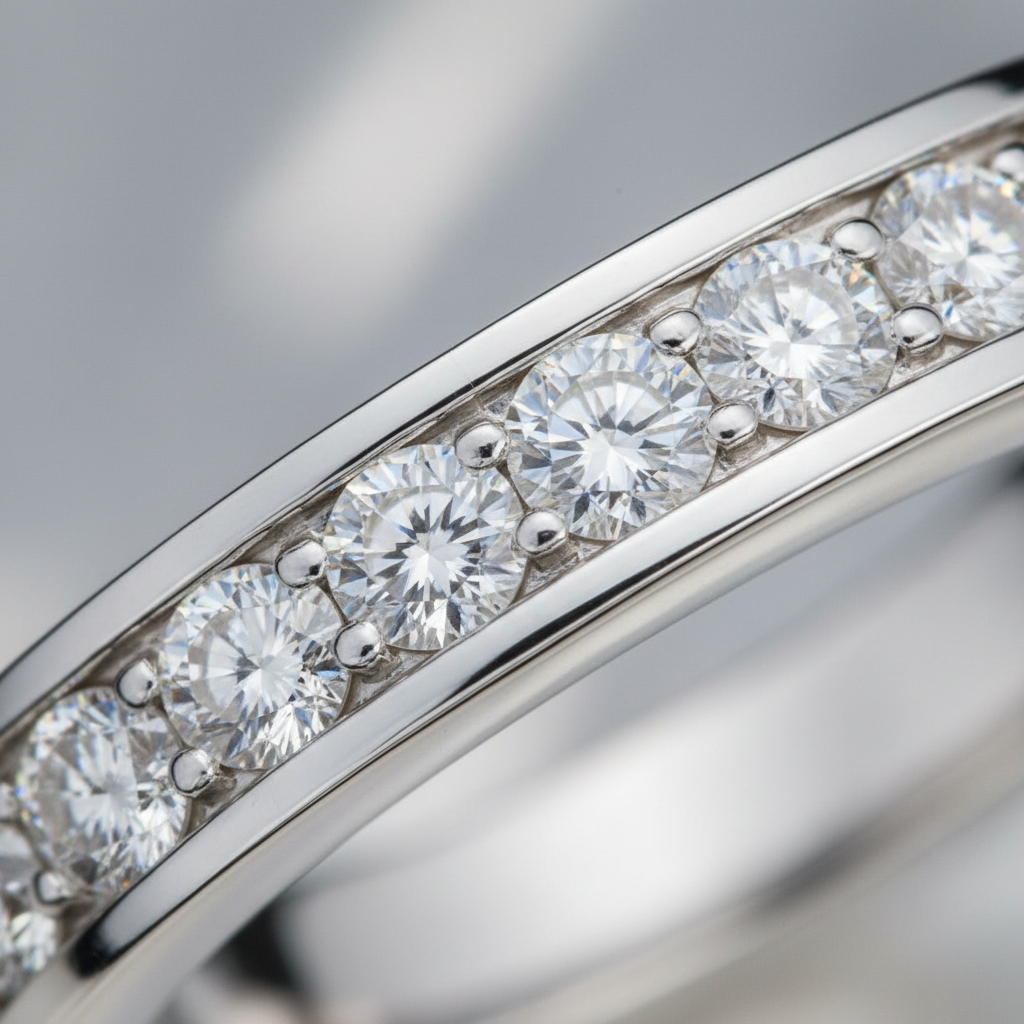
A diamond anniversary band is a ring with one or more rows of diamonds, given to honor a relationship milestone. It’s added after the wedding and often features half- or full-eternity designs to symbolize continued commitment, pairing easily with engagement and wedding rings.
Think of it as a wearable time capsule. Some couples pick five-, seven-, or nine-stone bands to mark specific years, while others choose half- or full-eternity designs to celebrate the arc of their story. Width typically ranges from 1.5–3.0 mm for stack-friendly wear or 3.5–5.0 mm for a bolder look. Many people wear bands 12–16 hours a day, so low profiles and smooth edges are practical.
- Milestones: 1, 3, 5, 10, 15, and 20+ years; vow renewals; first child; new home; major promotion.
- Symbolism: Full eternity represents unbroken love; half eternity supports future resizing.
- Stacking: Wear with engagement and wedding rings, or solo on the opposite hand for a minimal, modern look.
For inspiration on endless-sparkle designs, explore our eternity ring style guide and see how different widths change the overall rhythm of a stack.
Why anniversary bands matter
Anniversary bands turn milestones into daily sparkle. They refresh your bridal set without replacing original rings and can be tailored for a snag-free, commute-friendly profile. The best designs balance meaning, comfort, and durability for years of wear.
Meaning drives the decision. Diamonds catch the light like the highlights of a shared life, and a slim band adds easy brilliance to any day. Practicality matters just as much: if you wear gloves, carry bags, or type all day, a low-rise channel or bezel keeps edges smooth. Full-eternity looks incredible but is harder to resize; half-eternity improves serviceability. If you love symmetry, two slender half-eternity bands can frame an engagement ring for a refined, architectural look.
For occasion ideas that blend romance with personal meaning, see this short overview of jewelry symbolism and meaning. It can help you articulate what you want your milestone ring to say—subtly, but clearly.
How to choose a diamond anniversary band
Choose by aligning setting style, diamond matching, width, and metal with your engagement ring and routine. Measure stack height, confirm size late in the day, compare low versus high profiles, and book a quick consult to finalize details with confidence.
- Audit your current stack: Note metal color, shoulder height, and width. Try to match band height within ~0.3–0.5 mm for a flush feel and fewer gaps.
- Pick a secure setting: Channel (smooth, protective), pavé (shimmer-rich), shared prong (maximum light), bezel (most secure, modern).
- Prioritize cut and consistency: In multi-stone bands, matched cut, color, and clarity keep the line cohesive to the eye.
- Select metal and finish: 14k is harder and great for daily wear; 18k offers richer color. White gold may need periodic rhodium refresh; platinum resists wear and is hypoallergenic.
- Consider comfort-fit: A slightly rounded interior reduces pressure during temperature or activity-related swelling.
- Plan maintenance: Quick annual inspections and monthly cleans preserve brilliance and security.
If you’re pairing with a classic solitaire, our solitaire style guide shows how slim pavé bands amplify center stones without overpowering their silhouette. For curved looks, a contoured guard wrap can hug a high-set head for a flush, unified profile.
How anniversary bands are built (design and craftsmanship)
Quality bands start with precise CAD models, matched diamonds, and secure setting work. Tiny tolerances—stone seat depth, prong pressure, channel wall height—determine how bright, smooth, and durable a ring feels in daily life.
Behind the sparkle is engineering. Jewelers create CAD designs and cast in 14k or 18k gold or platinum, then refine seats for melee stones. Shared-prong bands often use two-prong junctions between stones to reduce metal and boost light return. Channel walls typically rise 0.3–0.6 mm above the girdle for protection, while pavé relies on even beading that grips each stone gently but securely.
- Stone matching: Dozens of stones must align in color, clarity, and millimeter size for a solid "ribbon of light." Inventory systems and QA checks keep batches consistent; see this discussion of diamond inventory accuracy for context on the logistics behind precise matching.
- Metal finishing: High-polish enhances gleam; satin or matte curbs reflections for a calmer stack.
- Profile tuning: Low-rise designs reduce snags in sleeves and gloves; a slight inner dome improves comfort over long workdays.
At Diamond2Deal, we pair engineering details with practical wear tests—typing, pocketing a phone, gripping a bag handle—because a band that behaves well during your normal routine gets worn the most.
Types of anniversary bands and settings
Core styles include channel, pavé, shared prong, bezel, and bar-set, available as five-stone, half-, or full-eternity rows. Channel and bezel emphasize security; pavé and shared prong maximize sparkle. Full eternity delivers 360° light; half eternity supports future resizing.
Core setting styles
- Channel-set: Diamonds sit between metal walls with smooth edges—ideal for daily wearers and commuters.
- Pavé: Small beads secure stones for a continuous shimmer; micro-pavé uses ultra-fine melee.
- Shared prong: Minimal metal, big brilliance; sidewalls stay open for maximum light return.
- Bezel: A rim encircles each diamond for top protection and modern lines.
- Bar-set: Vertical bars hold stones; open sides reveal profile sparkle.
Popular diamond arrangements
- Five-stone: Balanced presence; often chosen for 5- or 10-year milestones.
- Seven- or nine-stone: Finer graduation and a softer taper at the edges for slim bands.
- Half-eternity: Diamonds across the top half; easier to resize.
- Full-eternity: Diamonds 360°; uninterrupted sparkle; typically non-resizable.
- Mixed-shape rows: Rounds with baguettes or ovals for an artful rhythm.
Comparison at a glance
| Style | Sparkle | Security | Comfort | Best for |
|---|---|---|---|---|
| Channel | Bright, even | High | High | Active daily wear |
| Pavé | Maximum shimmer | Medium | Medium | Dressy stacks |
| Shared prong | High brilliance | Medium | Medium | Statement sparkle |
| Bezel | Focused flashes | Very high | High | Hands-on jobs |
| Full eternity | All-around | Medium | Medium | Max visual impact |
For a deeper dive into women’s pairings and profiles, our women’s wedding band guide shows how contouring and height alignment keep stacks flush and comfortable.
Best practices for selecting and wearing a band
Match height and metal to your engagement ring, prioritize secure settings for your routine, and confirm size late-day. Photograph your stack in natural light and test daily tasks to catch snag or spin risks before you buy.
- Stack alignment: Keep adjacent ring shoulders within ~0.5 mm to minimize gaps.
- Task test: Type, grip, and pocket your phone to spot edges that need smoothing.
- Seasonal checks: Summer and workouts can swell fingers; consider half sizes for 6–7 mm total stack widths.
- Documentation: Keep any grading details and service notes; they simplify future checks.
- Appointment: A quick consult with photos of your hand speeds decisions and avoids returns.
Curious how low-gloss textures affect a stack? The matte wedding band primer explains finishes that calm down glare without dulling diamond sparkle.
Diamond quality and certifications
Cut quality drives visible sparkle. In multi-stone bands, tight color and clarity matching keeps the line even, while proper disclosure confirms whether stones are lab-grown or natural. Ask for workmanship notes and inspect beadwork or prongs under magnification.
The 4Cs—cut, color, clarity, carat—remain the core framework, but in anniversary bands, uniformity matters most. Dozens of small stones must match within narrow tolerances to avoid a “checkerboard” effect. Warm golds (yellow, rose) are forgiving of faint color; white metals highlight icy tones. For education that simplifies lab-grown choices, see our brief on lab-grown diamond engagement rings.
If you’re exploring calendar-based gifting, these occasion planning tips can spark ideas for timing your milestone celebration—anniversary trips, renewals, or family gatherings.
Sizing, comfort, and wearability
Confirm your size professionally, test the total width of your stack, and consider a comfort-fit interior. Half-eternity bands are easiest to resize; full eternity may require a remake if your size changes.
- Late-day sizing: Fingers are typically largest late afternoon; size then for all-day comfort.
- Width planning: Stacks above ~6–7 mm can feel snug; test gripping a pen and closing a fist.
- Comfort-fit: Rounded interiors reduce hot-spot pressure during workouts or long commutes.
- Glove test: If you wear gloves often, prioritize channel or bezel to minimize snags.
Pro tip: If you plan to add bands over time, leave “space” in the stack by staying a touch slimmer now—your future self will thank you.
Care, cleaning, and maintenance
Clean monthly with mild soap, inspect prongs twice a year, and schedule a professional check annually. Remove your ring for heavy lifting and harsh chemicals. Consistent care preserves brilliance and prevents avoidable repairs.
- Home clean: Soak 5–10 minutes in warm, soapy water; brush gently under stones; rinse and pat dry.
- Ultrasonic caution: Great for channel or bezel; use care with delicate pavé beadwork.
- Metal refresh: White gold may need rhodium replating every 12–24 months depending on wear.
- Travel case: Padded storage prevents micro-abrasion; separate pieces for long trips.
Set a calendar reminder for quick seasonal checkups. Catching a lifted prong early is far better than replacing a lost stone later.
Styling and stacking ideas
For a cohesive stack, align heights, match or artfully contrast metals, and balance textures. Pair a pavé band with a sleek wedding band, or flank your engagement ring with two slim half-eternity bands for symmetry and extra light.
- Match heights: Keep adjacent ring shoulders within ~0.5 mm for a unified look.
- Mix textures: Pavé beside high-polish or satin adds dimension without clutter.
- Two thin bands: Two 1.5–1.8 mm bands can frame a center stone elegantly.
- Opposite hand: Wear the anniversary band solo on the right hand for modern minimalism.
Exploring bolder pairings or mixed shapes? Our unique engagement ring styles overview can spark ideas for distinctive silhouettes that still stack comfortably.
Real examples and mini case studies
In Manhattan and across New York County, commuters and busy professionals favor low-profile pavé or secure channel bands for snag-free wear. We routinely match color and height to existing rings, building stacks that transition from office to evening without spin or gaps.
Example 1 (commute-friendly): A Manhattan client with a cathedral solitaire wanted weekday sparkle without height. We paired a 1.8 mm half-eternity pavé band (≈1.3 mm stones) in 14k white gold; the stack sat within 0.3 mm of her engagement ring’s shoulder—no glove snags through winter.
Example 2 (active lifestyle): A runner needed smooth edges under fleece gloves. A 2.2 mm channel-set band with ≈1.7 mm matched melee in yellow gold delivered sleek sides and warm color harmony.
Example 3 (max brilliance): For a milestone celebration, a full-eternity shared-prong ring (≈2.0 mm stones) produced a continuous halo. We documented stone counts and matched color narrowly for an even ribbon of light.
Example 4 (mixed metals): A white gold engagement ring gained dimension with a slim rose gold pavé anniversary band. The subtle contrast highlighted both rings without visual clutter.
Example 5 (glove-ready bezel): A healthcare professional chose a low-rise bezel half-eternity in platinum. The protective rim and hypoallergenic metal stood up to frequent handwashing and glove changes.
Example 6 (right-hand minimalism): A client who works on-camera wears a solo 2.0 mm half-eternity on the right hand for sparkle that never distracts from a microphone grip.
Example 7 (architectural symmetry): Two 1.6 mm half-eternity bands flanked a round solitaire, creating a balanced “bar” motif that stayed flush during typing and travel.
Example 8 (heirloom harmony): We color-matched a new channel band to an heirloom yellow gold set, keeping warmth consistent while tightening tolerances for modern wearability.
Example 9 (texture play): A satin-finish wedding band paired with a bright pavé anniversary band offered contrast that photographed beautifully in natural light.
Example 10 (three-stone story): A five-stone anniversary ring echoed the meaning of a three-stone engagement ring—past, present, future—while adding daily sparkle. For meaning frameworks, see our note on three-stone symbolism.

Local considerations for Manhattan
- Time your fittings around commuter peaks; late-morning slots near Grand Central make quick drop-ins easier.
- Winter gloves can swell fingers; confirm size late afternoon and test with a thin liner glove.
- If you plan photos near Bryant Park, wipe prints with a microfiber cloth—cold air exaggerates smudges fast.
Tools and resources to shop smarter
Print a ring sizer, measure your stack height, and gather natural-light photos. Review the 4Cs, confirm diamond disclosures, and book a short consult. Ten minutes of prep prevents sizing surprises and ensures your band integrates perfectly.
- Ring sizing: Use a sizer and confirm late-day fit; note stack width and height.
- Photo kit: Shoot your hand in window light next to a credit card (for scale) and share images during your consult.
- Education: Revisit our lab-grown overview to align on terms and expectations.
- Wishlist: Save links or screenshots of bands you like so your expert can show close comparisons.
Ready to browse? See our current anniversary rings collection for stackable widths, metal colors, and setting styles you can receive with fast fulfillment.
Pricing and value factors (without numbers)
Value comes from craftsmanship, diamond matching, metal choice, and aftercare support—not sticker comparisons alone. Prioritize daily comfort and long-term serviceability; these are the traits that keep a ring in your regular rotation.
- Craftsmanship: Even beadwork, secure prongs, smooth interiors, and clean polish signal quality.
- Diamond matching: Tight color/clarity ranges and consistent cut elevate the whole row.
- Metal: 14k durability vs. 18k richness; platinum’s heft and hypoallergenic nature.
- Aftercare: Warranty coverage, inspection cadence, and easy returns add peace of mind.
For romance-forward timing ideas (anniversaries, renewals, or trips), this short occasion guide can help you choose a meaningful date for gifting your band.
Frequently Asked Questions
Shoppers often ask how to stack with an engagement ring, whether lab-grown stones are suitable, and how to size for comfort. These quick answers cover the essentials so you can move forward confidently.
How do I wear an anniversary band with my engagement ring?
Most wear wedding band closest to the heart, then anniversary band, then engagement ring. If heights or contours clash, try the anniversary band on the opposite hand or choose a contoured guard wrap to keep the set flush and comfortable.
Is a full-eternity ring practical for everyday wear?
Full eternity delivers 360° sparkle but is harder to resize and slightly more catch-prone. If you want maximum brilliance and stable size, it’s great. For flexibility, consider a half-eternity with low-profile settings for smoother daily wear.
Are lab-grown diamonds good for anniversary bands?
Yes. Lab-grown diamonds have the same physical and optical properties as mined diamonds. When disclosed properly and matched well in color and clarity, they offer beautiful, consistent sparkle and strong value for multi-stone anniversary designs.
What metal pairs best with a white gold engagement ring?
White gold-on-white gold creates a seamless look. Platinum also pairs well and resists wear, though it’s heavier. If you want contrast, add a slim rose gold pavé band between two white gold rings for a modern mixed-metal stack.
How often should I have prongs checked?
Have prongs and beadwork inspected every 6–12 months, and sooner after an impact or snag. Quick checks catch wear early, reducing the chance of stone loss and keeping your anniversary band secure for the long haul.
Conclusion
The right diamond anniversary band complements your life and your rings. Match setting security to your routine, align height and width to your stack, and verify diamonds and metal. A quick consultation plus simple upkeep keeps your milestone ring bright for years.
- Key takeaways: Prioritize cut and setting security; align heights; plan simple maintenance.
- Next steps: Confirm size late-day, collect stack photos, and book a short expert session.
- Browse now: See stackable options in our anniversary rings collection.