

Diamond Stud Earrings: Find Your Perfect Pair in 2026
Diamond stud earrings are a matched pair of diamonds set close to the ear on posts, prized for everyday sparkle and timeless style. At Diamond2Deal in New York (420 Madison Ave, 5th Floor, Rm 500), we help you choose the right cut, setting, and metal so your studs suit your taste and lifestyle.
By Mit Trivedi, President — Last updated: 2026-05-06
Overview and Game Plan
Choose diamond stud earrings by focusing on the 4Cs, the right setting and back, and a metal that fits your skin and style. Start with size goals, match cut and color for symmetry, then confirm grading and return policies. This plan ensures comfort, security, and lifetime shine.
Here’s a quick look at what you’ll learn and how to use this guide fast.
- Understand what studs are and how they’re built
- Decide between lab-grown and natural diamonds
- Pick settings (prong, bezel, halo, martini, basket) and backs (friction, screw, La Pousette)
- Size smart: carat weight vs millimeter spread vs ear lobe fit
- Choose metals (14k, 18k, platinum) and finishes that match your skin tone
- Style, maintain, and insure your studs with confidence
At a Glance
- Carat and diameter correlate: a 1.00 ct round per ear is about ~6.4–6.5 mm.
- 14k is 58.5% gold; 18k is 75% gold; platinum studs are typically ~95% pure.
- Balanced pairs match within ~0.05 ct and similar table/depth for even sparkle.
- Diamond2Deal has been family-owned since 1998 (28+ years of service).
- Enjoy next-day shipping on thousands of in-stock styles and 30-day returns.
- What studs are
- Why they matter
- How studs work (4Cs)
- Types, settings, and backs
- Lab-grown vs natural
- Best practices for buying
- Tools and resources
- Styling and care
- Real-world examples
- Value drivers (not pricing)
- FAQ
- Conclusion and next steps
What Are Diamond Stud Earrings?
Diamond stud earrings are matched, symmetrical diamond pairs set on posts that sit flush to the ear. They emphasize the diamond first, with minimal metal. The best studs balance carat, cut, and comfort so you get bright sparkle, secure wear, and a versatile look from day to night.
Think of studs as the “white T-shirt” of fine jewelry: clean, effortless, and always appropriate.
- Minimal design: The metal is subtle; the diamond takes center stage.
- Symmetry matters: Matching carat, color, clarity, and cut helps both ears shine evenly.
- Comfort-first: Post length, back type, and setting profile affect all-day wear.
For a visual of how a precision setting supports the stone, examine the prong alignment and basket height on a macro view—tiny differences change both comfort and sparkle.
Why Diamond Stud Earrings Matter
Diamond studs are the most versatile fine-jewelry essential: they frame the face, pair with anything, and transition from office to black-tie. In Manhattan and across New York County, they’re the go-to gift and daily wearable, delivering lasting value without trend expiration.
Why do they matter so much? Three reasons stand out.
- Wear-anywhere style: From jeans to gowns, studs never clash.
- Durable investment: A well-cut diamond retains beauty for decades with basic care.
- Gifting power: Sizing is simpler than rings; presentation is elegant and memorable.
In our experience helping New York clients, studs often become “first heirlooms” because they suit evolving wardrobes and life stages while holding emotional meaning.
How Diamond Stud Earrings Work (The 4Cs + Fit)
Great studs balance the 4Cs—cut, color, clarity, carat—with ear fit. Prioritize cut for brightness, then color and clarity that look clean to the eye. Match carat and millimeter size closely so both earrings sit and sparkle evenly on your lobes.
Here’s how to evaluate each factor quickly and confidently.
Cut (sparkle engine)
- Why it matters: Cut drives brilliance and fire, making stones look larger and livelier.
- Action: Favor Excellent/Ideal-level proportions; avoid overly deep stones that face up small.
- Data point: A well-cut 1.00 ct round typically measures ~6.4–6.5 mm in diameter.
- Learn more with this accessible diamond 4Cs guide from our education hub.
- For a supplemental primer, see this concise overview of the 4Cs.
Color (white balance)
- Why it matters: Whiter grades face up brighter in white metals; near-colorless can look warm and elegant in yellow gold.
- Action: Aim for closely matched grades to keep both ears consistent in tone.
- Data point: Near-colorless (G–J) often balances beauty and value for daily wear.
Clarity (eye-clean test)
- Why it matters: Inclusions near the center can reduce sparkle; edge inclusions are often hidden by prongs.
- Action: Choose stones that look clean at a normal viewing distance, not just on paper.
- Data point: VS or SI stones can appear eye-clean in small-to-medium sizes when cut well.
Carat and millimeters (size and balance)
- Why it matters: Carat is weight; what the eye sees is diameter and light return.
- Reference sizes per ear: ~0.25 ct ≈ ~4.1 mm; ~0.50 ct ≈ ~5.1 mm; ~0.75 ct ≈ ~5.7 mm; ~1.00 ct ≈ ~6.4–6.5 mm.
- Action: Keep pairs within ~0.05 ct and ~0.1 mm when possible for visual symmetry.
Fit matters as much as specs: earlobe thickness, piercing height, and daily activities influence setting profile and back choice.
Types, Settings, and Backs
Choose a setting that fits your lifestyle: prong and martini maximize sparkle; bezel adds sleek protection; halo boosts perceived size; basket balances low profile and light. Pair with a secure back—friction for speed, screw for security, La Pousette for premium comfort.
Here are the core options to compare, with practical guidance from our Manhattan showroom consultations.
Popular settings
- 4-prong basket: Classic, airy, and balanced height for daily wear.
- Martini (3-prong): Tapered cone sits closer to the ear for a low profile.
- Bezel: Metal rim protects the girdle and creates a modern outline.
- Halo: A ring of small diamonds increases face-up size and sparkle.
- Double-notched posts: Improve grip for friction backs; look for clean notches.
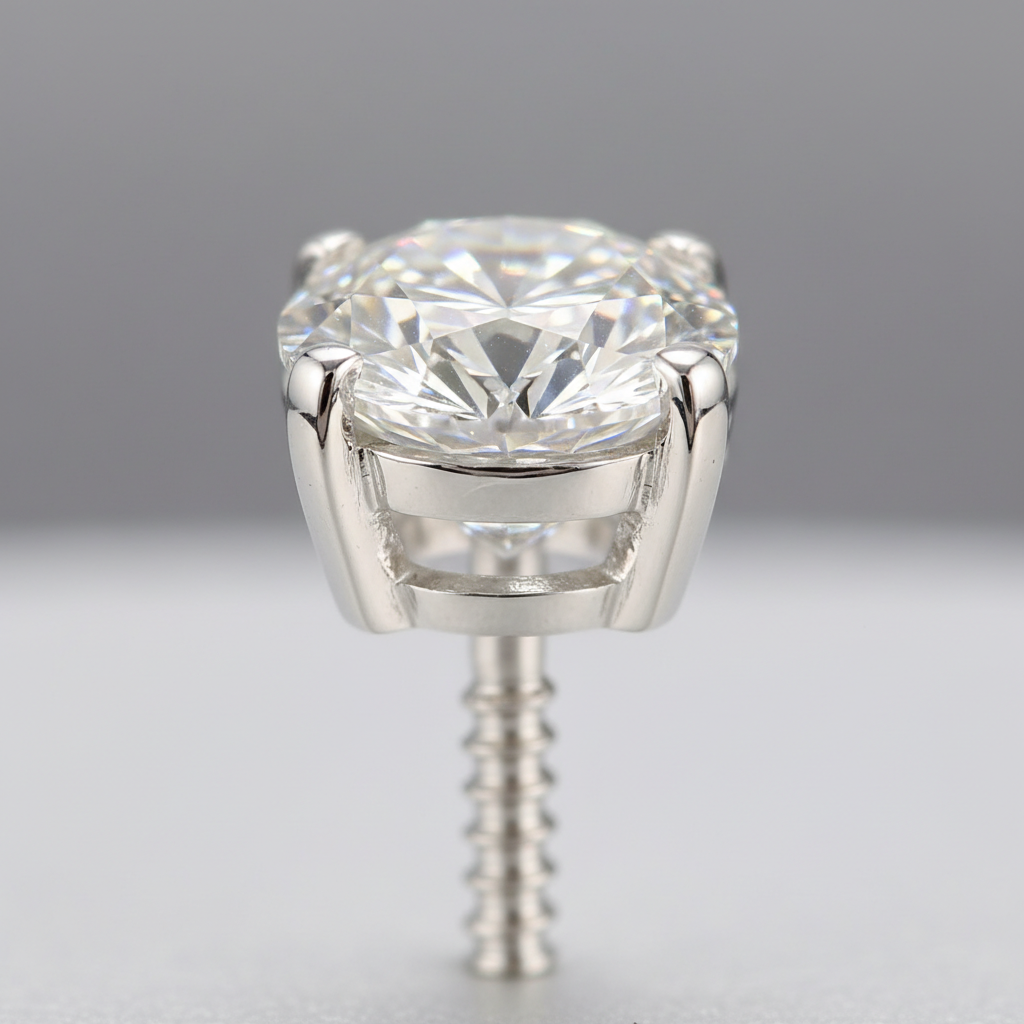
Back types compared
| Back Type | Security | Comfort | Speed On/Off | Best For |
|---|---|---|---|---|
| Friction (butterfly) | Good | High | Fast | Everyday, frequent changes |
| Screw back | Excellent | Medium | Moderate | All-day security, travel |
| La Pousette | Excellent | High | Fast | Premium comfort and security |
Shapes and personality
- Round brilliant: Maximum fire; most popular for symmetry and classic style.
- Princess (square): Modern lines; faces up large corner-to-corner.
- Pear/oval/cushion: Distinctive silhouettes; great for halos or bezels.
- Data point: Round studs dominate requests in our consultations, with princess a strong second for contemporary looks.
Metals and purity
- 14k gold (58.5%): Durable and bright; great daily driver.
- 18k gold (75%): Richer hue; slightly softer than 14k.
- Platinum (~95%): Naturally white and hypoallergenic; heavier and very durable.
Explore ready-to-ship examples to see these choices in action: a classic round solitaire lab-grown pair, an elegant pear-cut solitaire option, or a bold yellow gold set with matched stones.
Lab-Grown vs Natural Studs
Lab-grown and natural diamonds are chemically and optically the same. For studs, lab-grown offers larger looks for a given budget, while natural suits collectors who value origin rarity. Both require proper grading, secure settings, and aftercare to perform beautifully for decades.
- Same composition: Both are crystalline carbon; both score 10 on the Mohs scale.
- Certification focus: Prioritize transparent grading details for color, clarity, and cut.
- Data point: Many New York shoppers choose lab-grown for everyday studs and natural for milestone keepsakes.
- For a neutral primer, skim this lab-grown vs natural overview.
Diamond2Deal’s roots in wholesale diamond manufacturing help us curate clean, bright, certified lab-grown pairs that match closely in millimeters and performance.
Best Practices for Buying Diamond Stud Earrings
Start with size and metal, then lock in cut quality and matched millimeter spread. Choose a setting profile that fits your ear and a back suited to your lifestyle. Finally, confirm certification, warranty, and return windows before checkout or appointment.
- Define your size goal: Decide on subtle (~4–5 mm), everyday (~5–6 mm), or statement (~6.5+ mm) looks.
- Pick the metal: White gold or platinum for icy brightness; yellow or rose gold for warmth.
- Prioritize cut: Ideal/Excellent-level cut lifts sparkle and makes stones face up larger.
- Match the pair: Keep carat and millimeters close for symmetry; inspect side-by-side.
- Choose the back: Friction for speed, screw for security, La Pousette for both.
- Verify paperwork: Confirm clarity and color grades align with your expectations.
- Check policies: Diamond2Deal offers 30-day returns, a 1-year warranty, and responsive support.
- Plan delivery: Thousands of styles ship next day—ideal for tight gifting timelines.
Need personalized advice? Book a quick call with a diamond expert to compare sizes and settings, and we’ll shortlist matched pairs that suit your ear and style goals.
Local considerations for Manhattan
- Same-day pickups or courier coordination near Grand Central can help if you’re catching an evening train—confirm readiness before you head over.
- Holiday weeks and fashion events crowd midtown; plan next-day shipping or early appointments to avoid rushes.
- For discreet gifting, ask for low-profile packaging; it’s easier to tuck away during a stroll by Bryant Park.
Tools and Resources
Use simple tools to shop smart: a millimeter size chart, side-by-side photos, and an education hub to decode the 4Cs. Combine these with expert guidance and clear policies to move from browsing to confident checkout.
- Education hub: Read our Diamond 4Cs Guide for cut, color, clarity, and carat basics.
- External primer: This intro to diamond types provides quick background for first-time buyers.
- Matched-pair check: Ask for millimeter measurements and table/depth to ensure symmetry.
- Lifestyle checklist: Note your daily activities to choose the right back and profile.
- Wishlist: Save two or three finalist pairs for an expert to review with you.
Styling, Care, and Everyday Confidence
Keep diamond studs bright by cleaning monthly, checking prongs twice a year, and removing them for contact sports. Style them solo for minimalism or stack with huggies and cuffs for dimension. Care and smart pairing keep your look fresh without fuss.

Styling tips
- Minimalist: Wear studs alone with a sleek ponytail to spotlight your face.
- Stacked: Add a thin hoop or huggie in a matching metal for texture.
- Neckline harmony: Pair with a delicate pendant to avoid competing focal points.
Care routine
- Monthly clean: Warm water, mild soap, and a soft brush restore sparkle in minutes.
- Biannual check: Inspect prongs and backs; tighten or service as needed.
- Storage: Keep in a soft-lined box to prevent micro-scratches.
Looking for colorful options? Explore diamond-and-amethyst studs or diamond-and-sapphire studs for birthstone gifting.
Case Studies and Real-World Examples
Real shoppers balance look, lifestyle, and timing. These mini-examples show how carat, setting, and backs change outcomes—use them as templates for your own shortlist before you book an expert review.
Everyday commuter, midtown office
- Goal: All-day comfort, mask-friendly, quick on/off.
- Pick: 14k white gold 4-prong baskets, friction backs, ~5.1 mm per ear.
- Outcome: Low profile avoids snagging; bright cut keeps look crisp under office lighting.
Evening events, gallery openings
- Goal: Bigger presence without heavy feel.
- Pick: Halo studs in 18k yellow gold around ~5.7 mm centers.
- Outcome: Halo increases face-up size; golden tone flatters warm complexions in evening light.
Travel-ready security
- Goal: Peace of mind in transit.
- Pick: Platinum martini settings with screw backs, ~6.4 mm centers.
- Outcome: Secure backs and dense metal resist wear; tapered seat sits close for comfort.
Prefer a classic look? Compare our round solitaire studs side-by-side with a colored-gem accent to see how metal and hue change the vibe.
Value Drivers (Not Pricing)
Value in diamond studs comes from cut quality, matched measurements, secure craftsmanship, metal purity, and clear documentation. Strong aftercare—warranty, returns, and service—protects that value over time. Focus here to feel confident without fixating on numbers.
- Cut first: Better cut can make stones look visibly larger than the same carat with weak cut.
- Matched pairs: Close carat and millimeter spread create a premium, balanced look.
- Metal purity: 14k (58.5%), 18k (75%), and platinum (~95%) each signal different durability and feel.
- Documentation: Clear grading details and return windows reduce risk.
- Aftercare: A 1-year warranty and 30-day returns back long-term satisfaction.
If you’re comparing lab-grown options, bookmark this neutral 4Cs refresher to align on the basics with a partner or gift buyer.
Frequently Asked Questions
These concise answers address the questions we hear most in appointments and live chat. Use them as a quick pre-check before you finalize your pair or book an expert review.
What size diamond stud earrings should I choose for daily wear?
Most people find ~5–6 mm per ear (roughly 0.50–0.75 ct each, depending on cut) balances subtle sparkle and comfort. If your piercing sits low or your lobes are thinner, a martini setting can help studs sit closer and feel lighter.
Are lab-grown diamonds good for studs?
Yes. Lab-grown diamonds have the same hardness and optical properties as natural stones, so they’re ideal for everyday studs. Many shoppers choose lab-grown to achieve a larger face-up look while keeping cut quality, color, and clarity priorities intact.
Which earring backs are most secure?
Screw backs and La Pousette backs offer excellent security. Friction backs are secure for most daily wear and are faster to put on and remove. Choose based on your routine—travelers and active wearers often prefer screw or La Pousette.
What metal should I pick for sensitive ears?
Platinum is a strong hypoallergenic choice and is typically ~95% pure. Many people also do well with 14k or 18k gold in white, yellow, or rose. If you’re sensitive, avoid mystery alloys and choose known, stamped metals from reputable jewelers.
How do I keep my studs sparkling?
Clean monthly with warm water, mild soap, and a soft brush, and schedule a quick prong-and-back check twice a year. Remove studs for sports, heavy workouts, and chemical exposure. Store them in a soft-lined box to prevent micro-scratches.
Conclusion and Next Steps
The best diamond stud earrings match your size goals, metal preference, and daily routine—supported by strong cut, matched measurements, and secure craftsmanship. With clear policies and expert guidance, you can choose once and wear for years.
Key takeaways
- Prioritize cut and matched millimeters for standout sparkle and symmetry.
- Pick a setting profile and back that fit your ear and lifestyle.
- Confirm documentation, warranty, and returns to protect your investment.
Action steps
- Shortlist two settings—prong and bezel or martini—and one metal.
- Decide on your daily size target in millimeters, not just carat weight.
- Save two pairs you love—compare a classic round and a distinctive pear.
Ready to move forward? We’re here in midtown Manhattan to help you finalize the perfect pair—shipped next day when you need it fast.