

Fine Diamond Rings: Choose the Right Sparkle in 2026
Fine diamond engagement rings are expertly crafted engagement rings featuring high-quality diamonds, precise settings, and enduring precious metals. They combine the 4Cs (cut, color, clarity, carat) with design and craftsmanship to deliver brilliance and durability. In the USA, shoppers value certified stones, fast shipping, and education-backed choices for a confident, meaningful proposal.
By Mit — President, Diamond2Deal
Last updated: 2026-06-23
Overview
This complete guide explains what makes a fine diamond engagement ring, why quality matters, how to evaluate diamonds and settings, and how to shop with confidence. You’ll learn the 4Cs, metal choices, popular styles, care tips, and practical steps using Diamond2Deal’s education-first approach and fast, USA-wide fulfillment.
Here’s what you’ll find below, plus quick links to detailed sections:
- What a fine ring really is
- Why quality and certification matter
- How rings are evaluated (the 4Cs)
- Types, styles, and settings compared
- Best practices for choosing
- Tools and resources to use
- Real-world examples
- FAQ
- Conclusion + next steps
- Explore next: expert guides
Quick Summary
- Fine diamond engagement rings combine certified stones, precise settings, and durable precious metals for lasting beauty.
- Cut quality drives sparkle; metal choice affects style and maintenance; setting changes apparent size and security.
- Diamond2Deal supports confident decisions with an education hub, next-day shipping on thousands of styles, and expert appointments.
What Is a “Fine” Diamond Engagement Ring?
A fine diamond engagement ring is built around a well-cut, certified diamond set in expertly crafted precious metal. Hallmarks include excellent cut proportions, secure prong or bezel work, clean finishing, and design coherence—delivering brilliance, durability, and comfort you can trust for everyday wear.
When shoppers say “fine,” they’re usually referring to the whole package: the diamond’s quality, the setting’s precision, and the metal’s integrity.
- Diamond first: The 4Cs shape brightness, fire, and scintillation. Round brilliants typically feature 57–58 facets for maximum sparkle.
- Crafted setting: Prongs, bezels, and pavé must be smooth, even, and secure. Symmetry keeps the stone centered and comfortable.
- Precious metal: 14k and 18k gold or platinum-alternative alloys balance strength, color, and maintenance needs.
At Diamond2Deal, “fine” means certified lab-grown or natural diamonds, precise finishing, and designs ranging from classic solitaires to distinctive three-stone and halo looks. Our roots in wholesale manufacturing help uphold consistency and reliability across styles.
Why Fine Diamond Engagement Rings Matter
Fine engagement rings matter because they maintain brilliance, resist daily wear, and hold sentimental value for decades. Better cut quality and secure craftsmanship protect your center stone, while certifications and education reduce uncertainty—so your proposal piece feels as good as it looks, year after year.
Buying an engagement ring is emotional and technical. Quality decisions today influence daily enjoyment for years.
- Durability: Diamonds rate 10 on the Mohs hardness scale. A secure setting preserves that advantage and protects edges and girdles.
- Beauty over time: Excellent cut stones return more light, so they appear lively even in softer lighting.
- Confidence: Diamond2Deal’s education hub clarifies the 4Cs and ring anatomy so you can decide with less stress.
Many couples in the USA want speed without sacrificing assurance. That’s why we combine next-day shipping on thousands of in-stock designs with resources that help you compare options before you commit.
How Fine Diamond Engagement Rings Are Evaluated (The 4Cs)
Evaluate fine rings by prioritizing cut, then balancing color, clarity, and carat to your style and budget. Verify grading with a reputable certificate, inspect setting quality, and confirm sizing and comfort. This approach maximizes sparkle and wearability without overpaying for invisible attributes.
We recommend a simple order of operations when choosing your center stone.
1) Cut quality drives sparkle
- Why it matters: Cut governs light return. Even at identical carat weights, a superior cut looks brighter.
- What to know: Round brilliant is the most standardized; fancy shapes (oval, cushion, emerald, pear) trade different light patterns for character.
- Action: Start with cut grades and proportion guidelines before considering size increments.
2) Color, clarity, and carat: balance for beauty
- Color scale: D–Z describes how colorless the diamond appears. Subtle warmth can be flattering in yellow or rose gold.
- Clarity scale: From Flawless to Included (I), many SI stones look clean to the eye. Ask to review videos or magnified images.
- Carat weight: Size influences presence. Slight changes (e.g., 0.90 vs 1.00) may be visually close if cut is excellent.
Certification endorses what you’re seeing. Reputable labs document the 4Cs on a grading report you can reference throughout the ring’s life.
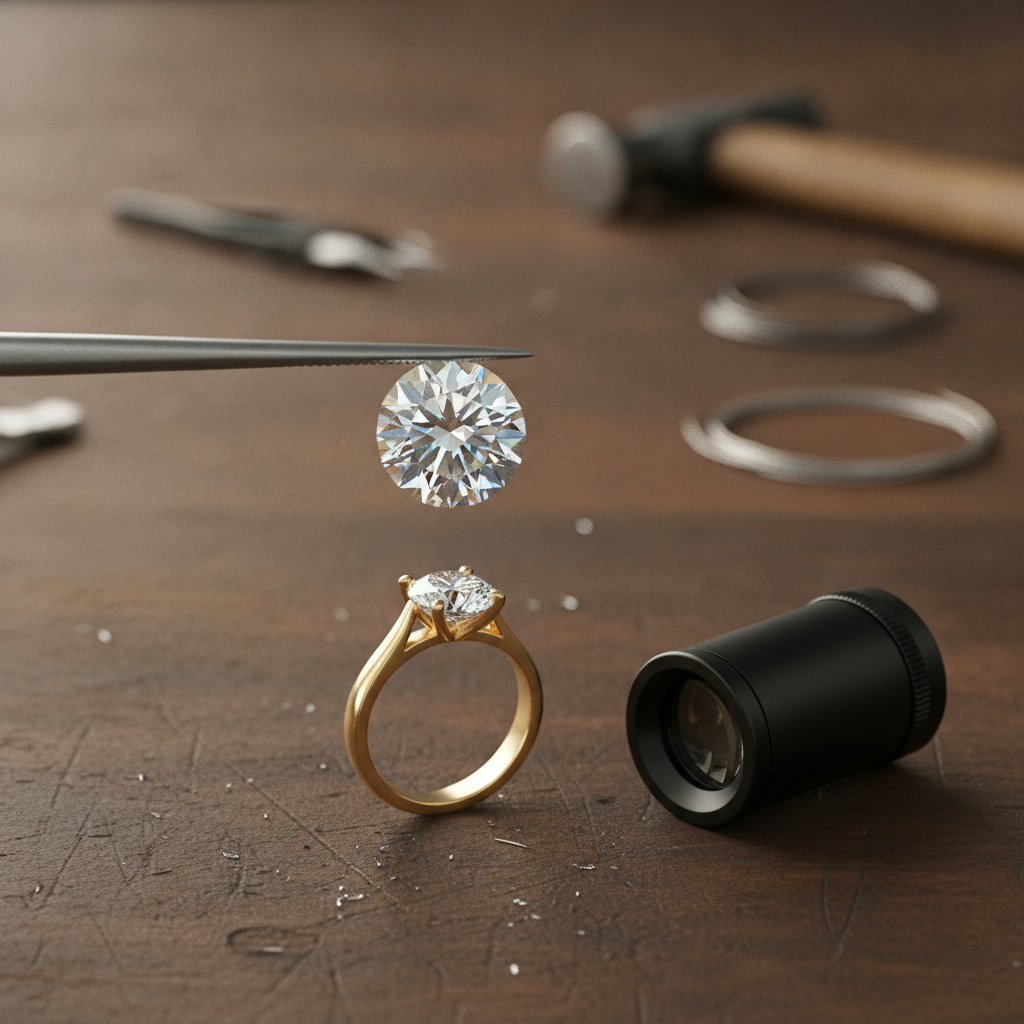
3) Setting quality and comfort
- Secure prongs or bezel: Even, tight prongs and smooth bezels protect and center the stone.
- Low vs. high profile: Higher heads show off the diamond and ease band stacking; lower profiles reduce snagging.
- Finish and polish: Clean gallery work, even pavé, and a smooth interior shank signal care.
In our experience, the right trade-offs depend on lifestyle. A frequent gym-goer may prefer a bezel or low-set solitaire for daily comfort, while a halo lover might opt for a slightly lower carat center to allocate quality to side stones and pavé.
Types, Styles, and Settings
The most popular fine ring styles are solitaire, halo, three-stone, and pavé/hidden-halo, offered in 14k/18k white, yellow, or rose gold. Solitaires maximize the center diamond’s presence; halos add perceived size; three-stone designs bring symbolism and side sparkle; pavé bands create a continuous shimmer.
Diamond2Deal’s assortment spans classic to modern, including certified lab-grown options that align with “luxury without the retail markup.” Here’s how top settings compare.
| Setting | Sparkle profile | Security | Maintenance | Best for |
|---|---|---|---|---|
| Solitaire (prong) | Focuses all light on center | High with well-made prongs | Low; periodic prong checks | Timeless, stackable looks |
| Bezel | Subtle, modern glow | Excellent edge protection | Very low | Active lifestyles |
| Halo | Maximizes perceived size | Good; many tiny stones | Moderate; pavé checks | Bold sparkle lovers |
| Three-stone | Broad light return | High with solid prongs | Moderate | Symbolism + presence |
| Pavé/hidden-halo | Band and gallery shimmer | Good; small stones | Moderate | All-over sparkle |
Metal choices and their character
- 14k gold: Durable and bright; 58.5% pure gold (often stamped “585”).
- 18k gold: 75% pure gold; deeper hue, slightly softer feel.
- White, yellow, rose: Choose for skin tone, wardrobe, and diamond color balance.
Pairing matters. A near-colorless center can look icier in white gold, while faint color can blend beautifully with yellow or rose gold. That’s one way style meets science in a fine ring.
Best Practices for Choosing and Buying
Start with cut quality, then align color, clarity, and carat to your style and daily wear. Choose a setting for lifestyle and security, verify certification, and size accurately. Document your ring, learn care basics, and buy from an education-first retailer that supports returns, warranty, and fast fulfillment.
Use this checklist to move confidently from browsing to “yes.”
- Define priorities: Sparkle, size, metal color, and design character.
- Prioritize cut: It’s the secret to standout brilliance day-to-day.
- Balance the 4Cs: Consider where your eye notices upgrades most.
- Pick a lifestyle-fit setting: Low-snag or show-stopping—both can be “fine.”
- Verify certification: Keep the grading report with your records.
- Confirm sizing and comfort: Smooth interior shank, proper balance on finger.
- Review support policies: Returns window, warranty, and expected ship times.
Diamond2Deal’s customer-friendly policies—including 30-day returns, a 1-year warranty, and next-day shipping on thousands of in-stock designs—are designed to reduce friction and keep momentum when your proposal timeline is tight.
Simple process table
| Step | Owner action | What to validate |
|---|---|---|
| 1. Learn | Skim 4Cs, metals, settings | Know cut drives sparkle |
| 2. Shortlist | Choose 2–3 styles | Comfort + daily wear |
| 3. Compare | Balance color/clarity/carat | Certification match |
| 4. Decide | Pick metal + profile | Security of setting |
| 5. Confirm | Size, photos, ship speed | Returns and warranty |
Book an appointment with a Diamond2Deal diamond expert for side-by-side comparisons of solitaires, halos, and three-stone styles, plus help reading grading reports and choosing a finger-friendly profile.
Prefer to self-educate? Start with our engagement ring guide and lab-grown deep dives linked below.
Tools and Resources to Use
Use an education hub for the 4Cs, a style shortlist, clear photos or videos, and written policies for returns, warranty, and ship speed. Supplement with ring-sizing tools and comparison checklists so your decision blends sparkle, comfort, and confidence.
- Diamond2Deal Engagement Ring Guide: A single hub for settings, metals, and sizing. Explore the engagement ring guide to get oriented fast.
- Lab-grown education: Compare creation methods, certifications, and sustainability angles in our internal coverage on lab-grown engagement rings.
- In-depth lab-grown overview: For a cluster deep dive on benefits and brand fit, see our lab-grown jewelry guide.
- Design inspiration: If you’re exploring customization, our custom engagement ring guide outlines how to translate vision into specs.
- Gifting context: For buyers pairing the ring with celebratory pieces, skim this diamond jewelry guide on classic gifts and everyday pieces.
- Budget-friendly angle: Considering trade-offs? Our internal look at affordable engagement rings explains smart compromises without sacrificing beauty.
Structured tools save time. We’ve found that a 15-minute read through the core guides dramatically reduces uncertainty and accelerates shortlisting for most buyers.
Case Studies and Real-World Scenarios
Real buyers balance sparkle, lifestyle, and timeline. These mini-scenarios show how education and fast shipping transform indecision into confidence—whether you prefer a classic solitaire, dramatic halo, or symbolic three-stone ring crafted with certified lab-grown diamonds.
Scenario A: Timeless solitaire, tight timeline
- Challenge: A buyer wants a classic round solitaire, USA delivery this week.
- Approach: Prioritize excellent cut in a 14k white gold prong setting, confirm size with a printable sizer, and verify next-day shipping availability.
- Result: The proposal stays on schedule and the ring photographs with crisp fire thanks to cut-first selection.
Scenario B: Halo presence without bulk
- Challenge: A shopper wants a larger visual footprint without increasing daily snag risk.
- Approach: Choose a halo with a modest head height and tapered shank for comfort; review pavé craftsmanship photos for even beadwork.
- Result: Perceived size increases dramatically while the ring still slips under gloves and sleeves.
Scenario C: Three-stone symbolism
- Challenge: Represent past–present–future with a balanced trio of stones.
- Approach: Pair a bright center with slightly smaller side stones of coordinated color; ensure prong symmetry and smooth galleries.
- Result: A meaningful, heirloom-leaning look that remains practical for daily wear.
Across scenarios, buyers cite two recurring wins: learning the 4Cs with pictures and having in-stock styles ready to ship. Those two factors keep excitement high and friction low.
Frequently Asked Questions
Common questions include how to prioritize the 4Cs, which settings are most secure, and how lab-grown diamonds compare. Short answers: start with cut, choose a lifestyle-fit setting, and treat certified lab-grown as real diamonds made by modern methods with excellent value potential.
What makes a diamond ring “fine” rather than just “good”?
A fine ring pairs a well-cut, certified diamond with precise, secure metalwork and clean finishing. You’ll see even prongs or a smooth bezel, balanced proportions, and a comfortable fit. The package holds up to daily wear while delivering standout sparkle from cut quality.
Is a halo or solitaire better for everyday wear?
Both can be great. Solitaires are simple and low maintenance. Halos amplify visual size and sparkle but include many tiny stones that should be checked occasionally. If you’re very active, consider a lower-profile head or a bezel for fewer snags.
How do lab-grown diamonds compare to natural diamonds?
Lab-grown diamonds are real diamonds produced by HPHT or CVD methods with the same crystal structure and Mohs hardness as natural stones. They’re graded on the same 4Cs and can offer excellent value. Always pair with a reputable grading report.
Which metal should I choose—14k or 18k gold?
14k gold (about 58.5% pure) is very durable and bright, great for active wear. 18k gold (about 75% pure) shows a richer hue and slightly softer feel. Match the color to your skin tone and your diamond’s color for a cohesive look.
How should I care for a fine engagement ring?
Rinse with lukewarm water and mild dish soap, brush gently with a soft toothbrush, and pat dry with a lint-free cloth. Avoid harsh chemicals and remove your ring for heavy lifting. Periodically check prongs and pavé to keep everything secure and sparkling.
Conclusion: Put Knowledge to Work
Fine diamond engagement rings unite superior cut, thoughtful design, and durable metals—backed by clear education and supportive policies. Start with cut, align the other 4Cs to taste, pick a lifestyle-fit setting, and choose a trusted retailer so your “yes” moment shines.
Key Takeaways
- Cut rules sparkle; certification anchors confidence.
- Setting and metal should match lifestyle and style goals.
- Simple care keeps brilliance high and maintenance low.
- Education plus fast shipping can shorten timelines without stress.
Action Steps
- Skim the engagement ring guide to set your baselines.
- Shortlist a solitaire, a halo, and a three-stone—then compare feel and photos.
- Read our internal piece on lab-grown engagement rings to decide if they’re right for you.
- When you’re ready, confirm size, shipment timing, and support policies—then celebrate.
Ready to move from research to ring? Explore certified lab-grown and fine gold designs, or book a conversation with our diamond experts for calm, confident decision-making.
Explore Next: Expert Guides
Continue your journey with education-forward resources: engagement ring fundamentals, deep dives on lab-grown diamonds, and customization walkthroughs. These guides help you visualize settings, compare metals, and finalize details so your proposal piece reflects both heart and craft.
Looking to extend your knowledge beyond this guide? Our cluster resources cover luxury diamonds and everyday classics. For a broader tour of styles and giftable pieces, visit the internal diamond jewelry guide. If you’re weighing brand-fit and sustainability, our lab-grown jewelry guide provides context. Considering a one-of-a-kind ring? See the custom engagement ring guide for frameworks and timelines.
If you’d like additional perspectives on styles and metal selection, you can review a general diamond ring buying overview, read a primer on choosing ring metals, or scan recent engagement ring trends in the USA for inspiration.