

Lab-Grown Diamond Rings: Save More, Love the Look 2026
Engagement rings with lab grown diamonds are fine-jewelry rings set with diamonds created in a laboratory rather than mined. They’re chemically and optically identical to natural diamonds and graded by the same 4Cs. From our Manhattan location at 420 Madison Ave (5th Floor, Rm 500), Diamond2Deal guides you to a stunning ring with next-day shipping on many in-stock styles.
By Mit Trivedi — President, Diamond2Deal
Last updated: 2026-05-23
Start here: the fast path to your perfect ring
If you want a brilliant, certified diamond with modern value, engagement rings featuring lab-grown diamonds deliver the sparkle you love without compromise. In Manhattan and across New York County, Diamond2Deal simplifies choices with curated settings, certified stones, and expert guidance online or by appointment.
Here’s how to use this complete guide quickly.
- Learn what lab-grown diamonds are, why they matter, and how they’re made.
- Compare shapes, settings, metals, and matching bands for everyday wear.
- Follow best practices for certification, durability, sizing, and ring care.
- Use our tools and examples to make decisions with confidence—then enjoy next-day shipping on eligible styles.
Quick summary
Lab-grown diamond engagement rings are graded just like natural stones (cut, color, clarity, carat) and fit every style—solitaire, halo, three-stone, and more. Choose a certified diamond, a secure setting, and a metal that matches your lifestyle, then pair a wedding band that sits flush for comfortable daily wear.
- Core move: prioritize cut quality for maximum sparkle; then color and clarity to your taste.
- Everyday comfort: low-profile solitaires or bezel/halo settings resist snags in city life.
- Certification: look for independent grading (e.g., IGI, GCAL) listed on the ring or diamond detail page.
- Speed matters: Diamond2Deal offers next-day shipping on thousands of in-stock pieces.
Local considerations for Manhattan
- Plan appointments around transit: our Midtown address is a quick walk from Grand Central, making in-person consultations convenient before work or at lunch.
- Seasonal timing: holiday engagement traffic near Rockefeller Center can be intense—book early and consider discreet weekday pickups.
- Urban wearability: choose lower-profile settings for subway commutes and gloves in winter, and confirm your warranty and returns for peace of mind.
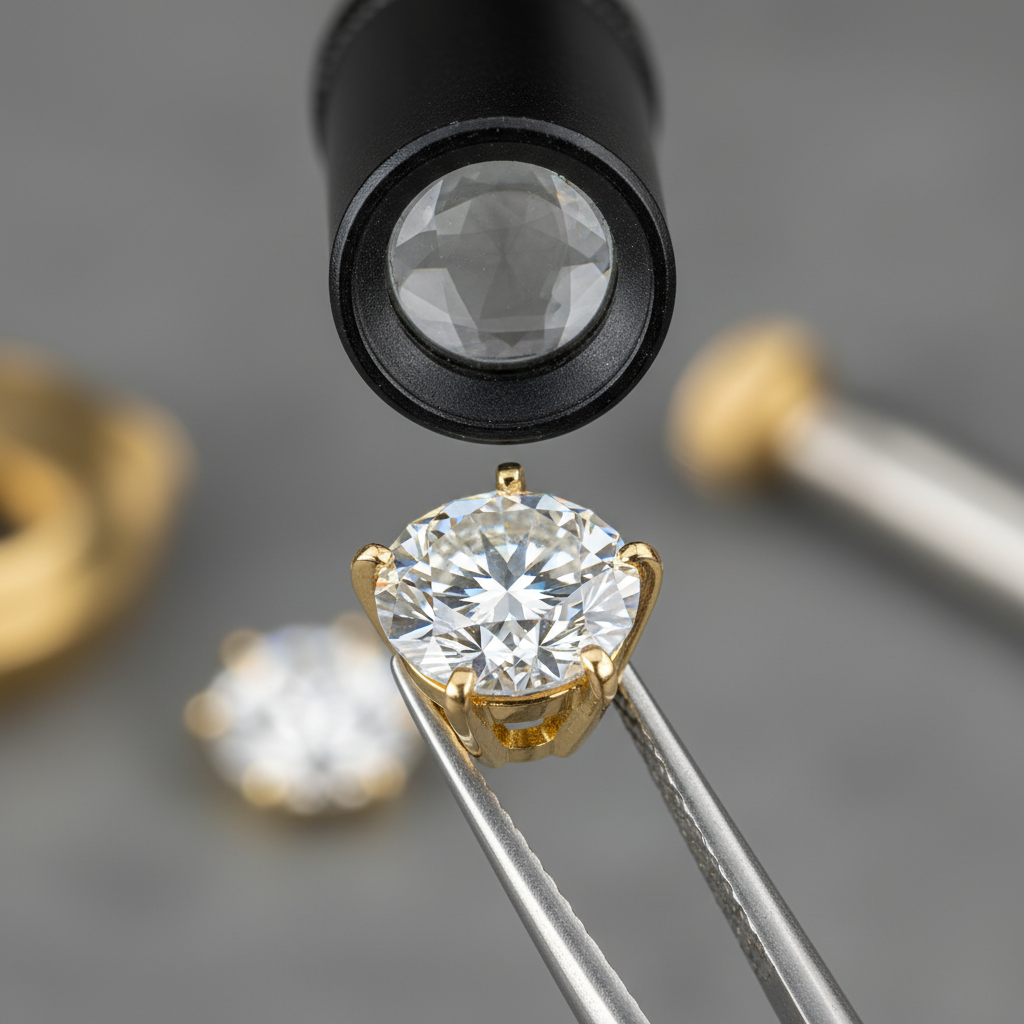
What are engagement rings with lab-grown diamonds?
An engagement ring with a lab-grown diamond is a fine-jewelry ring set with a diamond grown by HPHT or CVD technology. The diamond is chemically, optically, and physically identical to mined stones and evaluated by the same 4Cs, then set into styles like solitaire, halo, or three-stone.
Here’s what that means in practice—and why it matters for your proposal.
- Same diamond, different origin: Lab-grown diamonds are pure carbon crystals with the same Mohs hardness (10) as mined diamonds.
- Same grading standards: Cut, color, clarity, and carat weight are measured by independent labs and listed on certificates.
- Style flexibility: You can set lab-grown stones into any look—classic solitaire, sleek bezel, vintage-inspired halo, or three-stone with side accents.
- Great value focus: Many shoppers find they can prioritize cut quality and a larger look without sacrificing certification or metal quality.
At Diamond2Deal, you’ll find certified lab-grown options across engagement ring education and curated product pages, with next-day shipping available on many styles.
Why lab-grown diamond engagement rings matter
Lab-grown rings offer modern value, transparent grading, and wide availability, helping couples maximize cut quality and design. They simplify decision-making by pairing certified stones with proven settings and metals, making it easier to balance sparkle, durability, and style—especially when timelines are tight.
For many couples, the “why” is practical.
- Clarity and trust: Independent certification and detailed specs reduce guesswork when shopping online.
- Design freedom: With reliable supply, you can compare multiple shapes, carat weights, and settings side-by-side.
- Timeline-friendly: When your proposal date is set, in-stock rings with fast shipping reduce stress.
- Education-first support: Diamond2Deal combines a robust 4Cs hub with bookable appointments so you’re never choosing alone.
Couples often tell us that expertise plus speed matters as much as sparkle. That’s why we pair certified stones with classic settings and offer responsive guidance—online, by phone, or at our Manhattan address.
How lab-grown diamonds are made (HPHT vs. CVD)
Lab-grown diamonds form through two proven methods. HPHT compresses carbon under high pressure and heat until crystals grow; CVD deposits carbon layers in a plasma chamber. Both produce real diamonds with the same hardness, brilliance, and 4Cs grading as mined stones.
Understanding the process helps you decode grading reports and choose confidently.
Two growth methods at a glance
- HPHT (High Pressure, High Temperature): Mimics deep-Earth conditions. A seed crystal and carbon source are pressed and heated so carbon atoms attach, forming diamond.
- CVD (Chemical Vapor Deposition): Uses a vacuum chamber with hydrocarbon gas. Activated carbon atoms settle onto a seed, growing diamond layer by layer with precise control.
Typical process flow
| Stage | HPHT (high pressure) | CVD (plasma growth) |
|---|---|---|
| 1. Seed prep | Seed set in press with metal catalyst | Seed placed on substrate in vacuum chamber |
| 2. Growth conditions | Extreme heat and pressure drive crystal growth | Plasma breaks gas; carbon layers deposit onto seed |
| 3. Crystal recovery | Crystal cooled and extracted from press | Crystal removed from chamber and cleaned |
| 4. Cutting & polishing | Both undergo expert cutting to maximize light return; a round brilliant typically has 57–58 facets | |
| 5. Grading | Independent labs evaluate the 4Cs and inscribe report numbers where applicable | |
For deeper background on origins and comparisons that many shoppers find helpful, see this overview of lab-grown vs. natural diamonds. It provides a consumer-friendly primer you can cross-check with your ring’s certificate.
Types, settings, shapes, and matching styles
Choose a shape you love first, then match a secure setting and metal to your lifestyle. Round brilliant maximizes sparkle; oval elongates; emerald highlights clarity; princess offers crisp geometry. Pair a band that nests flush to avoid gaps and spinning during daily wear.
Popular engagement ring styles
- Solitaire: Timeless, focuses attention on cut quality and symmetry.
- Halo: A rim of smaller diamonds boosts perceived size and sparkle.
- Three-stone: Symbolic past–present–future; great with tapered side stones.
- Bezel: A protective rim ideal for active wearers and winter gloves.
Shapes and what they signal
- Round brilliant: Maximum fire and scintillation; classic and versatile.
- Oval: Finger-lengthening; often faces up larger than round of similar weight.
- Emerald: Step cuts showcase clarity and elegant flashes.
- Princess: Square brilliance with modern edges; watch for secure prongs.
Metals and daily durability
- 14k gold: A great balance of strength and luster for everyday NYC wear.
- 18k gold: Richer color; consider if you prefer a warmer tone and polish.
- White vs. yellow vs. rose: Match to skin tone and wardrobe; white can make near-colorless stones appear icier.
Explore real examples on Diamond2Deal: compare specs on an in-stock lab-grown solitaire, review an IGI-certified lab-grown ring, and see a round brilliant solitaire option.
Best practices for choosing your ring
Start with cut quality for sparkle, then choose color and clarity that look clean to your eye in the metal you prefer. Confirm independent certification, choose a secure setting, and size correctly. Finish by selecting a wedding band that nests flush without gaps.
Prioritize what your eye sees
- Cut is king: Brilliance comes from proportions and symmetry—prioritize it over tiny clarity jumps you won’t notice.
- Color in context: White metals may favor near-colorless grades; yellow or rose gold can flatter slightly warmer tones.
- Clarity that’s eye-clean: Many shoppers prefer stones that look clean without chasing microscope-perfect grades.
Certification and grading reports
- Choose rings that list an independent report (commonly IGI or GCAL on lab-grown) and a report number you can verify.
- Look for laser inscription on the girdle where applicable to match ring to report.
- If you’re comparing “GIA diamond” standards, align on 4Cs definitions; grading language is consistent across origins.
Value drivers (no pricing)
- Design efficiency: A halo or hidden halo can boost perceived size without changing carat weight.
- Metal choice: 14k often provides day-to-day resilience; 18k offers richer hue for those who prefer it.
- Setting height: Lower profiles resist snags on sleeves and bags during commutes.
Comfort and care
- Flush-fit planning: If you want a band that sits tight to the engagement ring, choose a setting designed for nesting.
- Resizing and maintenance: Verify sizing options and annual prong checks; diamonds are hard but settings still need care.
- Protection: Consider insurance for peace of mind; store the ring in a protective box when not worn.
For visual explanations of setting structures, this digest on engagement ring setting types offers a simple side-by-side overview you can reference as you compare Diamond2Deal styles.
Tools and resources for smarter shopping
Use independent grading reports, education guides, and side-by-side comparisons to shop efficiently. Diamond2Deal’s lab-grown diamonds page, product specs, and fast shipping make it easy to shortlist a ring online, then confirm details by booking a consultation with our diamond experts.
- Study the 4Cs and lab-grown background in our lab-grown education center.
- Review in-stock rings with full specs and photos, like this classic solitaire.
- Cross-check certification on product pages, including IGI-graded selections.
- Explore our blog on lab-grown sustainability for context as you compare origins.
Prefer guided shopping? Book an appointment with a Diamond2Deal diamond expert for tailored advice on cut quality, settings, and a wedding-band fit plan. Remote or in-person options available from our Midtown Manhattan location.
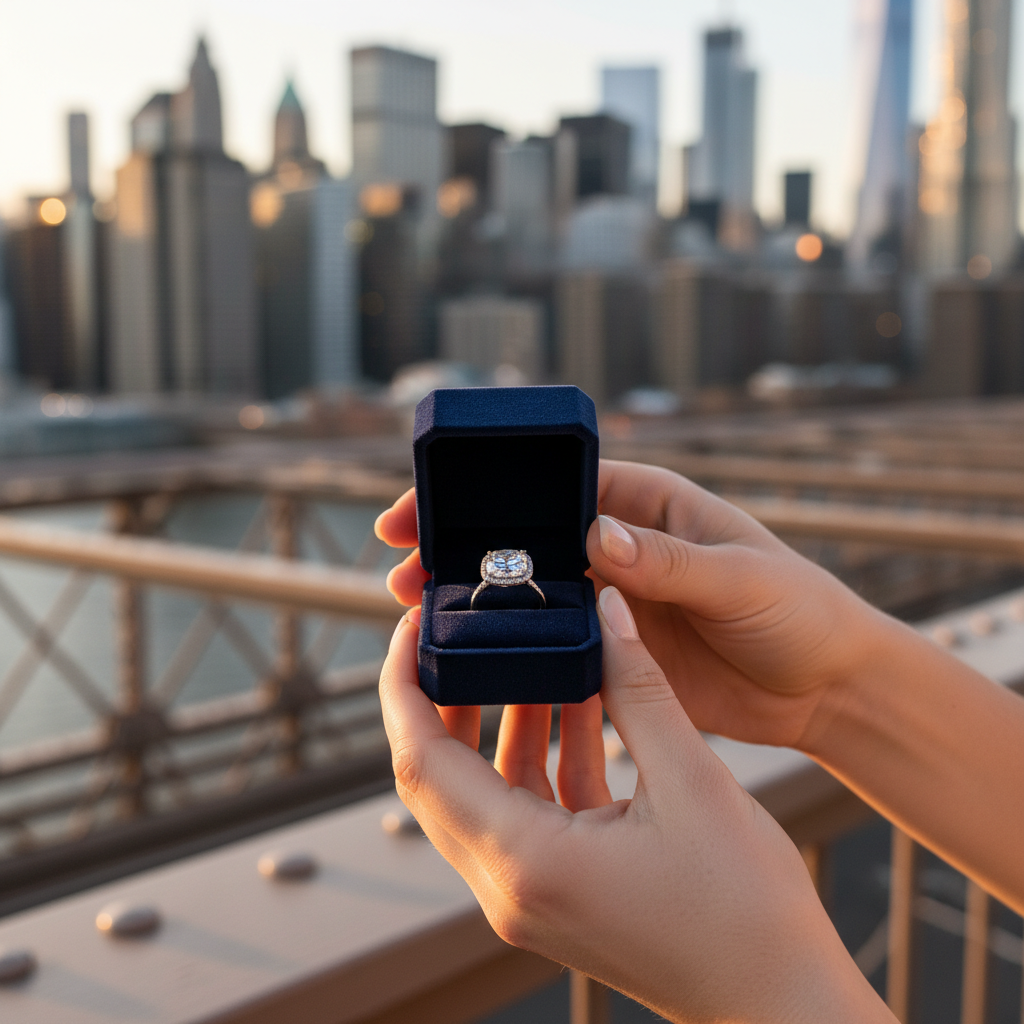
Case studies and real-world examples
Real shoppers balance sparkle, lifestyle, and timelines. These brief scenarios show how certification, setting choice, and flush-fit planning create everyday comfort and long-term satisfaction with lab-grown diamond engagement rings.
Example 1: The subway commuter
- Profile: Lives in Manhattan, commutes daily, works with gloves in winter.
- Challenge: Avoid snagging on sweaters and coat linings.
- Solution: A 14k bezel-set round brilliant offers strong brilliance with a low profile; the wedding band nests flush.
- Outcome: Comfortable daily wear, easy cleaning routine, and documented certification in their records.
Example 2: The timeline-sensitive proposal
- Profile: Planning a holiday engagement near Rockefeller Center lights.
- Challenge: Short timeline and busy seasonal traffic.
- Solution: Chooses an in-stock solitaire with independent grading; uses next-day shipping to meet the date.
- Outcome: Proposal happens on schedule with ring specs aligned to preferences discussed in a quick phone consult.
Example 3: The detail-focused designer
- Profile: Wants a three-stone ring with tapered sides and precise proportion.
- Challenge: Balance center stone spread and side-stone size.
- Solution: Compares multiple lab-grown options; selects a configuration where side stones frame but don’t overtake the center.
- Outcome: A refined silhouette that photographs beautifully and fits flush with a matching band.
For proposal planning inspiration and checklists, you can review this concise proposal ring guide and adapt the steps to your timeline and preferences.
Care, cleaning, and long-term maintenance
Diamonds are durable, but settings need periodic care. Clean your ring at home with mild soap and a soft brush, schedule annual prong checks, and store it in a protective box. Routine maintenance preserves brilliance and secures the stone over a lifetime of wear.
- Home cleaning: Soak in warm, soapy water and use a soft brush; rinse and pat dry with a lint-free cloth.
- Professional checkups: Inspect prongs annually; tighten as needed to secure the diamond.
- Storage: Keep in a padded box or fabric pouch to prevent scratches to metal.
- Activity-aware wear: Remove during heavy lifting, contact sports, or abrasive tasks.
Comparison: lab-grown vs. natural (at a glance)
Both lab-grown and natural diamonds are real diamonds graded by the same 4Cs. The key difference is origin: laboratory vs. geology. Your choice comes down to personal values, design preferences, and how you prioritize certification, availability, and timeline.
| Aspect | Lab-Grown | Natural |
|---|---|---|
| Origin | Laboratory (HPHT or CVD) | Geologic formation, mined |
| Grading | 4Cs by independent labs | 4Cs by independent labs |
| Availability | Consistent supply, broad size/shape options | Varies by market and sourcing |
| Design flexibility | Excellent—easy to compare multiples | Excellent—wide range of options |
| Certification focus | Commonly IGI, GCAL for lab-grown | Commonly GIA, AGS heritage |
If you’re exploring settings while weighing origin, this balanced engagement ring guide gives a consumer-level overview you can pair with Diamond2Deal’s specs.
Frequently asked questions
Here are clear answers to the most common questions buyers ask about engagement rings featuring lab-grown diamonds—covering grading, durability, everyday wear, and how to pair wedding bands without gaps.
Are lab-grown diamonds real diamonds?
Yes. Lab-grown diamonds are pure carbon crystals with the same hardness, brilliance, and 4Cs grading as mined diamonds. The difference is origin: laboratory growth (HPHT or CVD) instead of geological formation and mining.
Which shape gives the most sparkle?
A well-cut round brilliant maximizes fire and scintillation. Ovals, cushions, and princess cuts can deliver strong sparkle too. Prioritize cut quality, symmetry, and polish; then choose the shape that matches your style and hand proportions.
How do I pick the right metal?
Choose the color and durability that fit daily life. 14k gold balances strength and shine for routine wear, while 18k offers a richer hue. White gold can accent icy tones; yellow and rose gold complement warmer looks.
Will my wedding band sit flush with the engagement ring?
It can—if you choose a setting designed for nesting or select a contoured band. Review side profiles and ask for a flush-fit plan so the band sits tight without spinning or gaps.
What maintenance does a ring need over time?
Clean with mild soap and a soft brush, and schedule annual prong checks. Diamonds are hard, but prongs and shanks are metal and benefit from routine inspection to keep the stone secure and the finish bright.
Key takeaways
Choose cut quality first, confirm independent certification, and match setting profile and metal to your daily life. Plan a flush-fit wedding band and set up a simple cleaning routine. With those steps, lab-grown diamond engagement rings deliver beauty, comfort, and lasting confidence.
- Lab-grown diamonds are real diamonds with the same 4Cs grading.
- Round maximizes sparkle; bezels and halos add protection or presence.
- 14k is a durable everyday choice; 18k offers a richer tone.
- Confirm certification details and report numbers before checkout.
- Diamond2Deal supports you with education, fast shipping, and expert help.
Conclusion: Your next step with Diamond2Deal
Ready to choose with confidence? Shortlist a certified lab-grown diamond ring, confirm specs, and plan a flush-fit band. Diamond2Deal’s expert support and next-day shipping on many styles make celebrating your moment simple—online or from our Midtown Manhattan location.
Explore our guides and compare in-stock options now:
- Learn the essentials on our lab-grown diamonds page.
- Browse education on lab-grown engagement rings.
- Read context on lab-grown sustainability while you compare settings and metals.