

GIA Diamond Guide: Save Money When You Buy in 2026
A GIA diamond is a diamond evaluated by the Gemological Institute of America using standardized 4Cs grading for color, clarity, cut, and carat. A GIA report documents those grades, measurements, and identifying features so you can compare stones confidently. From our Midtown address at 420 Madison Ave in Manhattan, Diamond2Deal pairs GIA education with certified selections and fast nationwide shipping.
By Mit Trivedi • Last updated: 2026-06-19
At a Glance: What you’ll learn
This complete guide explains what a GIA diamond is, why certification matters, and how to use a report to choose better sparkle. You’ll see how grading works, compare labs, understand pricing drivers, and get Manhattan-specific buying tips—all with Diamond2Deal’s education-first approach.
- Clear definition of GIA-certified grading and what’s inside a report
- Why independent certification protects your purchase and insurance needs
- How GIA grading works—intake, 10× clarity, master-stone color, and cut
- GIA vs other labs (IGI, GCAL) with practical, side-by-side advice
- Key pricing drivers (without dollar figures) and how to prioritize
- GIA and lab-grown in 2026—what’s included and how to compare
- Step-by-step: read a GIA report and verify it online in minutes
- Local tips for Manhattan and New York County shoppers
What is a GIA diamond?
A GIA diamond is any natural or lab-grown diamond graded by the Gemological Institute of America. GIA evaluates the 4Cs—color, clarity, cut, and carat—under controlled conditions and issues an independent report with a unique number, measurements, and plotted characteristics you can verify online.
Here’s the foundation. The GIA color scale runs D to Z; clarity ranges from Flawless (FL) through Included (I1–I3); and round brilliants may receive an overall cut grade from Excellent to Poor. Many diamonds include a laser-inscribed report number on the girdle that matches the paperwork. Round brilliants commonly feature 57–58 facets, which is one reason they’re assessed for cut performance in more detail than fancy shapes.
At Diamond2Deal, we teach customers to translate those letters and numbers into how a diamond actually looks on the hand. For example, G–H color often appears bright and icy in 14k or 18k white gold, while slightly warmer grades can glow beautifully in yellow gold. We guide you through classic solitaires, three-stone rings, halos, diamond studs, tennis bracelets, and pendants—always starting with your style and how you wear your jewelry day to day.
Why GIA certification matters
GIA certification matters because it standardizes quality and reduces risk. Independent grading removes seller bias, clarifies expectations, and makes comparisons fair. A recognized report also streamlines insurance documentation and future trade-in or resale conversations.
Think of the report as a quality passport. It lists weight to two decimals, dimensions to hundredths of a millimeter, clarity features mapped on plots, proportion details, and—when relevant—fluorescence intensity from None to Very Strong. Those details are objective, testable, and repeatable. They’re not marketing language.
- Trust and transparency: Objective grading lets you compare diamonds across jewelers and websites without guesswork.
- Insurance-ready info: Carat, measurements, and grades help support documentation requirements.
- Resale clarity: Standardized grades reduce ambiguity if you ever upgrade, trade in, or resell.
- Education-first shopping: Our team explains every line, from table percentage to symmetry, in plain English.
In our experience working with New York couples, the report unlocks better choices. When you know that an eye-clean SI1 can look identical to a higher clarity grade at normal viewing distance, you can re-allocate toward a stronger cut or a setting you truly love.
How GIA grading works
GIA grading follows a controlled workflow: intake and verification, precision measurements, 10× clarity assessment, color grading against master stones, and cut analysis for round brilliants. Final grades are compiled in a report with a unique number that you can verify online.
- Intake & identification: The diamond is weighed to 0.01 ct and assigned a trackable ID.
- Measurements: Tools record diameter, depth, table size, angles, and girdle thickness to fine tolerances.
- Clarity at 10×: Trained graders identify inclusions and blemishes, then plot notable features.
- Color grading: The stone is compared face-down to a master set in controlled, neutral lighting from D through Z.
- Cut analysis (rounds): Light performance factors and proportions inform cut from Excellent to Poor.
- Report & inscription: Many stones carry a laser inscription of the report number on the girdle.
Practical note: fluorescence is described from None to Very Strong. We encourage evaluating the stone in daylight and UV-rich lighting. In rare cases, Very Strong blue can create a hazy look; Faint to Medium typically has little visible effect and can even make near-colorless grades appear crisper in some environments.
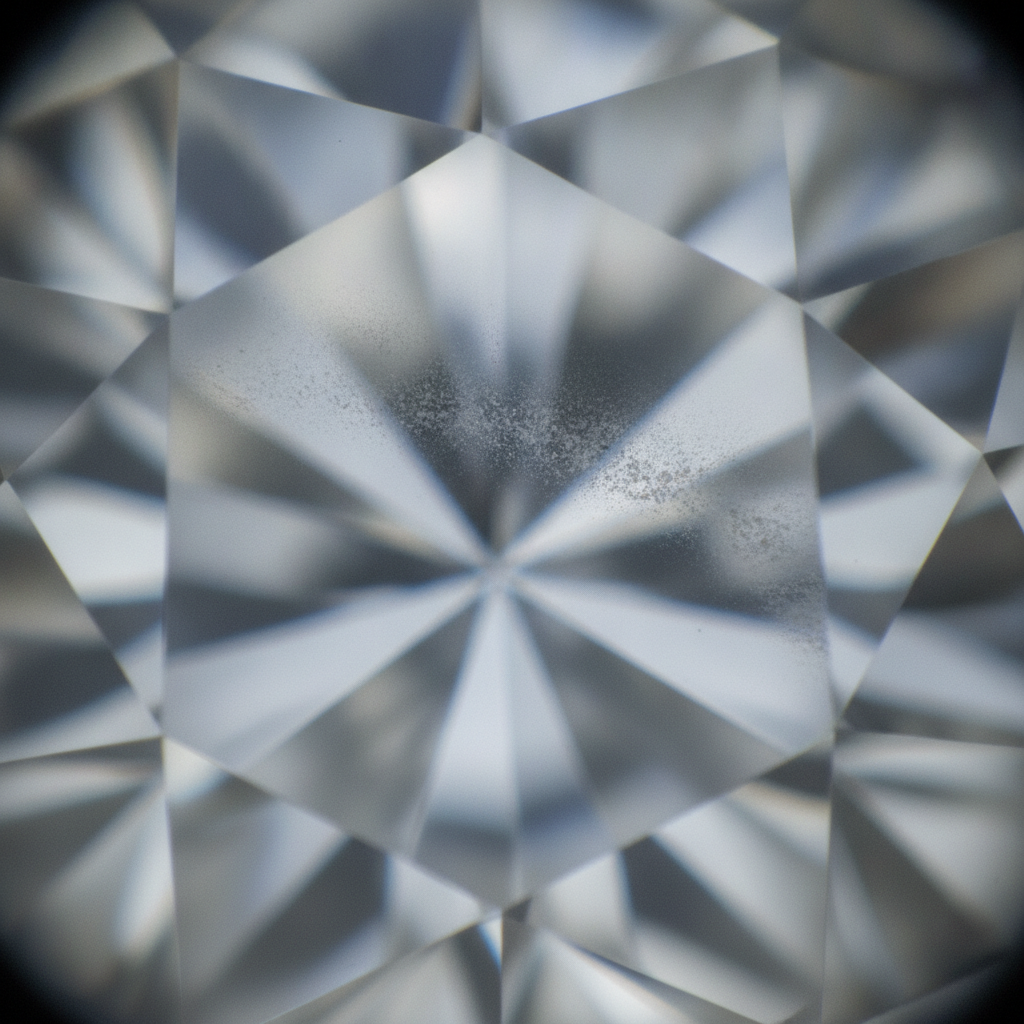
GIA vs other labs (IGI, GCAL)
GIA is widely regarded as the most consistent grader. IGI is popular for lab-grown diamonds and is broadly adopted by major retailers. GCAL adds a guarantee to its grading. The best choice is the lab whose standards and verification tools you trust—and the stone that performs best in real light.
Side-by-side is your friend. Compare a GIA-graded round and an IGI-graded round with the same listed 4Cs. Then review the table, depth, crown and pavilion angles, and symmetry. Subtle differences in geometry often explain why one diamond looks livelier on the hand, even when the letters and numbers match.
For a broader market perspective, see this IGI vs. GIA overview and this cut quality guide that discuss how grading and performance interact in everyday buying decisions. On the origin question, this lab-grown vs natural primer summarizes common considerations for shoppers comparing options.
Pricing factors for GIA-graded diamonds
GIA grades don’t set prices, but they strongly influence them. Carat weight usually has the largest impact, followed by cut quality, then color and clarity. Shape, fluorescence, and market supply also play roles. Aim for visible beauty instead of paying for specs you won’t notice.
Key drivers you can use without memorizing charts:
- Carat & milestones: Demand often spikes at 1.00, 1.50, and 2.00 carats. A stone just below a milestone can look the same on hand with smarter proportions.
- Cut first: Sparkle is driven by cut. An Excellent-cut round with strong symmetry can outshine a higher-color diamond with weaker proportions.
- Color in context: Near-colorless (G–I) appears crisp in white metals; warmer tones pair beautifully with yellow or rose gold.
- Clarity you can see: Many VS2–SI1 diamonds are eye-clean at normal viewing distance. Use magnified images to confirm rather than assume.
- Shape personality: Rounds command a premium. Ovals, cushions, pears, and emeralds bring character and sometimes offer value.
- Fluorescence nuance: Faint–Medium is usually neutral; always view in varied lighting to confirm look and feel.
- Origin choice: Lab-grown offers larger looks at a given spec tier while maintaining 4Cs grading and laser inscriptions.
We help match specs to styles. Three-stone rings benefit from tight color matching across all stones. A solitaire can tolerate slightly lower clarity if the diamond is eye-clean. Tennis bracelets and pendants rely on uniformity—consistent cut and color across many stones create a continuous shimmer that stands out across a room.
Lab-grown diamonds and GIA in 2026
GIA issues Laboratory-Grown Diamond Reports with full 4Cs grading and clear disclosure of HPHT or CVD growth. In 2026, these reports enable apples-to-apples comparisons with natural stones while honoring transparent origin labeling and laser inscriptions.
Lab-grown diamonds are a core focus at Diamond2Deal. You’ll find certified stones across engagement rings, diamond studs, tennis bracelets, and pendants, with next-day shipping on thousands of in-stock styles. Reports typically note 4Cs grades, fluorescence, exact measurements, and often a “LABGROWN” girdle inscription that matches the report number for quick verification.
When you’re comparing an IGI-graded lab-grown diamond to a GIA-graded one, go beyond the 4Cs and evaluate proportions and light images. Two stones with identical letters and numbers can look very different under daylight, LED, and candlelight—our team shares videos at 10× to 40× and hand shots so you can see it yourself.
How to read a GIA report (step-by-step)
Confirm identity via the laser inscription, verify shape and measurements, review the 4Cs, and study the plot and proportions. For rounds, cut parameters drive performance; for fancy shapes, assess spread, bow-tie, and facet pattern. Finish by checking the report online.
- Verify identity: Match the girdle inscription to the unique report number.
- Shape & spread: Ensure measurements match the listing. For rounds, compare average diameter to depth; for ovals, look at length-to-width.
- 4Cs in order: Start with cut (rounds), then color and eye-clean clarity. Carat is personal—don’t sacrifice sparkle for a milestone.
- Proportions: Table %, depth %, crown and pavilion angles shape light return. For ovals and pears, check for minimal bow-tie.
- Plot: Inclusions near the edge can be hidden under prongs; center crystals may remain visible.
- Fluorescence: Note intensity and check appearance in multiple lighting environments.
- Online verification: Use the report number to confirm authenticity on the lab’s site.

Best practices for buying with confidence
Prioritize cut, aim for eye-clean clarity, and choose a color that suits your metal. Verify the report online, review magnified photos or videos, and lean on expert guidance. Friendly policies like 30-day returns and warranty support add protection as you decide.
Based on hundreds of consultations, here’s a playbook that works:
- Start with the setting: Solitaire, three-stone, halo, or bezel affects which 4C trade-offs make sense.
- Use magnification: 20×–40× imagery reveals clarity features you won’t see by eye but helps you compare options objectively.
- Verify online: Confirm the report number and key measurements before checkout.
- Check lighting: Evaluate in daylight, LED, and softer light; sparkle should hold across environments.
- Leverage expertise: Book a quick appointment so we can prep a tailored tray—saves hours of scrolling.
- Think beyond rings: For studs and tennis bracelets, matched color and cut across pairs or lines create the “wall of light” effect.
Diamond2Deal adds real-world guardrails: next-day shipping on thousands of in-stock styles, a 1-year warranty, free gift packaging, and responsive human support from a family-owned team that has served buyers since 1998.
Tools and resources
Use Diamond2Deal’s education hub, curated collections, and guided appointments alongside trusted third-party resources. Together, they turn grades into on-hand beauty you can see—without guesswork.
- Explore our education on the 4Cs, metals, sustainability, and sizing in the diamond grading guide.
- Compare styles and settings in our engagement ring collections and certified lab-grown picks in this GIA-certified lab-grown overview.
- Review specific certified ring listings like this lab-grown engagement ring and this similar certified option.
- For additional 2026 perspectives, see the IGI vs. GIA comparison noted above.
- Have questions? Book a fast virtual or Midtown appointment and we’ll walk you through 10×–40× imagery, hand shots, and style pairings.
Manhattan buying tips for GIA diamonds
In Manhattan and New York County, plan around peak hours, verify reports before commuting, and combine errands near Midtown. With Diamond2Deal’s fast shipping, you can shortlist at home and finalize details during a quick visit, then enjoy a same-day pickup or rapid ship-out.
Local considerations for Manhattan
- Bundle your visit with a quick stop near Grand Central for seamless travel; our address is a short walk away.
- Holiday weeks and summer showers change foot traffic; book ahead and request videos to compare from home.
- Weekday afternoons are quieter; bring a shortlist of settings so we can prep exactly what you want to see.
Real-world examples from our clients
These quick scenarios show how report-driven choices deliver visible sparkle and smarter trade-offs. Each started with a style goal, then aligned the 4Cs to the look—without paying for specs that don’t change what you see.
- Classic solitaire (NYC): The couple targeted Excellent cut, G–H color, and eye-clean VS2–SI1. The result: crisp fire in a 14k white gold solitaire that shines across workdays and nights out.
- Tennis bracelet gift: We prioritized uniform cut and near-colorless grades across dozens of stones. The continuous shimmer beat chasing a single higher-clarity point.
- Lab-grown oval in halo: Slightly warmer color paired with yellow gold created contrast and warmth; careful proportions minimized bow-tie.
- Three-stone anniversary: Tight color matching and harmonious facet patterns across all three stones produced a balanced, high-contrast look in 18k yellow gold.
- Stud upgrades: Moving from 0.25 ct to 0.50 ct each, we emphasized matched cut and color for symmetry on the ear; the everyday sparkle doubled without overcomplicating specs.
Frequently Asked Questions
These concise answers cover what a GIA diamond is, how to verify reports, and how lab-grown fits the picture. Each is formatted for quick reading and voice responses.
Is a GIA diamond better than IGI?
GIA is widely considered the most consistent grader. IGI is popular for lab-grown and has strong market adoption. Compare actual stones side-by-side and verify both reports online before deciding.
Do lab-grown diamonds get GIA certificates?
Yes. GIA issues Laboratory-Grown Diamond Reports with full 4Cs grading and disclosure of HPHT or CVD growth. Many lab-grown stones include a laser inscription of the report number on the girdle.
How do I verify a GIA diamond report?
Match the laser inscription on the girdle to the report number, then use the lab’s online Report Check to confirm grades, measurements, and proportions.
Which 4C should I prioritize?
Prioritize cut for sparkle, then target eye-clean clarity and a color that suits your metal. Carat is personal—avoid chasing milestone weights if it reduces overall beauty.
Conclusion and next steps
A GIA diamond report turns a complex purchase into a transparent one. Focus on cut, verify the report online, and align specs with style. With Diamond2Deal’s education, fast shipping, and friendly policies, you can choose confidently and enjoy your jewelry for years.
- Key takeaways: Trust the report; prioritize cut; confirm eye-clean clarity; verify online.
- Action steps: Pick your setting, shortlist 2–3 reported stones, book an expert consultation, and compare videos in multiple lights.
- Ready to start? Explore our GIA-certified lab-grown selections and schedule a quick Midtown or virtual appointment today.