

Lab Grown Diamond Tennis Bracelets: Shine More in 2026
A lab grown diamond tennis bracelet is a continuous line of lab-created diamonds set in precious metal for everyday elegance. At Diamond2Deal in New York (420 Madison Ave, 5th Floor, Rm 500), we help you choose the right length, setting, and diamond quality so your bracelet shines for years.
By Mit Trivedi — President, Diamond2Deal
Last updated: 2026-06-14
Above-Fold Hook + Table of Contents
Use this guide to pick the perfect tennis bracelet: learn what “lab grown” means, how settings affect sparkle and security, which lengths and metals to choose, and how to care for your piece. Jump to any section to compare options and shop with confidence.
Here’s your quick roadmap. Skim first, then dive deeper where you need detail.
- Overview
- What is a lab grown diamond tennis bracelet?
- Why lab grown matters in 2026
- How tennis bracelets are built
- Styles, settings, and metals
- How to choose the right bracelet
- Care and maintenance
- Tools and resources
- Case studies and real examples
- FAQ
- Conclusion
- Related articles
Overview
A tennis bracelet is a flexible line of matched diamonds that drapes the wrist. Lab grown versions use diamonds created with HPHT or CVD technology, offering identical chemistry and brilliance. The right pick balances length, metal, setting style, and diamond quality with your lifestyle.
Think of a tennis bracelet as a design formula: consistent diamonds + secure setting + flexible links. Small choices change the look and daily wear experience.
- Diamond story: Lab grown diamonds share the same carbon structure, hardness (10 Mohs), and fire as mined stones.
- Wearability: Most people prefer 7.0 in. lengths; petite wrists may favor 6.5 in., while larger wrists often choose 7.5–8.0 in.
- Security: A box clasp with a safety catch adds redundancy; four-prong baskets are the classic secure choice.
- Finish: 14k white, yellow, or rose gold are durable standards; 18k offers richer color with a softer feel.
What Is a Lab Grown Diamond Tennis Bracelet?
A lab grown diamond tennis bracelet is a line bracelet featuring lab-created diamonds set continuously around the wrist. It delivers uniform sparkle, flexible comfort, and daily-wear durability. Expect matched color, clarity, and size, secured by prong, bezel, or channel settings in 14k/18k gold.
In our experience helping shoppers at Diamond2Deal, the term “tennis bracelet” often raises two questions: what “lab grown” means and how it compares to mined. The truth is simple: lab grown diamonds are real diamonds with the same physical and optical properties, produced in controlled environments.
- Diamond formation: CVD and HPHT replicate diamond growth conditions, producing crystals with the same refractive index (≈2.42) and dispersion (~0.044).
- Match-making: Great bracelets rely on tight sorting—size matched to the 0.01–0.02 mm, color typically within one grade band, and consistent cut.
- Flex links: Individual baskets connect with hinges, giving the bracelet its signature drape and comfort.
For shoppers comparing options, our lab-grown diamond store guide explains grading basics and sustainability, so you can evaluate any bracelet like a pro.
Why Lab Grown Tennis Bracelets Matter in 2026
Lab grown tennis bracelets deliver high sparkle, modern sustainability narratives, and strong availability. In Manhattan and across New York County, buyers value certified quality, quick shipping, and education—making lab grown a smart, timely pick for everyday luxury and milestone gifting.
Here’s why this category keeps growing in 2026: you get real-diamond brilliance, more design freedom, and faster access to in-stock lengths and metals.
- Real diamond performance: Hardness 10 on the Mohs scale resists scratches better than nearly all gemstones—ideal for daily wear.
- Design flexibility: Uniformity makes it easier to match 40–70 stones for a 7-inch bracelet, especially in popular 2.5–3.0 mm sizes.
- Availability: Our team stocks many lab grown line bracelets for next-day shipping, cutting lead times from weeks to days.
- Education-first: You can book a quick appointment with a diamond expert to confirm clarity targets (often VS range) and setting choices.
Want a deeper primer on lab grown vs. mined? This background explainer on lab grown vs natural diamonds offers broader context on formation methods and grading language.
How Tennis Bracelets Are Designed and Built
A tennis bracelet combines matched round diamonds in individual settings joined by hinges, finished with a locking clasp. Precision matching, sturdy prongs or bezels, and a smooth interior ensure comfort and security. The result is fluid sparkle that wears effortlessly from day to night.
From our bench to your wrist, build quality comes down to four factors: stone matching, setting integrity, link engineering, and clasp reliability.
Core components
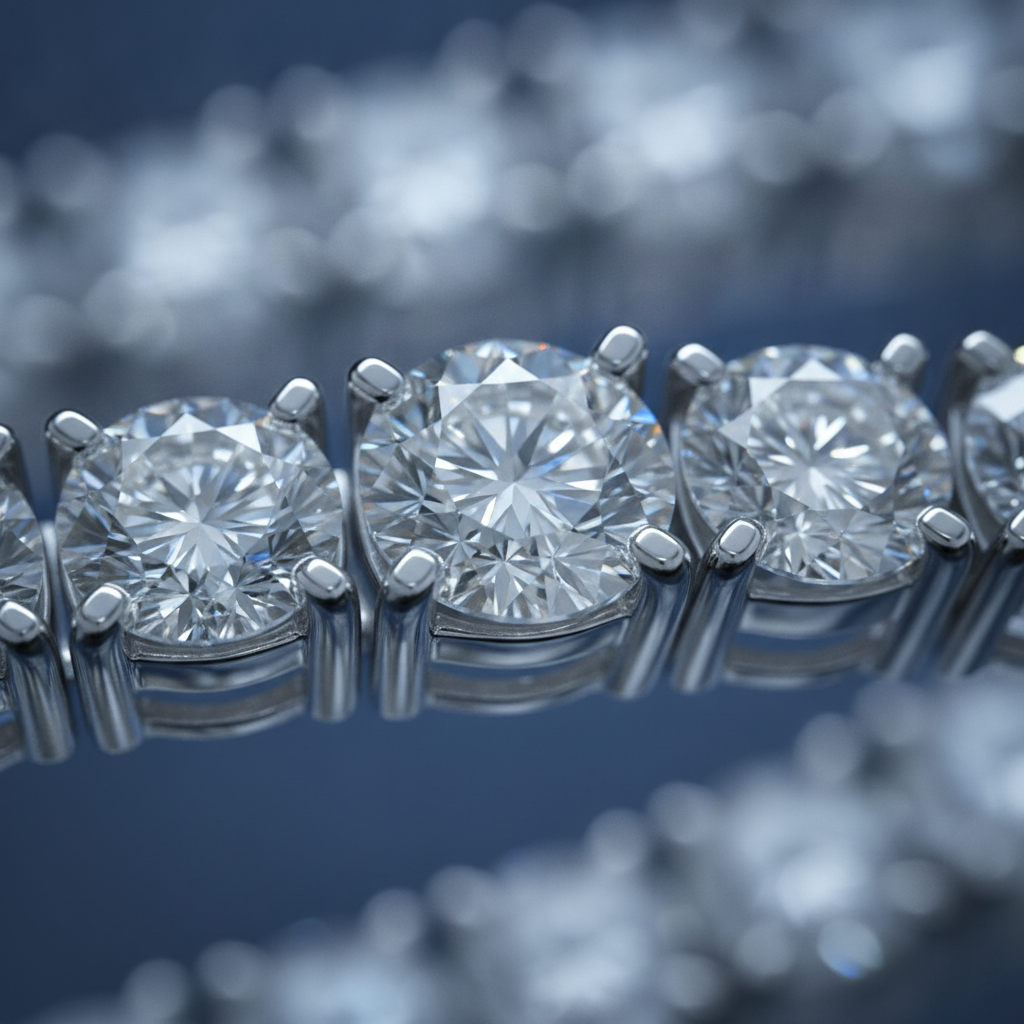
- Baskets and prongs: Four-prong baskets maximize light return and hold stones firmly; three-prong can lighten the look; bezel wraps the girdle for sleek protection.
- Links and pins: Each basket connects with a small hinge pin. Smooth articulation prevents hair pulling and improves drape.
- Clasp systems: A box clasp with a figure-8 safety or side safety provides double security; many buyers prefer the tactile “click.”
- Finishing: Polishing, rhodium (for white gold), and quality control checks on every link reduce snag points.
Typical build sequence
- Sort and match diamonds for size, color, and clarity.
- Assemble baskets and align prongs for consistent seat height.
- Set stones, tighten prongs, and inspect girdle protection.
- Join links, tune articulation, and install clasp + safety.
- Polish, ultrasonically clean, and perform final quality assurance.
| Setting Type | Look | Security | Best For |
|---|---|---|---|
| Four-prong | Classic, maximum light | High | Everyday sparkle |
| Three-prong | Airy, minimal metal | Moderate | Lighter visual weight |
| Bezel | Sleek, modern edge | Very high | Active lifestyles |
| Channel | Streamlined rows | High | Snag-resistant wear |
If you’d like to see components up close, our hands-on tennis bracelet guide walks through baskets, prongs, and clasp types in more depth.
Types, Styles, and Approaches
Choose a lab grown tennis bracelet by combining diamond size and shape, setting style, metal, and length. Round brilliants in four-prong 14k white gold are classic; bezel or channel settings add protection; yellow or rose gold warm the look; lengths range from 6.5 to 8 inches.
Diamonds and size
- Popular sizes: 2.0–3.0 mm stones create an elegant daily profile; 3.5–4.0 mm reads bolder. A 7 in. bracelet with 3.0 mm stones typically holds about 60–70 diamonds.
- Shapes: Rounds dominate for symmetry; ovals and emerald-cuts skew modern and require custom channels or bezels.
- Quality targets: Many shoppers aim for near-colorless grades and VS clarity for a crisp, eye-clean line under normal viewing.
Settings and metals
- Four-prong vs. bezel: Four-prong maximizes scintillation; bezels trade a touch of sparkle for superior snag resistance.
- 14k vs. 18k: 14k is tougher for daily wear; 18k brings richer hue. White gold is rhodium-finished; yellow and rose deliver warmth.
- Clasps: Prefer box clasps with an added safety. Magnetic or slide clasps aren’t typical for diamond line bracelets.
Styling approaches
- Solo statement: Wear alone on the dominant wrist for impact.
- Stacking: Mix with a slim gold bangle or chain for texture; alternate metals for contrast.
- Bridal set: Pair with stud earrings and a classic pendant for a cohesive aisle-to-evening look.
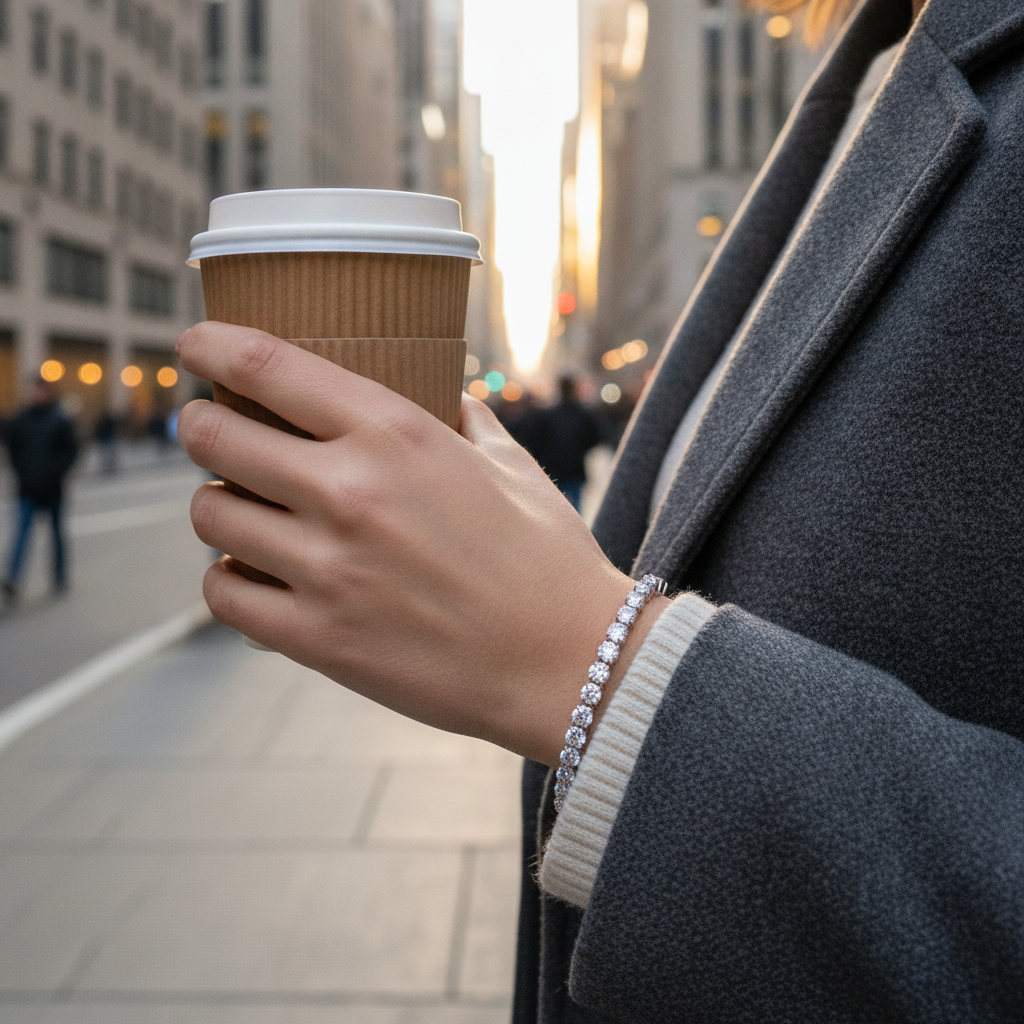
Explore an example build in 14k white gold here: the round-cut lab grown diamond tennis bracelet showcases matched VS clarity stones and a time-tested basket layout.
How to Choose a Lab Grown Diamond Tennis Bracelet
Measure your wrist, add 0.25–0.5 inches for comfort, then select diamond size, setting, and metal to match your lifestyle. Prioritize secure clasps and consistent grading. When in doubt, book a quick consultation to confirm sizing and daily-wear durability.
Fit and length
- Measure: Wrap a flexible tape at the wrist bone; add 0.25–0.5 in. for comfort (0.25 for snug, 0.5 for looser drape).
- Common lengths: 6.5 in. (petite), 7.0 in. (classic), 7.5–8.0 in. (larger wrists or looser fit).
- Balance: Larger stones add weight; ensure the bracelet doesn’t rotate excessively when you move.
Diamond and setting choices
- Cut consistency: Well-cut, matched stones elevate fire and avoid a “blinking” line effect.
- Clarity sweet spot: VS ranges are popular for line bracelets—eye-clean at normal viewing distances.
- Setting security: Prefer four-prong baskets or bezels for daily wear; confirm prong thickness and seat height uniformity.
Verification and support
- Certification: Request grading documentation for center stone lots or batch-level QC summaries where available.
- Durability check: Look for a box clasp + safety; test the hinge articulation across links for smooth motion.
- Guided help: Use our lab-grown buyer guide and schedule an appointment with a Diamond2Deal expert for a 10-minute fit and finish review.
Care and Maintenance
Keep your tennis bracelet bright by cleaning monthly with warm water, mild soap, and a soft brush. Rinse and dry thoroughly, then inspect clasps and prongs. For heavy wear, schedule professional checks twice a year to tighten prongs and refresh rhodium on white gold.
- At-home clean: Soak 10–15 minutes in mild soapy water; gently brush under baskets; rinse and pat dry.
- Ultrasonic caution: Ultrasonics are fine for most diamonds; avoid if stones have significant inclusions near the surface.
- Storage: Lay flat in a soft-lined box to avoid bending pressure on links.
- Checkpoints: Review clasp “click,” safety latch tension, and prong tips every few weeks.
For seasonal styling and upkeep reminders, this holiday jewelry guide includes helpful checklists you can adapt year-round.
Tools and Resources
Use education guides, expert appointments, and in-stock filters to shop faster. Diamond2Deal offers next-day shipping on many lab grown bracelets, robust education articles, and quick consultations to verify fit, finish, and grading before you buy.
- Education hub: Start with our lab-grown diamond guide for the 4Cs and lab methods in plain English.
- In-depth reads: Compare styles in this design overview and see how tennis bracelets stack with other classics.
- Bracelet details: Visit our step-by-step tennis bracelet guide for clasp and setting visuals.
- Style inspiration: Browse this diamond jewelry guide for pairing a bracelet with studs and pendants.
- Occasion planning: This Valentine’s Day planning guide can spark gifting ideas any month.
Want 1:1 help? Book a brief appointment with a Diamond2Deal expert for sizing, clasp options, and diamond quality confirmation. We’ll help you decide in minutes—online or from our New York base.
Case Studies and Real-World Examples
Real shoppers choose lab grown tennis bracelets for daily wear, milestone gifts, and bridal stacks. These quick scenarios show how length, diamond size, and setting affect comfort and sparkle—and how next-day shipping and expert checks simplify the process.
Everyday elegance, busy schedule
A Manhattan buyer commuting near Grand Central wanted office-to-dinner versatility. We sized a 7.0 in., four-prong 14k white gold bracelet with ~2.7 mm stones for low-snag wear. She appreciated quick availability and the secure box clasp plus safety catch.
Bridal stack with heirloom ring
A couple mixing new and heirloom pieces asked for a warm tone that wouldn’t compete with a vintage ring. We recommended 14k yellow gold in a three-prong setting to soften the line and keep visual weight balanced next to the ring’s ornate details.
Gift with a deadline
A gift buyer needed delivery fast. We confirmed wrist size, suggested 7.5 in. for comfort, and shipped an in-stock lab grown line bracelet the next day. The safety latch and matched VS clarity ensured confident daily wear from day one.
Local considerations for Manhattan
- Plan pickups around Midtown crowds; if you’re near Grand Central, allow a few extra minutes during evening rush for a smooth handoff.
- Holiday season gets busy; schedule sizing checks earlier in November to avoid last-minute queues.
- For event styling near Rockefeller Center, consider bezel or channel settings to reduce snag risk on winter layers.
Lab-Grown vs. Natural for Tennis Bracelets
Both lab grown and natural diamonds are real diamonds with identical hardness and optical properties. For tennis bracelets, lab grown options often offer tighter matching and faster availability, while natural options appeal to traditionalists. Choose based on values, timeline, and the look you want.
| Factor | Lab Grown | Natural |
|---|---|---|
| Chemistry/Hardness | Diamond / 10 Mohs | Diamond / 10 Mohs |
| Matching Ease | High (consistent supply) | Moderate (tighter sorting) |
| Availability | Often in stock | May require sourcing |
| Narrative | Modern, tech-forward | Traditional, natural origin |
For broader context while you compare, read this overview on lab vs natural diamonds. It covers formation and grading language you’ll see as you shop.
Frequently Asked Questions
Get quick answers to the most common tennis bracelet questions: sizing, daily wear, security, and lab grown credibility. Each answer is concise so you can decide confidently and move to the right product.
Are lab grown diamond tennis bracelets real diamond jewelry?
Yes. Lab grown diamonds are real diamonds with the same carbon crystal structure, hardness, and optical properties as mined diamonds. They’re produced with HPHT or CVD methods and graded using the same standards you’d expect for natural stones.
What length should I choose for a tennis bracelet?
Measure your wrist at the bone and add 0.25–0.5 inches for comfort. Many adults prefer 7.0 inches, while petite wrists often opt for 6.5 inches and larger wrists for 7.5–8.0 inches. If you’re between sizes, consider the next half-inch for easy drape.
Which setting is best for daily wear?
Four-prong baskets are the classic, secure choice with great sparkle. If you’re very active or wear knits often, consider bezel or channel settings for added snag resistance and edge protection. Always pair with a box clasp and a safety catch.
How do I keep my bracelet secure?
Check that the box clasp clicks firmly and the safety latch sits tight. Inspect prongs for even tips and minimal movement at each basket. A quick monthly clean and a professional check twice a year will maintain both shine and security.
Conclusion and Next Steps
A lab grown diamond tennis bracelet blends real-diamond brilliance with everyday practicality. Choose the right length, setting, and gold color, verify clasp security, and maintain it with simple care. When you’re ready, lean on education resources and a fast consult to finalize details.
Key takeaways
- Measure wrist + 0.25–0.5 in. for ideal drape and comfort.
- Four-prong or bezel settings balance sparkle and security for daily wear.
- Box clasp + safety is the reliability standard for line bracelets.
- Monthly cleaning and twice-yearly checks keep shine and structure strong.
- Use Diamond2Deal’s guides and quick appointments to confirm choices fast.
Ready to see a classic build? Explore our lab grown round-cut bracelet and compare settings using our visual guide before you decide.
Related Articles
For deeper background on grading, sustainability, and matching your bracelet to other classics, start with our lab-grown diamond guide and this broader diamond jewelry overview. If you’re comparing options across cuts and styles, this design comparison is a helpful read.