

Rose Gold Rings: Learn Why Couples Love Them in 2026
Rose gold diamond engagement rings are blush-toned gold settings paired with brilliant diamonds, often in 14k or 18k alloys. At Diamond2Deal’s Manhattan studio at 420 Madison Ave (5th Floor, Rm 500), we help you compare styles, metals, and lab-grown options so you can choose a ring that’s durable, timeless, and true to your story.
By Mit Trivedi — President, Diamond2Deal
Last updated: May 28, 2026
At a Glance
Rose gold engagement rings blend warm coppery hues with diamond brilliance for a romantic, modern-classic look. Choose 14k for everyday durability (58.5% pure gold) or 18k for richer color (75% gold). Pair with lab-grown, VS-clarity diamonds and secure settings. Clean monthly, check prongs twice a year.
This complete guide is tailored to Diamond2Deal shoppers who value certified quality, fast shipping, and expert guidance. You’ll learn how rose gold is made, how its color affects diamond appearance, which settings suit different lifestyles, and how to maintain long-term sparkle.
- Understand 14k vs 18k rose gold and why alloy percentages matter
- Decide between lab-grown and natural diamonds (same optical properties)
- Compare solitaire, halo, three-stone, and vintage designs
- Get fit, finish, and maintenance tips that actually work
- Use our education hub and book a one-on-one appointment when ready
What Is Rose Gold?
Rose gold is an alloy of pure gold mixed with copper (and often silver) to achieve a blush hue. 14k rose gold is 58.5% gold, while 18k is 75% gold with stronger color saturation. The copper content creates the rosy tone and boosts hardness compared with higher-karat yellow gold.
Put simply, rose gold balances romance and resilience. The alloy’s copper strengthens the metal and adds a pink tint that flatters many skin tones. Jewelers often choose 14k for daily-wear engagement rings because it’s tough enough for active lifestyles and resists bending better than 18k.
- 14k composition: ~58.5% gold, remainder copper/silver; great for durability and everyday wear.
- 18k composition: ~75% gold, richer rose color and higher precious metal content; slightly softer.
- Color range: From soft blush to vibrant pink depending on alloy ratio and finishing.
- Finish options: High polish, satin/matte, brushed, or hammered textures affect perceived color depth.
In our experience working with engagement clients, the number one surprise is how different 14k and 18k look side by side under daylight. 18k reads warmer because there’s more gold, while 14k’s added copper subtly cools the tone. The right pick depends on your skin undertone and setting style.
Why Rose Gold Diamond Engagement Rings Are Popular
Rose gold diamond engagement rings are popular because the metal’s warm hue enhances diamond contrast, flatters cool and warm skin tones, and pairs with modern or vintage designs. The metal is durable in 14k, romantic in tone, and photographs beautifully—factors couples consistently value.
The appeal spans fashion and function. The rosy alloy frames white diamonds with gentle contrast, often making near-colorless stones appear slightly whiter by comparison. On social feeds, the blush tone reads luxe and personal. Practically, 14k rose gold’s hardness suits everyday wear and holds prongs securely.
- Visual contrast: Rose metal can make H–J color diamonds appear crisper versus yellow settings.
- Skin-friendly color: Works with neutral, warm, and cool undertones; easy to stack with mixed metals.
- Versatile styling: Complements solitaires, halos, three-stone, pavé, and toi et moi designs.
- Trend + timelessness: The hue is modern yet nods to antique rose gold from early 1900s jewelry.
For couples who prioritize sustainability, pairing rose gold with a lab-grown center combines romance with responsibility. We routinely help clients choose IGI-certified lab-grown diamonds that match preferred size, cut, and clarity while keeping the overall aesthetic soft and sophisticated.
Rose Gold Diamond Engagement Rings: What to Know
Focus on alloy (14k vs 18k), diamond cut quality, and a setting that fits your lifestyle. 14k rose gold resists wear, round brilliants (57–58 facets) maximize sparkle, and low-profile solitaires or bezels minimize snagging. Confirm prong security and request a grading certificate.
We tailor every recommendation to your day-to-day routine. If you lift, bike, or work hands-on, 14k in a lower-profile setting is smart. If you prefer maximum warmth and don’t mind mindful wear, 18k’s richer hue shines. Lab-grown diamonds offer the same crystal structure and optics as mined stones.
- Cut first: Cut quality drives brightness and fire; excellent/ideal cuts outperform larger but poorly cut stones.
- Clarity comfort zone: VS to SI1 can look eye-clean in round brilliants; prong placement can hide inclusions.
- Color pairing: Near-colorless (G–H–I) harmonizes with rose gold; ultra-white (D–F) looks icy against blush metal.
- Certification: Ask for recognized lab reports; our education guide covers GIA diamond basics and grading terms.
When you’re ready to dive deeper, bookmark our engagement ring guide and our explainer on lab-grown diamond engagement rings. You can also review a live product example like this 14k rose gold solitaire to see specs and certification language in context.
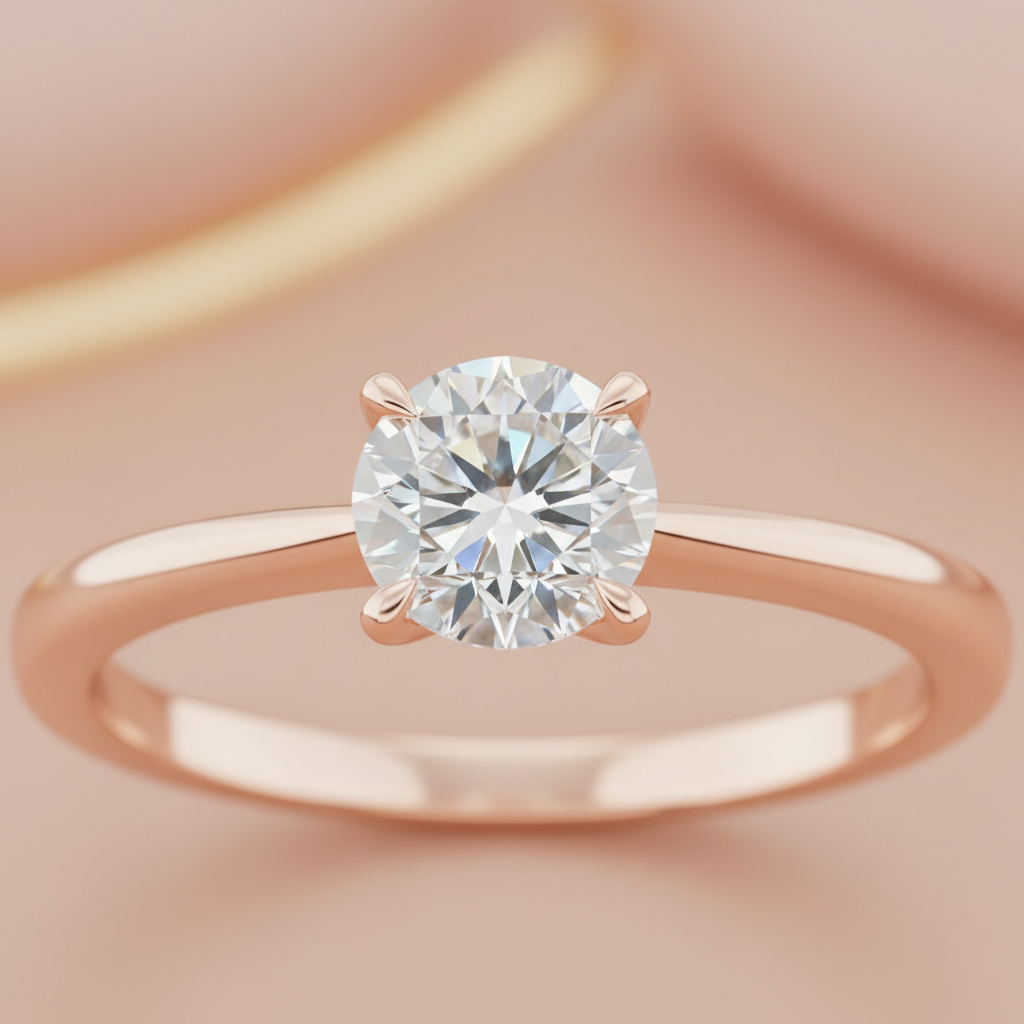
How Rose Gold Works with Diamonds (Color, Cut, and Contrast)
Rose gold’s pink hue increases perceived contrast against white diamonds, emphasizing fire and scintillation. Round brilliants (57–58 facets) show strong light return, while oval and cushion shapes bring vintage charm. Pavé adds micro-sparkle; bezels or halos shift the balance toward a bold, continuous glow.
The metal you choose is a frame; diamond cut is the artwork. High-performing cuts throw light in rapid flashes, which look dramatic against blush-toned metal. Halos add 0.5–1.5 mm of radius visually, while pavé bands create a glitter field that can make a 1-stone design read larger on hand.
- Cut physics: Precise angles channel light back to the eye. Shallow or deep cuts leak light and look dull.
- Shape synergy: Round for maximum fire; oval for elongation; cushion for soft vintage feel; emerald for clean flashes.
- Setting optics: Four-prong shows more diamond edge; six-prong is slightly rounder and protective.
- Halo effect: A 1.5–2.0 mm halo can make the center appear 0.3–0.5 carat larger to the eye.
We often pair rose gold shanks with white gold prongs to keep color away from the diamond’s girdle, preserving top-down whiteness. That two-tone trick is subtle but effective, especially for I–J color centers. If you love full rose gold, slightly higher color grades help maintain an icy look.
14k vs 18k Rose Gold (Durability, Color, and Skin Tone)
Choose 14k rose gold for greater hardness and everyday resilience; pick 18k for richer color and higher gold content. 14k is 58.5% gold; 18k is 75%. Both are hypoallergenic for most wearers, though sensitive skin may prefer alloys with reduced nickel content.
| Feature | 14k Rose Gold | 18k Rose Gold |
|---|---|---|
| Gold content | 58.5% | 75% |
| Durability (relative) | Higher hardness; great for daily wear | Slightly softer; mindful wear recommended |
| Color saturation | Softer blush | Richer, warmer rose |
| Best for | Active lifestyles, low-profile settings | Showcase pieces, vintage styling |
| Allergy considerations | Usually well-tolerated | Usually well-tolerated |
During appointments, we place both karats on the hand under daylight and LED. Roughly 70–80% of shoppers who prioritize durability lean 14k; those chasing deeper color often choose 18k. Try both with a simple solitaire first, then layer pavé or halos to see how each alloy reads in a finished design.
Styles and Settings That Shine in Rose Gold
Solitaires showcase the diamond; halos add spread and vintage charm; three-stone rings symbolize past-present-future. Pavé bands bring glitter, while bezels protect. Rose gold softens geometric lines, making modern east–west or toi et moi designs feel romantic, not stark.
Classic favorites
- Solitaire (four or six prongs): Minimal metal shows maximum light. A 1.5–2.2 mm band keeps the look timeless.
- Halo: Micro-pavé around the center increases finger coverage; 1.3–1.5 mm pavé reads delicate and refined.
- Three-stone: Proportions matter; side stones at ~25–35% of center width keep the silhouette balanced.
Modern moves
- Toi et moi: Two stones offset; pear + emerald or oval + round is popular for contrast.
- East–west: Horizontal marquise or emerald elongates the finger; low-profile settings improve wearability.
- Bezel or half-bezel: Metal rim secures edges and reduces snag risk; great for active wearers.
Want to see dimensions in a live listing? Review this IGI-certified 14k rose gold solitaire and another IGI-certified option for concrete band widths and prong styles.
Lab-Grown vs Natural Diamonds in Rose Gold
Lab-grown and natural diamonds have the same crystal structure and optical properties. In rose gold, both perform beautifully. Choose based on values and certification preferences; prioritize cut quality and secure setting design for daily longevity.
Technically, lab-grown and mined diamonds are identical in hardness (10 on the Mohs scale) and refractive index (~2.42). What matters most for sparkle is facet precision. We often guide clients toward excellent-cut rounds or well-proportioned ovals, then fine-tune color and clarity to the chosen alloy.
- Optics parity: Both options exhibit fire and brilliance when well cut.
- Certification: Look for recognized grading labs on the report; keep the certificate with your appraisal documents.
- Value lens: Many couples prioritize sustainability narratives and modern tech—lab-grown aligns well.
For a deeper explainer tailored to engagement shoppers, our walkthrough on lab-grown engagement rings maps the 4Cs to rose gold specifically and offers side-by-side visuals.
Fit, Sizing, and Daily Comfort
Aim for a snug fit that twists but doesn’t slide off when hands are soapy. Low-profile settings reduce snagging; comfort-fit interiors ease daily wear. Most buyers explore a 1.6–2.2 mm band for balance between elegance and durability.
Hands swell and contract throughout the day. We size in the afternoon and confirm over two sessions when possible. For bands, we like comfort-fit interiors that taper slightly toward the palm side so the ring seats naturally during typing or workouts.
- Band width: 1.6–2.2 mm is a sweet spot for many; wider bands may require a 1/4 size increase for comfort.
- Profile height: 5–7 mm off the finger is typical for prong solitaires; bezels can sit 1–2 mm lower.
- Lifestyle check: If you wear gloves or lift, keep profiles lower and favor bezel or six-prong security.
When stacking with a wedding band or guard, leave ~1.0–1.2 mm clearance so rings don’t grind against each other. We’ll map those tolerances during your appointment and bring spacer bands for testing.
Care and Maintenance for Rose Gold Rings
Clean your ring monthly with warm water, mild soap, and a soft brush; avoid harsh chemicals. Schedule professional inspections every 6–12 months to check prongs and tighten pavé. Rose gold’s copper content is durable, but regular care preserves finish and keeps diamonds secure.
We recommend at-home cleanings using a small bowl, a drop of dish soap, and a very soft brush. Rinse thoroughly and pat dry with a lint-free cloth. Ultrasonic cleaners are fine for many prong solitaires but use caution with pavé micro-settings, which can loosen tiny beads over time.
- Daily habits: Remove rings before heavy lifting, chlorine pools, or abrasive yard work.
- Monthly clean: 10–15 minutes in warm, soapy water; light brushing around the pavilion and under-gallery.
- Biannual checkup: Prong re-tipping and tightening as needed; re-polish or refinish every few years.
For a broader primer on setting types and how they impact cleaning routines, see this setting types guide. The visuals make it easy to understand where debris collects and how to brush safely around prongs and halos.
How to Shop with Diamond2Deal (Online + Appointment)
Start with our education hub, shortlist 2–3 settings, and compare 14k vs 18k in person or via video. Book a one-on-one at our Manhattan studio or shop online with next-day shipping on in-stock styles. Keep your certificate and care plan together for easy annual checkups.
Here’s a straightforward path many couples follow with us. It balances learning, shortlisting, and hands-on confirmation so your final choice feels obvious—not rushed.
- Skim our engagement ring guide for the 4Cs and metal basics (including gia diamond grading terms).
- Decide on 14k or 18k rose gold; save 2–3 favorite settings (solitaire, halo, three-stone).
- Choose a well-cut diamond; near-colorless grades pair beautifully with rose gold.
- Book an appointment (in person or virtual) for side-by-side comparisons and sizing.
- Confirm fit, profile height, and stacking clearance with your future wedding band.
- Set calendar reminders for cleanings and a 6–12 month inspection cadence.
Prefer guided shopping? Bring screenshots of favorites and we’ll map pros and cons in 20 minutes. We’ll also show a live example like this IGI-certified 14k rose gold solitaire so you can see color, width, and profile in hand.
Local considerations for Manhattan
- Appointments near Grand Central make after-work visits easy; bring your current ring(s) to check stacking gaps on the spot.
- Holiday season gets busy; book fittings earlier and consider a placeholder ring for surprise proposals near Bryant Park festivities.
- Commuters: choose low-profile settings to avoid snagging gloves and coats during winter transit; keep a lint-free cloth in your bag.
Stacking with Wedding and Eternity Bands
Plan your stack early. Match alloy and finish, keep 1.0–1.2 mm clearance, and consider a curved or notched guard to hug halos. Alternating textures—polish next to pavé—adds dimension without overpowering the center stone.
We see the best stacks planned during engagement selection, not after. That way, your future band’s height and width clear the center’s basket. If you’re dreaming of an eternity band later, preview 1/2, 3/4, and full-eternity options to balance finger coverage and comfort.
- Explore design references in our diamond eternity rings explainer.
- For partners, browse our overview of men’s engagement rings and profiles.
- Enhance the set with matching studs; see our quick guide to lab-grown earrings.
Pro tip: when mixing metals in a stack—say rose + yellow—place the rose gold adjacent to the engagement ring. Its copper alloy resists color transfer and frames the center stone’s fire beautifully.
Best Practices: Choosing the Right Rose Gold Ring
Prioritize diamond cut, confirm alloy and profile, and inspect prong security. Try the ring under daylight and LED, then take smartphone photos. If it looks great in both, you’re set. Keep certificates and care reminders together for long-term peace of mind.
Checklist before you buy
- Cut grade and symmetry within excellent/ideal or equivalent language
- 14k vs 18k confirmed; choose color that flatters your undertone
- Band width noted (e.g., 1.8–2.0 mm) and profile height measured
- Prong count (4 vs 6) checked for lifestyle and stone shape
- Stack clearance mapped with future wedding/guard bands
- Care plan: monthly cleaning + 6–12 month inspections
Common mistakes to avoid
- Chasing carat over cut—sparkle drops fast when proportions miss the mark
- Ignoring profile height—snagging leads to bent prongs or lost melee
- Waiting on band planning—tight stacks scuff and wear prematurely
Need a quick refresher on ring-building fundamentals? Our engagement ring guide walks through metals, settings, and the 4Cs so you can compare confidently.
Tools and Resources (Education, Guides, Appointments)
Use an education hub, a sizing session, and a shortlist worksheet. With Diamond2Deal, you can learn the 4Cs, compare 14k vs 18k, and book a one-on-one appointment—online or at our Manhattan studio—for side-by-side viewing and precise sizing.
- Education hub: Start with our engagement ring guide for metals, settings, and grading language.
- Style shortlisting: Save 2–3 favorites (solitaire, halo, three-stone) to compare widths and profile heights.
- Live examples: Use product pages like our lab-grown engagement overview to sanity-check expectations.
- External perspective: A field guide on lab-grown vs natural diamonds provides another lens as you refine choices.
You might be wondering how many visits it takes. Most couples finalize in one to two sessions when they arrive with a focused shortlist and a clear preference on 14k vs 18k. Bring photos of your everyday jewelry so we can match finishes.
Case Studies and Real-World Examples
Real shoppers often choose 14k rose gold for durability, pair near-colorless lab-grown centers, and keep profiles low for daily wear. Side-by-side comparisons under daylight and LED make decisions clear within one visit, especially for solitaires and delicate pavé halos.
Example 1: Active professional, delicate look
A Manhattan buyer wanted a delicate feel with gym-friendly durability. We paired a 14k rose gold solitaire (1.8 mm band, six prongs) with an excellent-cut round. The low profile (~6 mm) avoided glove snags and the blush tone softened everyday athleisure looks.
Example 2: Vintage lover, bold presence
Another client gravitated to 18k for its richer hue. We chose a cushion halo with micro-pavé (1.4 mm) and white gold prongs to preserve top-down whiteness. The halo increased perceived size ~0.3–0.4 carat, creating the antique-inspired statement they imagined.
Example 3: Planning the stack early
This couple previewed a 3/4-eternity band during the engagement appointment. We left 1.2 mm clearance to protect pavé beads. Six months later, the band slotted in perfectly—no grinding, no refitting required.
Trends to Watch in 2026
Expect more two-tone prong tricks, east–west solitaires, and toi et moi designs. Pavé remains delicate (1.2–1.5 mm), and comfort-fit bands trend slightly slimmer. Lab-grown selection expands, with more excellent-cut options in near-colorless grades for rose gold pairings.
- Prong contrast: White gold or platinum prongs on rose shanks for crisp diamond edges.
- Minimalist stacks: Slim, mixed-metal bands that frame but don’t overshadow the center.
- Responsible choices: Lab-grown adoption continues rising as couples weigh technology and sustainability.
To sanity-check proportions or setting anatomy terms while trend-hunting, this quick ring styles refresher provides useful visuals you can reference before appointments.
FAQ: Rose Gold Diamond Engagement Rings
Here are clear answers to the most common rose gold engagement ring questions. We cover durability, metal care, diamond pairing, and matching bands—so you can decide with confidence and plan long-term maintenance from day one.
Is 14k or 18k better for a rose gold engagement ring?
Choose 14k for daily durability and a soft blush tone; choose 18k for richer color and higher gold content. Both are excellent. If you work with your hands or wear gloves often, 14k’s added hardness and slightly lower profile make daily wear easier.
Do lab-grown diamonds look different in rose gold?
No. Lab-grown and natural diamonds share the same crystal structure and optical properties. In rose gold, both look beautiful. Focus on excellent cut and a secure setting. Near-colorless grades (G–H–I) pair especially well with the blush hue.
How do I keep a rose gold ring from scratching?
Remove it for heavy lifting, abrasive chores, and chlorine pools. Clean monthly with warm, soapy water and a soft brush. Schedule professional inspections every 6–12 months for prong checks and occasional refinishing to refresh the surface.
What styles pair best with rose gold?
Solitaires, halos, three-stone, and delicate pavé bands all shine. Rose gold softens modern shapes like east–west emeralds and toi et moi designs, making them feel romantic. Choose profiles that fit your lifestyle and consider white prongs for extra top-down whiteness.
Conclusion and Next Steps
Pick the alloy first, then the diamond, then the setting. Confirm fit and profile under daylight and LED. Keep a simple care plan: monthly cleaning and semiannual inspections. With those steps, a rose gold engagement ring stays beautiful and secure for years.
-
Key Takeaways
- 14k (58.5% gold) is the durability sweet spot; 18k (75%) offers richer color
- Cut quality drives sparkle more than any other factor
- Low-profile solitaires and bezels reduce snagging; halos add perceived size
- Plan your stack early; leave ~1.0–1.2 mm clearance
- Clean monthly; inspect prongs every 6–12 months
-
Action Steps
- Review our engagement ring guide
- Shortlist 2–3 rose gold settings you love
- Book a focused appointment at 420 Madison Ave, Manhattan
- Save a product example like our IGI-certified solitaire
Ready to see rose gold in person? We’d be honored to help—online or at our Manhattan studio in New York County.