

Diamond Carats Explained: Choose the Best Size in 2026
Carats of diamonds refers to a standardized unit of mass used to measure gemstones: 1 carat equals 0.2 grams (200 milligrams). Because weight is not the same as visible size, two diamonds with the same carat can look different depending on cut, shape, and proportions. From our New York showroom at 420 Madison Ave, we help you translate carat into real-world sparkle.
By Mit Trivedi, President, Diamond2Deal
Last updated: 2026-06-12
Above-Fold Section: Why Carats Matter + What You’ll Learn
Diamond carat is gemstone weight, not size. One carat equals 0.2 grams. Choosing the right carat means balancing look, finger coverage, budget priorities, and cut quality. In this guide, you’ll learn how carats of diamonds relate to millimeters, the 4Cs, and real-life ring styles from Diamond2Deal.
Many shoppers start with carat. That’s smart—but carat interacts with cut, color, and clarity. In Manhattan and across the U.S., we see the same questions: How big will it look? What’s a classic choice? How do lab-grown options compare? This complete guide answers those clearly.
- What carat means, how it’s measured, and why “points” matter
- Carat versus size (millimeters) with easy reference examples
- How carat affects sparkle and ring style choices
- Smart selection steps for solitaires, halos, and three-stone rings
- Local tips for Manhattan ring shopping around Grand Central
What Is Diamond Carat?
Diamond carat is a unit of mass equal to 0.2 grams, divided into 100 points (1 point = 0.01 carat). Carat measures weight, not visible size. Shape, cut, and depth decide how large a diamond appears at a given carat weight.
Carat is standardized worldwide. A 1.00 ct round brilliant typically measures about 6.4–6.5 mm in diameter when well-cut. That spread changes by shape; for example, ovals and marquise often face up larger per carat.
- 1 carat = 200 mg: A precise mass standard used by all grading labs.
- Points scale: 75 points equals 0.75 ct; 150 points equals 1.50 ct.
- Cut drives spread: A shallower diamond can look bigger but may leak light.
- Shape impact: Elongated shapes (oval, pear) can appear 8–15% larger at the same carat.
At Diamond2Deal, we use carat as a starting point, then optimize for cut and style to achieve the look you want, whether a classic solitaire ring or a unique engagement design.
Why Carat Matters for Look, Feel, and Confidence
Carat influences finger coverage, perceived size, and design options. It also interacts with cut, color, and clarity to shape brilliance. The right carat choice aligns with personal style, daily wear, and the setting you love—not just a number on paper.
Carat affects how a ring photographs, how it balances on your finger, and what settings fit. A 1.00 ct center is a timeless benchmark in the U.S., while many New York couples favor 0.90–1.25 ct for everyday versatility. For halos or three-stone rings, you can select a smaller center and let the design amplify presence.
- Finger coverage: The millimeter spread determines how much skin the stone covers.
- Design flexibility: Pavé shanks complement smaller centers; cathedral solitaires elevate mid-range sizes.
- Daily comfort: Larger stones sit higher; low-profile bezels protect edges for active lifestyles.
- Long-term satisfaction: Balance carat with cut for sparkle you’ll love year after year.
We guide you through trade-offs so your diamond looks bright from across the room and dazzling up close.
How Carat Works: Weight, Points, and Millimeters
Carat is weight. Millimeters are size. A diamond’s face-up size at a given carat depends on cut and shape. For rounds, a well-cut 1.00 ct is roughly 6.4–6.5 mm. Understanding this weight-to-size link prevents surprises and helps you choose confidently.
Because weight hides in depth, two stones of the same carat can face up differently. The “points” system offers precision; for instance, 0.98 ct versus 1.00 ct may look nearly identical to the eye.
- Face-up size metric: Millimeter diameter (round) or length × width (fancy shapes).
- Cut proportions: Table %, depth %, and crown/pavilion angles shape brightness and spread.
- Weight distribution: Extra weight in the pavilion narrows the face-up view.
- Practical tolerance: A ±0.05 ct difference is rarely visible in isolation.
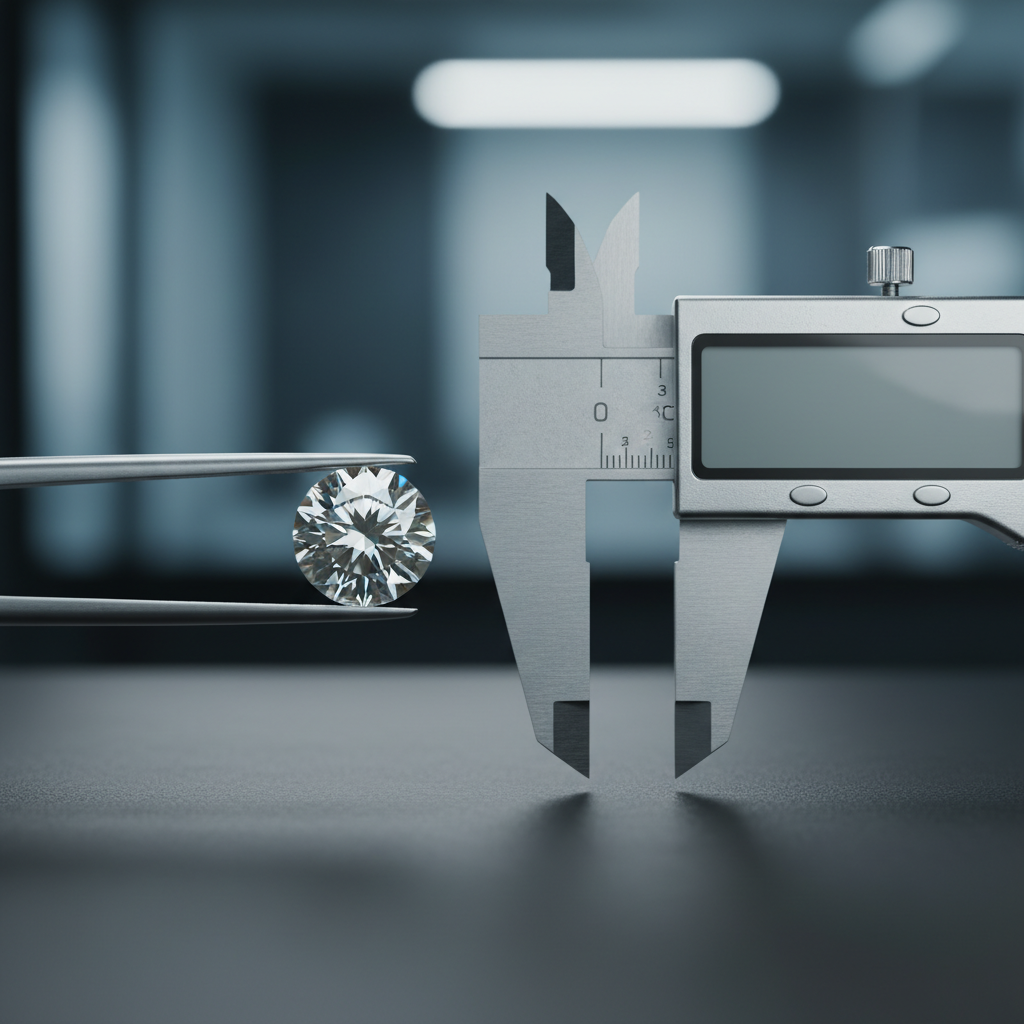
When you compare side by side, our advisors call out both carat and millimeters so you know exactly how the stone will look in your chosen setting.
Carat vs. Visible Size (With Round Reference Table)
Carat doesn’t guarantee a specific diameter. In round brilliants, well-cut stones follow common size ranges. Use millimeters to visualize coverage and ensure your chosen carat achieves the presence you want without sacrificing light performance.
Use this reference as a starting point. Individual stones vary with cut and girdle thickness. Values below represent typical face-up diameters for well-cut rounds.
| Carat (ct) | Approx. Diameter (mm) | Visual Notes |
|---|---|---|
| 0.50 | 5.0 mm | Delicate, great for minimalist solitaires or halos |
| 0.75 | 5.8 mm | Balanced everyday sparkle; pairs well with pavé |
| 1.00 | 6.4–6.5 mm | Classic benchmark; strong presence on most hands |
| 1.25 | 6.9–7.0 mm | Noticeably larger; consider protective settings |
| 1.50 | 7.3–7.4 mm | Statement size; prioritize excellent cut |
| 2.00 | 8.1–8.2 mm | Bold center; comfort and height become key |
For elongated shapes, length-to-width ratio affects how large the diamond appears. An oval around 1.50 ct with a 1.35–1.45 ratio often offers excellent finger coverage without extreme length.
Types/Approaches: Matching Carat to Style, Setting, and Lifestyle
Start with your style, then tune carat to match. Solitaires spotlight the center; halos amplify presence; three-stone designs add width. Daily wear, hand size, and metal color should guide how much carat weight you assign to the center versus the design.
Center-first approaches
- Classic solitaire ring: Prioritize cut at your target carat; simple bands keep focus on the center.
- Cathedral solitaire: Slightly elevates mid-size centers (0.90–1.25 ct) for more presence.
- Low-profile bezel: Ideal for active wearers; choose a carat that remains comfortable under gloves.
Design-amplified approaches
- Halo engagement ring: A 0.75–1.00 ct center can visually wear like a larger stone with a refined halo.
- Three-stone ring: Use matched side stones to increase width and finger coverage.
- Hidden halo or undergallery sparkle: Keeps a clean top view while amplifying light.
Metal and shape considerations
- White metals (14k/18k gold): Emphasize brilliance; can make a given carat appear crisper.
- Yellow/rose gold: Warmth flatters vintage and oval or cushion shapes at mid-range carats.
- Shape strategies: Ovals and pears maximize spread per carat; princess offers edge-to-edge coverage in square profiles.
Our team helps you map lifestyle to design so your daily routine and your diamond stay in sync.
Best Practices: How to Choose Your Ideal Carat
Decide on a look, set practical size boundaries in millimeters, then balance carat with cut. Compare 2–3 stones side by side. If you love a halo or three-stone, you can choose a slightly smaller center and still achieve the presence you want.
- Define your style goal: Minimalist solitaire, halo glow, or three-stone width.
- Pick a size lane: Use mm targets (for rounds, e.g., 6.3–6.7 mm) rather than a carat-only target.
- Prioritize cut first: Better cut makes any carat look brighter and often larger.
- Compare options: View stones in natural light and overhead; note face-up size and fire.
- Check comfort: Try on the setting prototype to confirm height and daily wear.
Many couples find their “just-right” size between 0.90 and 1.25 ct for solitaires; halos often look stellar with 0.70–1.00 ct centers.
Tools & Resources for Carat Decisions
Use millimeter charts, side-by-side comparisons, and expert guidance. Diamond2Deal’s education hub and appointment support simplify decisions, while real-world try-ons make size obvious. The goal: align your carat pick with sparkle, comfort, and long-term joy.
- Explore our in-depth diamond carat guide for measurement tips and visuals.
- Review the 4Cs in our diamond 4Cs guide to balance cut with carat.
- Compare styles in our lab-grown diamond overview to see carat value in modern designs.
- Plan your setting with the engagement ring guide and visualize finger coverage.
- For shape-specific size cues, see our 1 carat princess cut guide.
If you’re deciding between nearby sizes—say, 0.95 ct vs. 1.05 ct—our advisors can show both on a hand model so differences are unmistakable.
How Carat Affects Value (Without Talking Price)
Carat is a major value driver, but cut, color, clarity, and shape also matter. Two diamonds of the same carat can differ in light performance and eye-cleanliness. Focusing on beauty-per-carat keeps your investment aligned with what you actually see.
- Cut premium: Excellent cut quality elevates brightness and can make a smaller carat outshine a larger, poorly cut stone.
- Color and clarity bands: Choose eye-clean clarity and a color that suits your metal to maximize visual value.
- Shape market dynamics: Some shapes see different availability at popular carats.
- Design leverage: Halos and three-stone settings boost presence without pushing carat higher.
When you emphasize light performance and design harmony, you enjoy the diamond every day—not just the spec sheet.
Case Studies: Real-World Carat Choices from Our Clients
Successful carat picks match lifestyle and design. These brief scenarios show how New York clients reached “yes”—balancing carat with cut, shape, and setting to get the look, comfort, and sparkle they wanted without compromise.
- The classic solitaire: A Manhattan couple chose a 1.00 ct round brilliant for a cathedral solitaire. Focusing on excellent cut delivered strong fire under city lights and a timeless profile for everyday wear.
- The amplified halo: A client who types all day selected a 0.80 ct round with a refined halo. The result wore like a larger center, stayed low-profile, and photographed beautifully.
- The three-stone width: For broader finger coverage, a 0.90 ct center with tapered sides balanced elegance and comfort, creating the look of a larger single stone.
- The modern oval: An oval around 1.25 ct achieved impressive spread on a slim band. The elongated shape looked bigger per carat and flattered the hand.
Each decision began with carat in mind, then landed on the cut and setting that made the diamond sing.
How Carat Interacts with the 4Cs
Carat changes what you notice in the other Cs. As stones get larger, color and clarity features can become more visible. Pair your target carat with a cut-first approach, then select color and clarity that remain eye-pleasing in your metal color.
- Cut: The primary driver of sparkle. Excellent cut can make a 1.00 ct look brighter than a 1.10 ct with mediocre cut.
- Color: Warmer tones blend well in yellow or rose gold; whiter tones shine in white metals.
- Clarity: Aim for eye-clean at your chosen carat; inclusions can be more noticeable as size increases.
- Shape: Elongated shapes may hide color differently; princess and emerald cuts reveal clarity differently.
Our 4Cs education helps you make these trade-offs with confidence.
Lab-Grown Perspective: Carat, Quality, and Style
Lab-grown diamonds are real diamonds with the same physics and optics as mined stones. They follow the same carat system and 4Cs. Many clients use lab-grown to allocate more carat to their dream style while staying focused on cut and beauty.
Lab-grown options at Diamond2Deal span solitaires, halos, three-stone rings, and everyday classics like diamond stud earrings and tennis bracelets. Because carat follows the same rules, you’ll use the same millimeter checkpoints and cut priorities. The upshot: you don’t change how you shop—just what’s possible within your style goals.
- Same standards: Carat, 4Cs, and shape dynamics mirror mined diamonds.
- Education-first: Our team teaches you the same cut-first strategy for sparkle.
- Design freedom: Explore halos and three-stone looks with the proportions you want.
How Carat Reads in Manhattan, New York County
In Manhattan, daily wear and fast-paced commutes favor balanced carat choices and secure settings. New York County shoppers often compare a 0.90–1.25 ct center in person, then consider halos or three-stone designs for extra presence without extra height.
City lighting flatters excellent cut; you’ll see fire from office fluorescents to evening spots. Try-on sessions near our Midtown address make mm differences obvious on your hand. Low-profile, durable settings keep your diamond secure on subways and sidewalks.
Local considerations for Manhattan
- Schedule try-ons near Grand Central to compare 2–3 sizes quickly on a lunch break.
- Peak holiday weeks bring crowds around Rockefeller Center; book earlier appointments for quieter views.
- Daily transit favors low to medium setting heights; a bezel or protective prongs can be smart for larger centers.

Common Pitfalls to Avoid with Carat
Don’t chase a round number at the expense of cut, and don’t confuse carat (diamond weight) with karat (gold purity). Avoid deep stones that hide weight and reduce sparkle. Always verify millimeters and proportions—your eyes notice light, not the spec alone.
- Carat vs. karat: Karat measures gold purity (e.g., 14k/18k), not diamond weight. For a refresher, see this gold karat explainer.
- Spec chasing: 0.98 ct that’s well-cut can outperform a deeper 1.00 ct.
- Ignoring mm: Always confirm face-up size to match your visual target.
- Under-protected settings: Bigger centers benefit from protective designs for daily life.
Step-by-Step: Your Carat Selection Process
Define style, set a millimeter goal, compare a few stones, and choose the setting that complements your daily routine. This process focuses on what you’ll actually see: brightness, coverage, and comfort—using carat as the starting metric, not the finish line.
- Pick a style lane: Solitaire, halo, or three-stone.
- Set a mm target: For rounds, choose a ~0.3 mm window around your goal.
- Evaluate cut: Review brightness, fire, scintillation under multiple lights.
- Compare clarity & color: Confirm eye-cleanliness and color harmony with your metal.
- Confirm comfort: Try a prototype to test height and snag resistance.
Document your favorites and why; when you look back, the best stone usually reveals itself by how it made you feel on the hand.
Quick Reference Facts About Carats of Diamonds
Remember these fast facts: 1 ct = 0.2 g; 1 point = 0.01 ct; well-cut 1.00 ct round ≈ 6.4–6.5 mm; elongated shapes face up larger; halos add perceived size. Use millimeters and cut quality to translate carat weight into the look you love.
- Standards: Carat is universal, divided into 100 points.
- Size link: Weight isn’t size; depth eats spread.
- Round cues: ~5.0 mm (0.50 ct), ~6.5 mm (1.00 ct), ~7.4 mm (1.50 ct).
- Design lever: Halos/three-stone raise presence without bigger centers.
- Cut-first rule: Light performance makes any carat look its best.
Trusted External Resources (For Deeper Study)
If you enjoy research, consult third-party education pages on carat weight and the 4Cs. Use them to supplement, not replace, hands-on comparisons. Always return to your own eyes—light performance wins in real life.
For supplemental reading on carat basics and gem measurement, explore this concise carat weight guide and a general 4Cs overview. To avoid carat/karat confusion, review this gold purity explainer. Use these as cross-checks alongside our in-house education.
Need a second opinion? Bring us two or three favorites and we’ll compare mm, cut, and sparkle side by side. Our team is here to make the choice simple and enjoyable.
Frequently Asked Questions
These brief answers address the most common carat questions we hear from clients. Each response is practical and direct so you can move forward with clarity.
Does a higher carat always look bigger?
Not always. Carat is weight, while size is measured in millimeters. A deeper stone can weigh more yet face up smaller. Cut, shape, and depth determine how large a diamond appears at a given carat.
What’s a popular engagement ring carat size?
Many U.S. buyers choose around 1.00 carat for solitaires. In Manhattan, we often see 0.90–1.25 carat centers for comfort and daily wear. Halos let smaller centers appear larger without extra height.
How do halos and three-stone settings affect carat choice?
They amplify presence. A refined halo can make a 0.75–1.00 ct center wear like a larger stone. Three-stone rings add width, increasing finger coverage without raising the center’s carat.
Is carat different from karat?
Yes. Carat measures diamond weight (1 ct = 0.2 g). Karat measures gold purity (e.g., 14k or 18k). They sound similar but refer to different things.
Conclusion: Choose Carat with Confidence
Start with a look you love, set a millimeter target, then choose the best-cut diamond that meets it. Carat is your starting metric; brilliance, comfort, and design create lifelong satisfaction.
- Key takeaways: 1 ct = 0.2 g; weight ≠ size; mm shows coverage; cut drives sparkle.
- Action steps: Try on 2–3 sizes, compare mm and cut, then finalize a setting you’ll enjoy daily.
- Next move: Explore our carat guide and engagement ring guide, then book a comparison session.
If you’re near Midtown, we’re easy to reach from Grand Central. We’ll help you turn numbers into a diamond that feels perfect the moment it’s on your hand.