

Diamond Earrings & Necklaces: Complete Guide to Smart Buying (2026)
Diamond earrings and necklaces are timeless fine-jewelry staples that frame the face and neckline, elevating everyday outfits and formal looks. In the USA, smart buying means understanding the 4Cs, selecting designs that fit your lifestyle, and pairing pieces that complement each other. This guide shows you how—simply and confidently.
By Mit Trivedi, President at Diamond2Deal • Last updated: 2026-06-28
Above-Fold Overview
Choose diamond earrings and necklaces by matching shape, metal, and scale; prioritizing cut quality; and selecting certified stones, including lab-grown. For daily wear, start with studs and a pendant; for events, add hoops or a tennis-style necklace. Favor secure settings and balanced carat weight for comfort and longevity.
We wrote this as a practical playbook for shoppers who want beauty and confidence, without the guesswork. You’ll see what matters, why it matters, and exactly how to decide.
- Understand diamond basics (the 4Cs) and why cut impacts sparkle most.
- Compare core earring and necklace styles and how they wear day to day.
- Learn how to pair pieces into cohesive sets for work, weekends, and events.
- See real-world examples from Diamond2Deal’s lab-grown diamond selection.
- Use checklists for sizing, metal choice, and maintenance.
Quick Summary
For most shoppers, a starter set includes round diamond stud earrings (balanced carat total weight) and a simple diamond pendant on a matching gold chain. Focus on cut quality, secure settings, and certified stones. Expand with huggies or hoops for versatility, and consider a station or tennis necklace for dressier moments.
Diamond2Deal is a family-owned, education-first jeweler offering certified lab-grown diamonds across earrings, necklaces, and bracelets. The brand emphasizes next-day shipping on thousands of in-stock styles, a 1-year warranty, free gift packaging, 30-day returns, and the option to book an appointment with a diamond expert for tailored guidance.
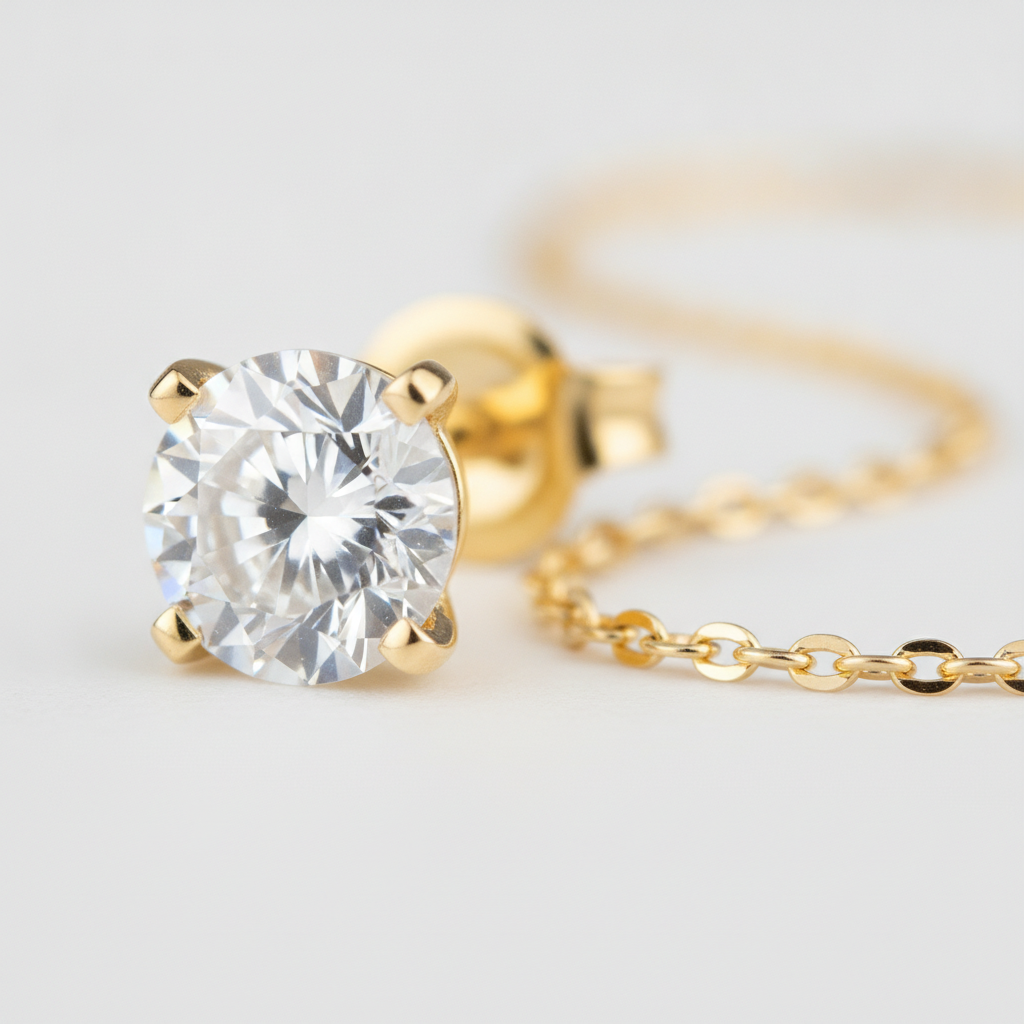
What Are Diamond Earrings and Necklaces?
Diamond earrings and necklaces are fine-jewelry pieces that set diamonds into precious-metal designs for the ears and neck. Common earring styles include studs, huggies, hoops, and drops; necklaces range from solitaires and pendants to station and tennis designs. Each style balances sparkle, comfort, and occasion.
At a basic level, these categories center on how diamonds are mounted and how pieces move with you. Studs sit flush on the lobe; hoops and huggies add motion; drops introduce length. Pendants sit at a single point; station necklaces spread sparkle; tennis necklaces deliver a full line of brilliance. Diamonds rank 10 on the Mohs hardness scale, making them exceptionally durable for daily wear.
- Studs (earrings): Minimal profile, everyday friendly, often round brilliant or princess cuts.
- Huggies/Hoops: Hinged or continuous circles that frame the face; great for work-to-weekend transitions.
- Drops/Linear: Elongating silhouettes with movement; ideal for evening and formal occasions.
- Pendants/Solitaires (necklaces): A single diamond on a chain—clean, versatile, timeless.
- Station necklaces: Evenly spaced diamonds along the chain; layered look with balance.
- Tennis necklaces: Continuous diamonds for high-impact shine; special events and statement style.
Because design drives how light interacts with stones, the same total carat can read understated or dramatic depending on setting, spread, and surface area. That’s why choosing with intention matters.
Why Diamond Earrings and Necklaces Matter
Diamond earrings and necklaces elevate personal style, hold sentimental value, and deliver unmatched durability for everyday wear. Their brilliance comes from diamond’s high refractive index and cut precision, while timeless designs ensure pieces pair with multiple looks over many years.
Jewelry should fit your real life. We’ve found that customers reach for studs and pendants the most because they’re comfortable, secure, and universally flattering. Diamond’s refractive index (~2.42) and dispersion (~0.044) create the fire and scintillation you see across a room. Pair that with strong settings and the right chain length, and you have beauty you can wear often—without fuss.
- Everyday confidence: Small-to-medium studs plus a solitaire pendant work with tees and blazers alike.
- Sentiment and milestones: Earrings and necklaces mark engagements, anniversaries, graduations, and new chapters.
- Longevity: With proper care, diamonds can be heirloom pieces worn for decades.
- Ethical options: Certified lab-grown diamonds provide traceable, modern alternatives many shoppers prefer.
If you’re new to fine jewelry, start simple and build. Add pieces that fill gaps in your wardrobe—then learn to pair them seamlessly.
How Diamond Quality Works (4Cs + Lab-Grown)
Diamond quality is graded by the 4Cs: cut, color, clarity, and carat. Cut drives sparkle; color affects warmth; clarity measures inclusions; carat gauges weight. Certified lab-grown diamonds have the same crystal structure as natural diamonds and can be excellent choices for earrings and necklaces.
All four C’s interact, but cut quality is the engine of sparkle. A well-proportioned round brilliant reflects light efficiently, enhancing perceived size and brightness. For necklaces and earrings viewed at arm’s length, you can prioritize cut and carat, then select a color/clarity balance that appears clean to the eye.
- Cut: Governs brightness and fire. Superior symmetry and polish increase scintillation you notice in motion.
- Color: Ranges from icy white to warmer tones. In white metals, near-colorless grades help stones look bright.
- Clarity: Eye-clean grades are ideal for studs and pendants; small inclusions often vanish at normal viewing distance.
- Carat: Total weight (ctw) for pairs. Balance presence with comfort and proportion to your features.
Lab-grown diamonds are real diamonds created via HPHT or CVD growth, with the same hardness (10 on Mohs) and optical properties as mined diamonds. Many shoppers choose lab-grown for selection, traceability, and value positioning. Diamond2Deal specializes in certified lab-grown options across studs, hoops, pendants, and tennis-inspired pieces, supported by next-day shipping on thousands of in-stock styles.
To deepen your knowledge, explore our education hub on lab-grown diamond jewelry in this comprehensive lab-grown guide and our overview on shopping lab-grown online.
Types and Styles: Earrings and Necklaces That Work
Build a core set with studs or huggies plus a solitaire pendant. Add hoops for impact, drops for dressy occasions, and station or tennis necklaces for continuous sparkle. Match metal color and diamond shape to keep the set cohesive and wearable across outfits.
Essential earring styles
- Round or princess-cut studs: Versatile, balanced, secure with screw-backs or friction backs.
- Huggies: Small hoops that hug the lobe; comfortable under headphones or masks.
- Classic hoops: From slim to bold; choose inside-out diamond styles for face-framing brilliance.
- Drops/linear: Motion-forward silhouettes that lengthen the neckline; ideal with off-shoulder looks.
Essential necklace styles
- Solitaire pendant: Single diamond on a chain (14K or 18K); choose adjustable lengths (16–18 inches).
- Station necklace: Evenly spaced diamonds; perfect for layering over crewneck or V-neck tops.
- Tennis necklace: Continuous stones; high-impact evening essential and modern bridal favorite.
Style coordination tips
- Match the metal: Keep yellow, white, or rose gold consistent across the set for polish.
- Echo the shape: Round studs pair naturally with round solitaires; princess with princess.
- Balance the scale: Statement hoops? Opt for a clean pendant. Bolder tennis? Choose understated studs.
- Consider skin tone and wardrobe: Yellow gold reads warm; white gold is crisp; rose adds a soft glow.
These combinations form a wardrobe you can wear on rotation with minimal decision-making. That’s the goal—ease and elegance.
How to Pair Diamond Earrings and Necklaces
Start with one hero piece, then support it. If earrings are bold (hoops or drops), choose a simple pendant. If the necklace is a tennis line, wear minimal studs. Keep metal color and diamond shapes consistent across the set and adjust chain length to frame your collarbone.
Pairing is about visual hierarchy and proportion. One piece leads; the other follows. Work with your face shape, hair length, neckline, and the event’s dress code. In our experience, coordinated sets feel elevated without being matchy-matchy—especially when shape and metal match, but textures vary.
- Pick the focal point: Decide whether earrings or necklace will take the lead.
- Set a color baseline: Choose yellow, white, or rose gold and stick with it for the look.
- Align shapes: Round with round, princess with princess, oval with oval—or intentionally contrast for edge.
- Size for comfort: Ensure earrings don’t pull and chains sit where you want the diamond to rest.
- Test in natural light: Check sparkle and balance in daylight and evening lighting.
| Lead Piece | Support Piece | Best For | Notes |
|---|---|---|---|
| Round stud earrings | Solitaire pendant | Everyday work-to-weekend | Eye-clean clarity and excellent cut maximize daily sparkle. |
| Inside-out hoops | Minimal pendant | Dinner, events | Balance scale; avoid competing statement pieces. |
| Tennis necklace | Small studs or huggies | Formal occasions | Keep earrings quiet to let the line necklace shine. |
| Station necklace | Huggies or mid-size hoops | Smart-casual | Station adds movement; hoops add frame and rhythm. |
Fit, Sizing, and Comfort
For earrings, balance carat total weight with secure backs and even weight distribution; for necklaces, choose adjustable chains (often 16–18 inches) so solitaires sit at the collarbone. Comfort, symmetry, and secure closures ensure you’ll wear your set often and with ease.
Comfort drives wear frequency. If earrings tug or a chain sits awkwardly, you’ll set the piece aside. We aim for designs that stay put and lie flat, with closures you can operate easily. Small changes—like switching to a slightly heavier friction back—can improve balance and reduce rotation.
- Earring backs: Screw-backs maximize security; friction backs are quick and comfortable.
- Weight and spread: Larger stones may need broader backs or support discs for stability.
- Chain length: 16 inches sits higher; 18 inches hits most collarbones; adjust for your neckline.
- Pendant bails: A well-sized bail keeps the diamond facing forward during movement.
Care and Maintenance for Longevity
Clean diamond earrings and necklaces regularly with warm water, mild soap, and a soft brush; dry with a lint-free cloth. Schedule periodic prong and clasp checks. Proper care protects brilliance and settings, ensuring your jewelry keeps shining through daily wear.
Diamonds are hard, but settings are still metal. Prongs can snag; chains can kink. A simple routine keeps everything in peak condition. At-home cleaning revives fire by removing oils that dull the surface. Regular inspections catch loose stones before they become losses.
- Weekly: Quick soap-and-water clean; pat dry.
- Monthly: Deeper clean; check earring backs and the pendant’s bail.
- Seasonally: Professional inspection for prongs, clasps, and chain integrity.
- Storage: Separate compartments to prevent scratches; travel pouches for on-the-go.
Why Certified Lab-Grown Diamonds Belong in Your Set
Certified lab-grown diamonds offer the same hardness, brilliance, and fire as natural diamonds with modern traceability. They’re ideal for studs, pendants, hoops, and tennis-inspired pieces, giving you selection and consistency across a coordinated earrings-and-necklace set.
Diamond2Deal’s roots in wholesale diamond manufacturing help deliver high-quality, certified lab-grown stones across everyday classics and special-occasion designs. Many buyers appreciate the clarity of knowing how a stone was grown (HPHT or CVD) and the ability to compare similar specs across multiple styles quickly.
For background reading on lab-grown diamonds, see this general explainer on lab-grown diamonds and a primer on what a lab-grown diamond is. To compare materials, this overview on lab-grown vs. moissanite summarizes key differences in composition and optical behavior.
Best Practices When Buying Diamond Earrings and Necklaces
Prioritize cut quality, choose eye-clean clarity, match metal color and diamond shapes across your set, and select secure, comfortable settings. Verify certification for each stone and favor adjustable chains for pendants so you can fine-tune where the diamond rests.
Decision checklist
- Cut first: Sparkle is the payoff you’ll notice every day.
- Match the set: Align metal color and diamond shape across earrings and necklace.
- Comfort and security: Test backs and clasps; confirm the pendant faces forward.
- Certification: Review grading details for clarity and color expectations.
- Lifestyle fit: Choose low-profile settings if you wear headphones, scarves, or activewear often.
Pro tips we share with clients
- Round-brilliant studs maximize light return and look bright even in softer indoor lighting.
- Inside-out hoops deliver sparkle from front and side angles—great for photos.
- Adjustable chains let you switch from 16 to 18 inches to suit necklines without changing necklaces.
- Set planning beats one-off purchases: decide your next two pieces in advance so they coordinate.
When you want deeper education in one place, visit our diamond education hub for the 4Cs, metals, and sustainability, plus our guidance on shopping with expert help.
Pricing Factors (Without Numbers)
Expect diamond earring and necklace pricing to reflect cut grade, carat weight, color and clarity ranges, metal type, and setting complexity. Certified lab-grown diamonds often provide more measurable sparkle per budget tier, while premium craftsmanship and secure settings add lasting value.
We don’t quote figures here, but we can outline the drivers so you can weigh trade-offs. In practice, many shoppers prioritize cut and carat for visible presence, then target eye-clean clarity and near-colorless ranges for bright results. Metal choice (14K vs. 18K) and setting style also influence total investment and longevity.
- Stone quality: Cut, color, clarity, and carat interact to shape beauty and value.
- Certification: Documented grading supports informed comparisons.
- Metal and build: Gold purity, chain thickness, prong count, and closures affect durability.
- Design complexity: Tennis styles, inside-out hoops, or stations require more labor and precision.
Real-World Pairing Examples (Mini Case Studies)
Effective sets share a common thread—shape, metal, or overall scale—so they look intentional. Start with your daily piece and build around it. Studs plus a solitaire pendant cover most days; hoops or a tennis necklace elevate evenings without clutter.
Everyday professional
- Set: Round-brilliant studs + solitaire pendant on a 16–18 inch adjustable chain.
- Why it works: Balanced sparkle at a glance; zero fuss in meetings or on calls.
- Diamond2Deal angle: Next-day shipping means you can refresh your weekday lineup quickly.
Weekend casual
- Set: Huggies + station necklace.
- Why it works: Movement from both pieces; playful but polished with denim and knits.
- Diamond2Deal angle: Certified lab-grown stations keep the look light and modern.
Evening statement
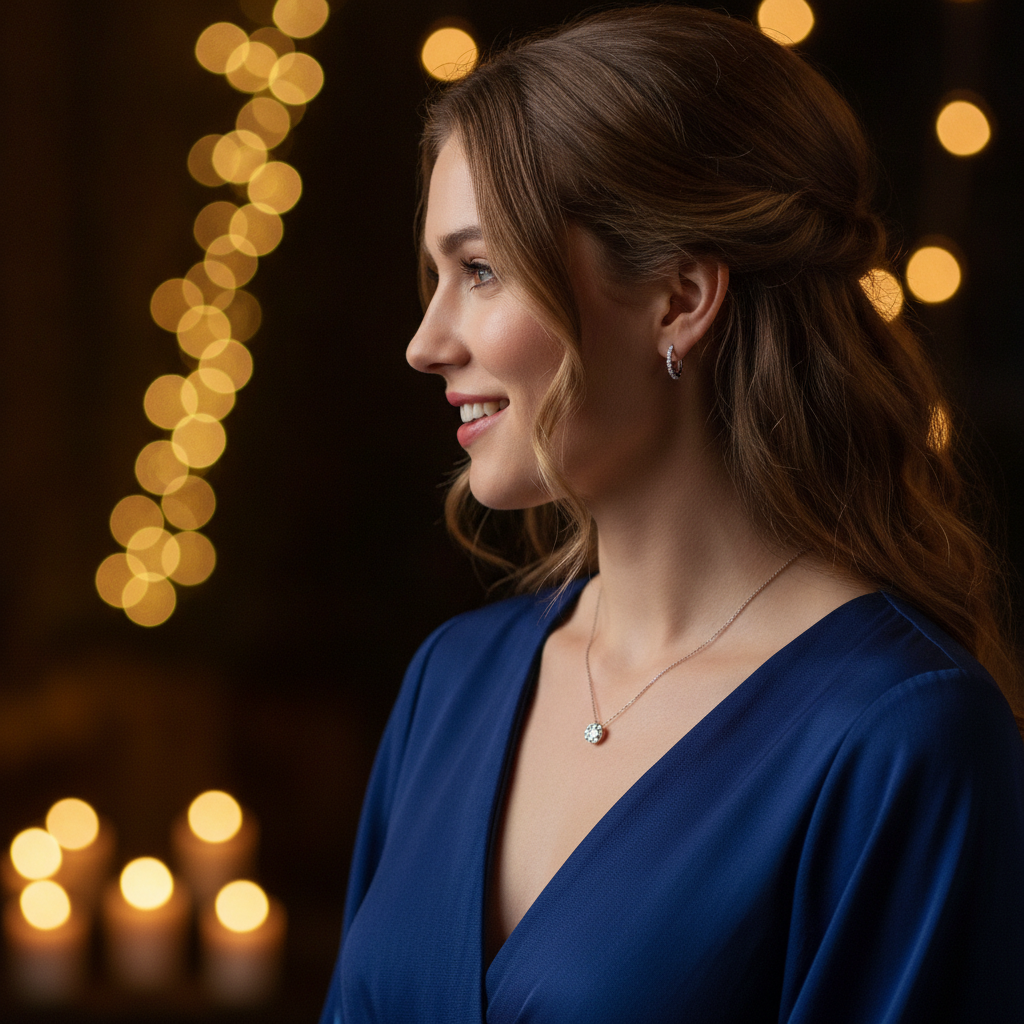
- Set: Inside-out hoops + minimal pendant (or small studs) to support a bold lip or sleek updo.
- Why it works: Face-framing brilliance reads well in low-light settings.
- Diamond2Deal angle: Education-first guidance helps you size hoops that balance presence and comfort.
Modern bridal
- Set: Tennis necklace + petite studs or huggies.
- Why it works: A continuous diamond line complements classic gowns and minimalist silhouettes.
- Diamond2Deal angle: Book an expert appointment for set planning and timeline coordination.
Tools and Resources
Use an education hub to review the 4Cs, metals, and setting types; keep a sizing guide for chain lengths and earring backs; and maintain a simple cleaning kit. Expert appointments translate questions into a confident, coordinated set plan.
We’re big believers in learning once so you can shop with ease forever. Start here, then bookmark the two resources below for deeper dives tailored to lab-grown pieces.
- Diamond2Deal’s lab-grown diamond education for the 4Cs, metals, and sustainability.
- Our overview on how to shop lab-grown online with expert support.
- Style inspiration and set planning ideas from our cluster articles such as our diamond jewelry guide and lab-grown brands overview.
FAQ: Diamond Earrings and Necklaces
Shoppers ask about matching shapes, chain lengths, and whether lab-grown works for daily wear. The short answers: echo shapes across pieces, choose adjustable chains for versatility, and yes—certified lab-grown diamonds are excellent for studs, pendants, hoops, and tennis styles.
Should my earrings and necklace always match?
They don’t need to be identical, but echoing metal color and diamond shape looks intentional. If one piece is bold (like large hoops or a tennis necklace), keep the other simpler so the set feels balanced and polished.
What chain length is best for a diamond pendant?
An adjustable 16–18 inch chain suits most necklines and frames the collarbone nicely. If you layer with a station or tennis necklace, let the pendant sit slightly above so the pieces don’t tangle or compete for attention.
Are lab-grown diamonds durable enough for everyday wear?
Yes. Lab-grown diamonds have the same crystal structure and hardness as natural diamonds. With secure settings and periodic cleaning, lab-grown studs and pendants hold up beautifully to daily use.
How do I choose the right earring backs?
Screw-backs offer maximum security; friction backs are fast and comfortable. If your studs tilt or rotate, consider slightly heavier backs or support discs to distribute weight evenly and keep stones facing forward.
Key Takeaways
Lead with cut quality, build a cohesive set around shape and metal, and size for comfort. Start with studs and a pendant, then add hoops or a tennis-style necklace as your wardrobe expands. Certified lab-grown diamonds make coordination and selection simple.
- Studs + solitaire pendant = reliable starter set.
- Match metal color and echo diamond shape for cohesion.
- Prioritize cut; choose eye-clean clarity for everyday wear.
- Use adjustable chains to fine-tune pendant position.
- Schedule quick cleanings and seasonal inspections.
Conclusion
A thoughtful diamond earrings-and-necklace set gives you instant polish and years of wear. Learn the 4Cs, choose comfortable settings, and coordinate metal and shape. With certified lab-grown options and expert guidance, you can build a set you’ll reach for every day.
Diamond2Deal blends family-owned service with wholesale manufacturing roots to help you shop with confidence. Explore our education hub, compare certified lab-grown options across studs, hoops, pendants, and tennis-inspired designs, and reach out for guided set planning that fits your style and schedule.