

Pear Rings: Find the Best Fit and Shine in 2026
Pear shaped solitaire engagement rings are teardrop-style diamonds set alone on a band, prized for elongating the finger and high sparkle. From our Manhattan base at 420 Madison Ave, New York, NY, Diamond2Deal helps you compare cut, symmetry, settings, and lab-grown options so you can choose a timeless pear solitaire with confidence.
By Mit — President, Diamond2Deal • Last updated: 2026-06-07
Above the Fold: Hook and Table of Contents
A pear solitaire blends the round’s brilliance with marquise elongation for a bold, finger-flattering look. This complete guide shows how to judge cut and symmetry, choose secure settings, compare lab-grown vs. mined, and size for daily comfort. Jump to any section using the outline below.
- What pear-shaped solitaires are and why they flatter many hands
- How to evaluate a pear’s cut, symmetry, L/W ratio, and bow-tie
- Setting styles (V-tip, bezel, cathedral, hidden halo) and metals
- Lab-grown pears vs. mined diamonds: grading and disclosure
- Local tips for Manhattan shoppers and real client examples
Quick Summary
Choose a pear-shaped solitaire by balancing length-to-width ratio, even brightness, and a secure V-tip or bezel. View stones in multiple lighting, test band pairings, and confirm grading. Lab-grown pears deliver the same optics and 4Cs framework as mined diamonds, giving you flexibility without sacrificing beauty.
- Fast checklist: verify symmetry, inspect bow-tie under diffused light, protect the point, and confirm the certificate.
- Fit and feel: pick a low to medium profile if you wear gloves or lead an active lifestyle.
- Next step: compare two or three candidates side by side and book an expert appointment.
Pear Shaped Solitaire Engagement Rings: Complete Overview
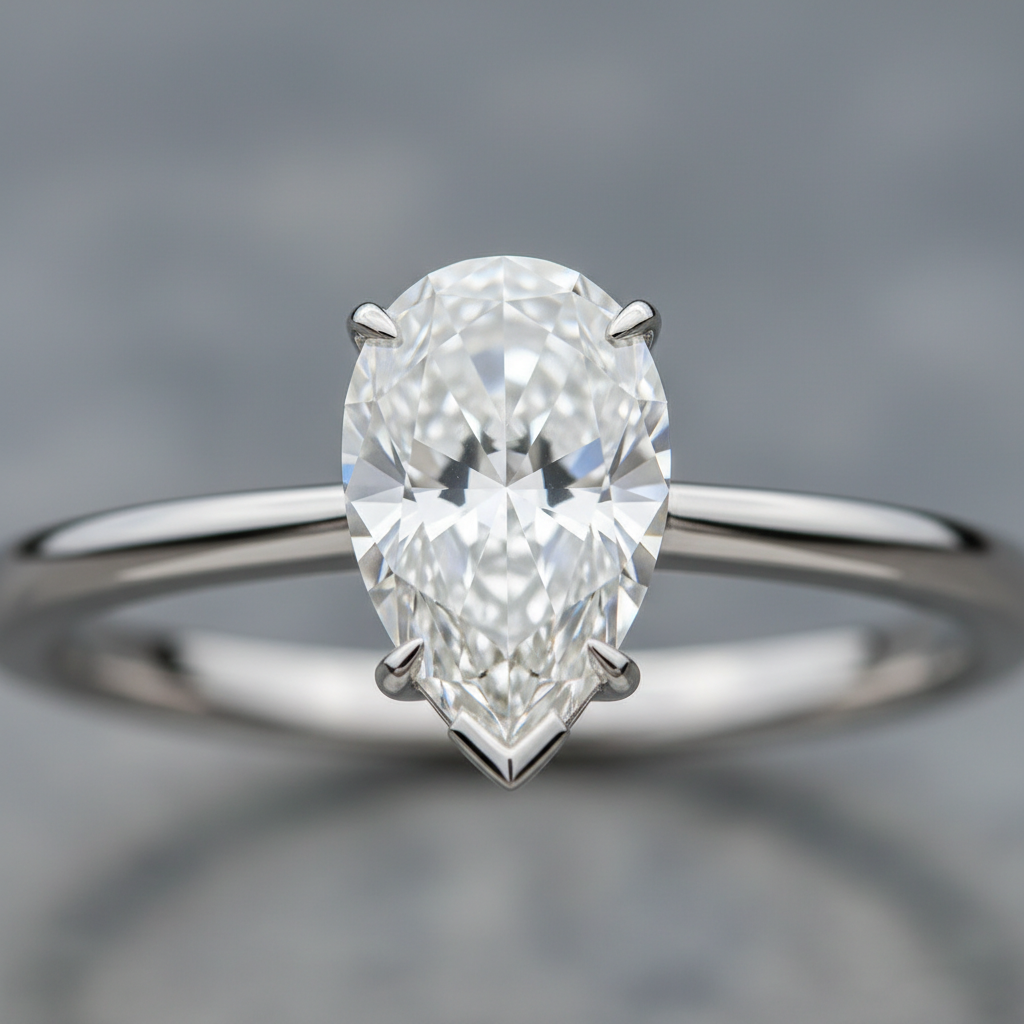
Pear shaped solitaire engagement rings feature a single teardrop diamond set without side stones. The look emphasizes proportion, symmetry, and tip protection. Many shoppers prefer a length-to-width ratio around 1.45–1.75 for a balanced profile that appears larger relative to weight and flatters most fingers.
A pear (also called teardrop) merges a round’s brightness with a marquise-style taper. In a solitaire, the center stone carries the entire visual story, so precision matters: even shoulders, a centered point, and consistent brightness across the belly. Protect the tip using a V-prong or bezel for long-term durability.
- Core anatomy: rounded head, tapered point, shoulders, belly, girdle, table, crown, pavilion.
- Performance drivers: facet alignment, polish/symmetry grades, and minimized bow-tie.
- Comfort cues: smooth under-gallery, comfort-fit shank, and profile height tuned to your routine.
What Is a Pear-Shaped Solitaire?
A pear-shaped solitaire is a single pear-cut diamond on a simple band, designed to spotlight the stone’s shape and sparkle. Because there are no side stones, proportions, symmetry, and light performance determine the entire look, from finger-lengthening effect to perceived size.
Think of a pear as equal parts poetry and engineering. The rounded end gathers light; the point sculpts the silhouette. In our experience working with New York couples, the ideal first short list includes three stones that vary slightly in L/W ratio and belly shape so you can see what flatters your hand best.
- Popular ratios: ~1.45 (plump), ~1.60 (balanced), ~1.75 (slender). Try each on-hand.
- Bow-tie check: under soft, diffused light, the center should stay bright—not a fixed dark band.
- Security: a V-tip or bezel guards the point from bumps, zippers, and winter knits.
Why Pear Solitaires Matter for Style, Value, and Sustainability
Pear solitaires deliver finger-lengthening style, standout silhouette, and strong value—especially with certified lab-grown options. With clear disclosure and the same 4Cs grading, lab-grown pears offer origin transparency while keeping attention on cut quality and secure setting design.
Shoppers choose pears for agility. The same center stone can read minimalist on a plain band or glamorous with a slim pavé shank. Lab-grown choices align with Diamond2Deal’s education-first approach and expand possibilities, whether you prioritize a brighter color grade, a platinum head, or an upgraded setting.
- Perceived size: many pears face up large for their weight due to the elongated outline.
- Style range: north–south looks classic; east–west feels modern and relaxed.
- Sustainability: lab-grown reduces mining reliance and often carries documented origin pathways.
For shape context, explore a concise overview of diamond outlines in this independent diamond shapes guide to visualize how pears compare to rounds, ovals, and marquise.
How a Pear Solitaire Works: Optics, Anatomy, and Comfort
Light enters through the table and crown, reflects within pavilion facets, and exits as brightness and fire. In pears, the rounded belly concentrates sparkle while the point defines the outline. Security comes from prongs and a V-tip over the point; profile height balances sparkle exposure with snag resistance.
The so‑called bow‑tie is a contrast band that may appear across the center if facet alignment isn’t ideal. You want lively patterns that change as the ring moves. Mechanically, a medium-profile basket with a V-tip prong protects the point yet keeps light pathways open for strong performance.
- Symmetry: the shoulders should mirror; the point should align with the shank centerline.
- Polish and symmetry grades: “Good” to “Excellent” help signal precise craftsmanship.
- Comfort: rounded inside (comfort fit) and smooth under-gallery reduce hotspots in daily wear.
Types and Approaches: Settings, Metals, and Orientation
Pear solitaires shine in prong, bezel, and cathedral settings across white, yellow, and rose gold or platinum. Orientation changes the mood: north–south elongates and reads classic; east–west feels modern. Choose profile height to match your wardrobe, gloves, and daily routines.
Popular Solitaire Settings for Pears
- 5‑prong with V‑tip: maximum light with secure point protection; everyday favorite.
- Full bezel: a protective metal rim; ideal for active professions and winter layers.
- Cathedral: elegant arches meet the head; pairs easily with straight bands.
- Hidden halo head: discreet melee beneath the center; sparkle from side views while keeping a solitaire look.
- Tapered or knife‑edge shanks: funnels attention to the center stone.
Metal Choices and Their Look
- 14k white gold: bright and versatile; complements colorless to near‑colorless pears.
- Yellow gold: adds warmth and vintage contrast against a white diamond.
- Rose gold: flattering, romantic hue that softens the outline.
- Platinum: dense, naturally white, and durable—excellent for prongs.
Orientation and Profile
- North–south (point to fingertip): traditional, elongating, and elegant.
- East–west (sideways): modern, laid‑back, often set lower.
- Profile height: low to medium for glove‑friendly comfort; higher for dramatic presence.
For quick inspiration on silhouettes and ring architecture, this independent overview of common ring styles is a handy visual primer.
Pear vs. Other Solitaire Shapes: A Practical Comparison
Pears emphasize elongation and a distinctive tip, while rounds are balanced, ovals are softly lengthening, and marquise are dramatic with two points. With proper symmetry and a V-tip, pears combine standout style with everyday security and often appear larger relative to weight.
Every shape brings unique trade‑offs. Use this quick table to match style to lifestyle.
| Shape | Look & Effect | Bow‑tie risk | Security notes | Why choose |
|---|---|---|---|---|
| Pear | Elongating, bold point | Medium; view under diffused light | V‑tip prong recommended | Distinct silhouette and strong sparkle |
| Round | Classic symmetry | Low | Four or six prongs | Max light return; easy to pair |
| Oval | Soft elongation | Medium; inspect center | Four prongs or bezel | Gentle lengthening with timeless feel |
| Marquise | Dramatic, two tips | Higher; inspect carefully | V‑tips at both ends | Vintage drama and face‑up spread |
Best Practices for Shopping and Sizing in Manhattan (New York County)
In Manhattan, confirm grading, compare length‑to‑width ratios under different lights, and test comfort with gloves and everyday motions. Book timed appointments, plan around Midtown rush hours, and leverage quick‑turn services to align with proposals and travel timelines in New York County.
- Verify certification: ensure the grading report lists color, clarity, and measurements.
- View in multiple lights: daylight, office, and evening tones reveal contrast and bow‑tie.
- Band pairing: bring your wedding band or try a guard wrap for a flush sit.
- Lifestyle check: if you wear winter gloves or work hands‑on, favor bezels or low cathedrals.
- Sizing reality: fingers change with seasons; a comfort‑fit shank adds flexibility.
Local considerations for Manhattan
- Appointments near Rockefeller Center let you compare stones in natural daylight and bright office lighting during one visit.
- Plan pickups around holiday foot traffic and commuter surges near Grand Central to keep surprises on schedule.
- For winter proposals, request quick‑turn sizing; next‑day shipping on stocked styles helps you stay on timeline.
How to Evaluate the Diamond: 4Cs and Pear-Specific Cues
Prioritize eye‑clean clarity, balanced color, and cut craftsmanship. For pears, symmetry, consistent brightness, and a controlled bow‑tie matter more than chasing a single “ideal” cut grade. Verify measurements and L/W ratio, and protect the point with a V‑prong or bezel for daily durability.
- Cut & light: look for even brightness across the belly and toward the point in videos and in‑hand.
- Color: tips can show color slightly more; white metals emphasize crispness.
- Clarity: inclusions near the point are more visible—prioritize clean facets there.
- Measurements: check L/W, table, and depth; balanced ranges reduce bow‑tie and windowing.
For a broad visual refresher on shapes and proportions, here’s a general shape and style explainer you can skim before comparing specific pears.
Lab-Grown vs. Mined Pears: Grading and Disclosure
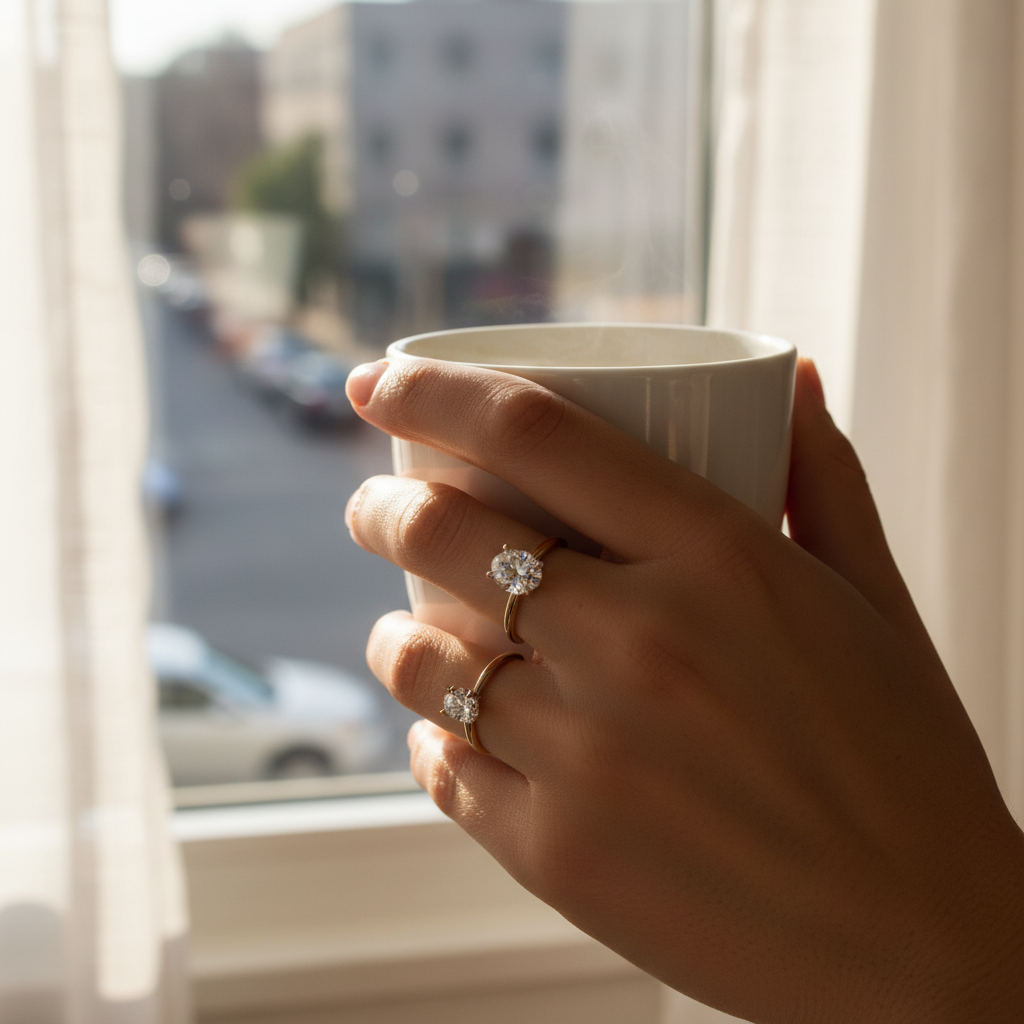
Lab-grown diamonds have the same crystal structure and 4Cs framework as mined diamonds. Transparent labeling on grading reports and product pages keeps comparisons fair. Many shoppers pick lab-grown pears for origin clarity and the ability to prioritize cut or metal choices without sacrificing beauty.
We emphasize education and choice. Whether you lean mined heritage or documented lab origin, evaluate each stone by how it performs on your hand. In our New York consultations, side‑by‑side video and in‑person viewing reveal differences in bow‑tie, brightness, and face‑up presence quickly.
- Chemistry and optics: both are pure carbon; assess using the same 4Cs.
- Reports: confirm lab‑grown designation where applicable and match report to the item.
- Decision drivers: consider lifestyle, maintenance preferences, and long‑term wear.
Care, Maintenance, and Peace of Mind
Clean weekly with mild soap and a soft brush, focusing under the pavilion. Schedule professional checks to confirm prong tension and V‑tip integrity. Store separately in a soft pouch, and keep documentation and photos with your insurance policy for fast replacement support.
- Weekly clean: remove lotions and oils that dull fire and brilliance.
- Quarterly check: verify the V‑tip and prongs are secure and snag‑free.
- Storage: use individual pouches or compartments; avoid tossing in bags.
- Documentation: grading report and images streamline any insurance claim.
Tools and Resources to Shop Smarter
Use comparison videos, measurement filters for length‑to‑width ratio, and a guided appointment to accelerate decisions. Education hubs covering 4Cs, metals, and sizing help you avoid common pitfalls and find a pear that fits your hand, style, and routine.
- Compare videos side‑by‑side: watch how brightness shifts as stones move.
- Apply smart filters: L/W ratio, table/depth ranges, and setting compatibility.
- Book an expert: a short session can save weeks of back‑and‑forth.
- Shipping and returns: clear policies and fast fulfillment keep timelines predictable.
To dig deeper into solitaire style foundations, see our internal overview of solitaire ring styles and a broader look at unique engagement ring styles for design inspiration.
If you like comparing visual references, a general third‑party diamond shape primer offers quick refreshers before you narrow to your final pear picks.
Want personalized guidance? At Diamond2Deal, our education‑first team helps you compare pears side‑by‑side, align settings with your lifestyle, and finalize sizing with confidence. Book a quick appointment to get tailored recommendations.
Case Studies and Real Examples from Diamond2Deal Clients
Most clients refine from three pears to one by comparing symmetry, bow‑tie, and setting comfort. Real‑world factors—gloves, travel dates, proposal timing—often drive bezel vs. prong choices. Our next‑day shipping on stocked styles helps customers hit tight moments without compromising on quality.
- Active professional: chose a full‑bezel pear in 14k rose gold to prevent snags during medical shifts; paired with a slim contour band.
- Classic minimalist: selected a 5‑prong V‑tip solitaire with a comfort‑fit 14k white gold band for office‑to‑evening wear.
- Frequent traveler: opted for platinum prongs for longevity and documented insurance photos ahead of an international trip.
- Design‑forward buyer: explored east–west orientation in a low‑profile bezel for a sleek, modern feel with daily comfort.
For additional design context, our broader education content on lab‑grown diamonds and unique engagement ring styles can help you weigh aesthetics alongside daily practicality.
Frequently Asked Questions
Common questions focus on orientation, wedding‑band pairing, bow‑tie control, and daily security. These short answers give you direct guidance before you book a visit or place an order.
Should the point face up or down?
Either works. Point‑up elongates the finger and feels classic; point‑down reads modern and can shorten the look slightly. Try both orientations on your hand with your preferred band to see what balances best.
How do I avoid a strong bow‑tie?
View the diamond in diffused light and video, not only still photos. Look for even brightness across the center and into the point. A fixed dark band suggests misalignment—choose a stone with better symmetry and light return.
What wedding bands pair best with pears?
Straight bands work with low‑profile solitaires. For higher heads or pronounced bellies, try a slight contour, chevron, or a slim guard wrap to sit flush. Bring bands to appointments to evaluate gaps and comfort.
Are lab‑grown pears graded the same way?
Yes. Lab‑grown diamonds use the same 4Cs framework and grading scales as mined stones. Ensure reports clearly state the diamond is lab‑grown, and compare color, clarity, and measurements side by side.
How do I protect the tip from chips?
Use a V‑tip prong or a full bezel, avoid hard impacts, and schedule regular prong checks. A low or medium profile reduces snagging on sweaters and gloves.
Conclusion and Next Steps
Select a pear solitaire by balancing L/W ratio, brightness, and secure setting design. Verify the grading report, test orientation and band pairing, and align profile height with daily life. With thoughtful choices, your pear will be elegant, durable, and unmistakably you.
- Key takeaways: protect the point, check symmetry, and view in multiple lights.
- Action steps: shortlist two or three candidates, compare side‑by‑side, and book an expert appointment.
- Confidence: Diamond2Deal’s next‑day shipping on stocked styles and education resources support timely, informed decisions.
Continue exploring design ideas in our internal guides on solitaire ring styles and a broader look at custom diamond engagement rings. When you’re ready, we’re here in Midtown to help you compare options in person or virtually.