

Silver Jewelry Care: Stop Tarnish Fast in 2026
Silver jewelry tarnish prevention is the set of handling, cleaning, and storage practices that keep silver from reacting with sulfur and humidity to form dark silver sulfide. At Diamond2Deal in New York (420 Madison Ave, 5th Floor, Rm 500), we help you stop tarnish before it starts with proven, easy routines you can use today.
By Mit — President, Diamond2Deal
Last updated: May 16, 2026
Above the Fold: Why This Guide Matters + What You’ll Learn
This complete guide shows you how to prevent and remove silver tarnish fast using safe, repeatable steps. You’ll learn the chemistry in plain English, the exact home-cleaning workflow, storage systems that actually work, and pro tips our Manhattan team gives clients every day.
Here’s the thing: most tarnish is preventable with a few consistent habits. In this guide, we combine science-backed care with practical routines that fit busy lives—so your sterling pieces stay bright between special events and everyday wear.
- What tarnish is and why it happens (in 60 seconds)
- Step-by-step home cleaning that protects stones and settings
- Storage systems and tools that actually slow oxidation
- When to use pro help—and how we support you at Diamond2Deal
- Manhattan-specific tips for humidity, seasons, and city living
What Is Silver Jewelry Tarnish Prevention?
Tarnish prevention is a daily-care system that reduces silver’s contact with sulfur compounds, skin residues, and moisture. It blends clean handling, gentle washing, and airtight storage with anti-tarnish materials so sterling (92.5% silver) stays bright longer and needs fewer polishing cycles.
In plain terms, silver dulls when it bonds with tiny amounts of sulfur in the air or on skin to form silver sulfide. The right prevention routine blocks that contact, keeps residues off the metal, and slows the chemical reaction.
- Core idea: Limit sulfur + moisture, remove residues, store airtight.
- Applies to: Sterling silver chains, bracelets, hoops, rings, charms, and lockets.
- Good news: A 10-minute weekly routine outperforms occasional deep cleans.
We reinforce these steps during appointments and in our education hub, and we see the biggest gains when customers create a simple, repeatable routine they actually enjoy doing.
Why Tarnish Prevention Matters (Longevity, Luster, and Less Work)
Preventing tarnish protects brilliance, reduces abrasive polishing, and preserves settings. Consistent care means fewer professional interventions, longer metal life, and jewelry that’s photo-ready for milestones—from proposals to anniversaries.
Why invest a few minutes each week?
- Protects luster: Bright silver reflects more light, complementing diamonds and gemstones.
- Prevents wear: Over-polishing removes microns of metal; prevention cuts that need.
- Saves time: Small, regular cleans beat marathon scrubs before events.
- Supports settings: Clean prongs and hinges function as designed and are easier to inspect.
In our experience working with bridal and fine-jewelry buyers nationwide, tarnish prevention is the single most effective way to keep silver looking elevated next to lab-grown diamonds, pearls, and gemstone accents.
How Tarnish Happens (Chemistry + Daily Life)
Tarnish forms when silver reacts with trace sulfur to create silver sulfide, the dark layer you see. Humidity, sweat, lotions, perfumes, and urban air increase exposure, so washing residues off and storing airtight slows the reaction dramatically.
Sterling silver is 92.5% pure silver alloyed with copper for strength. That copper, while helpful, can speed up discoloration because it also oxidizes. Daily life adds catalysts:
- Humidity: Higher relative humidity promotes faster chemical reactions on the surface.
- Skin contact: Sweat is slightly acidic and carries salts that jump-start tarnish.
- Residues: Sunscreen, hair spray, and hand cream trap pollutants on metal.
- Urban air: City environments can contain more sulfur compounds.
The fix isn’t complicated: remove residues with mild soap and water, dry fully, limit open-air exposure, and let anti-tarnish materials scavenge corrosive gases while pieces are stored.
Step-by-Step: Clean Silver Safely at Home
Use a mild soap bath, a soft brush, and a microfiber cloth. Skip harsh abrasives and aluminum-foil “tricks” for gemstone-set pieces. Rinse, pat dry, air-dry fully, then store airtight with anti-tarnish aids. This gentle cycle restores shine without stripping metal or harming stones.
Follow this reliable workflow. It’s fast, safe for most sterling pieces, and easy to repeat each week.
- Prepare a bath: Mix a few drops of mild dish soap in warm water (not hot).
- Soak 3–5 minutes: Loosen oils and surface grime. Keep gem-set pieces brief.
- Brush gently: Use a baby-soft toothbrush on crevices; avoid scrubbing stones hard.
- Rinse thoroughly: Run under lukewarm water until slickness is gone.
- Pat dry: Use a lint-free microfiber cloth; don’t rub aggressively.
- Air-dry fully: Let pieces sit 15–30 minutes to evaporate hidden moisture.
- Final polish (optional): Light buff with a treated silver cloth—use minimal pressure.
- Store airtight: Place each piece in a zip bag or anti-tarnish pouch with a desiccant.
Avoid: Toothpaste (abrasive), baking-soda scrubs on stones, bleach, ammonia, and hot ultrasonic cleaners unless a jeweler confirms stone safety.
Want a quick visual of the finish line? Here’s what a safe hand-polish looks like up close.
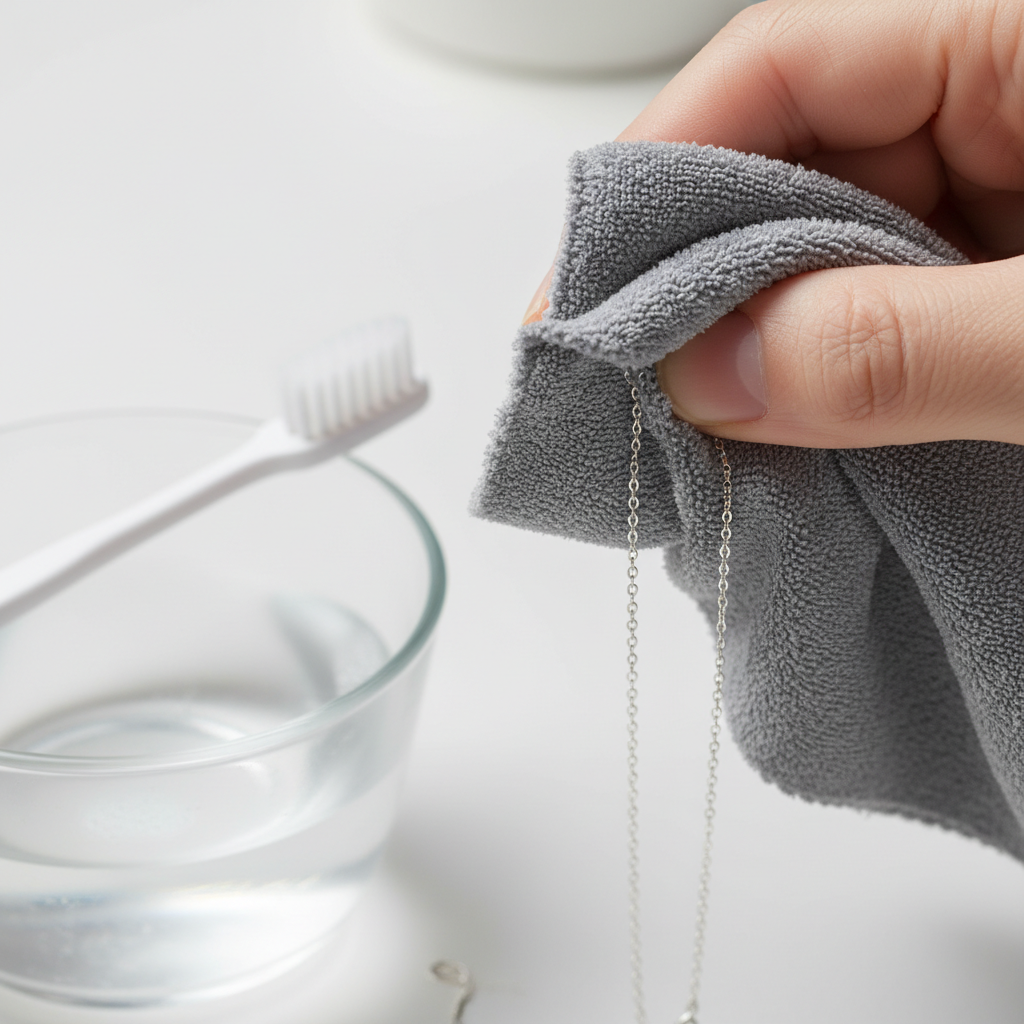
Process snapshot (when to use each step)
| Situation | Action | Why it works |
|---|---|---|
| Light dullness | Soap bath + microfiber buff | Removes residues before sulfide thickens |
| Dark crevices | Soft brush in soapy water | Reaches prongs and chains safely |
| After the beach | Rinse, soap, dry, store airtight | Salt + sunscreen accelerate tarnish |
| Gemstone-set pieces | No harsh abrasives; brief soak | Protects settings and stone finishes |
For heirloom or complex designs, we recommend a professional inspection annually to check prongs and clasps; clean metal is easier to evaluate and service.
Storage Methods That Actually Work
The best storage is individual, airtight, and dry. Use anti-tarnish pouches or zip bags, remove air, add desiccants, and separate pieces to prevent scratches. A simple drawer system keeps routines effortless and dramatically slows tarnish formation.
Build a small “care kit” and keep it where you remove jewelry at night. Make the good choice the easy choice.
- Individual bags/pouches: One piece per bag; squeeze out excess air.
- Anti-tarnish aids: Add strips or treated pouches to scavenge sulfur compounds.
- Desiccant packs: Keep humidity down; replace when indicators change color.
- Drawer organizer: Short trays for chains; lined slots for hoops and studs.
- No bathroom storage: Steam spikes humidity and accelerates reactions.
- Label and rotate: Quick labels make weekly upkeep painless.
Here’s a top-down example of a simple, sustainable drawer setup that turns prevention into a two-minute habit.
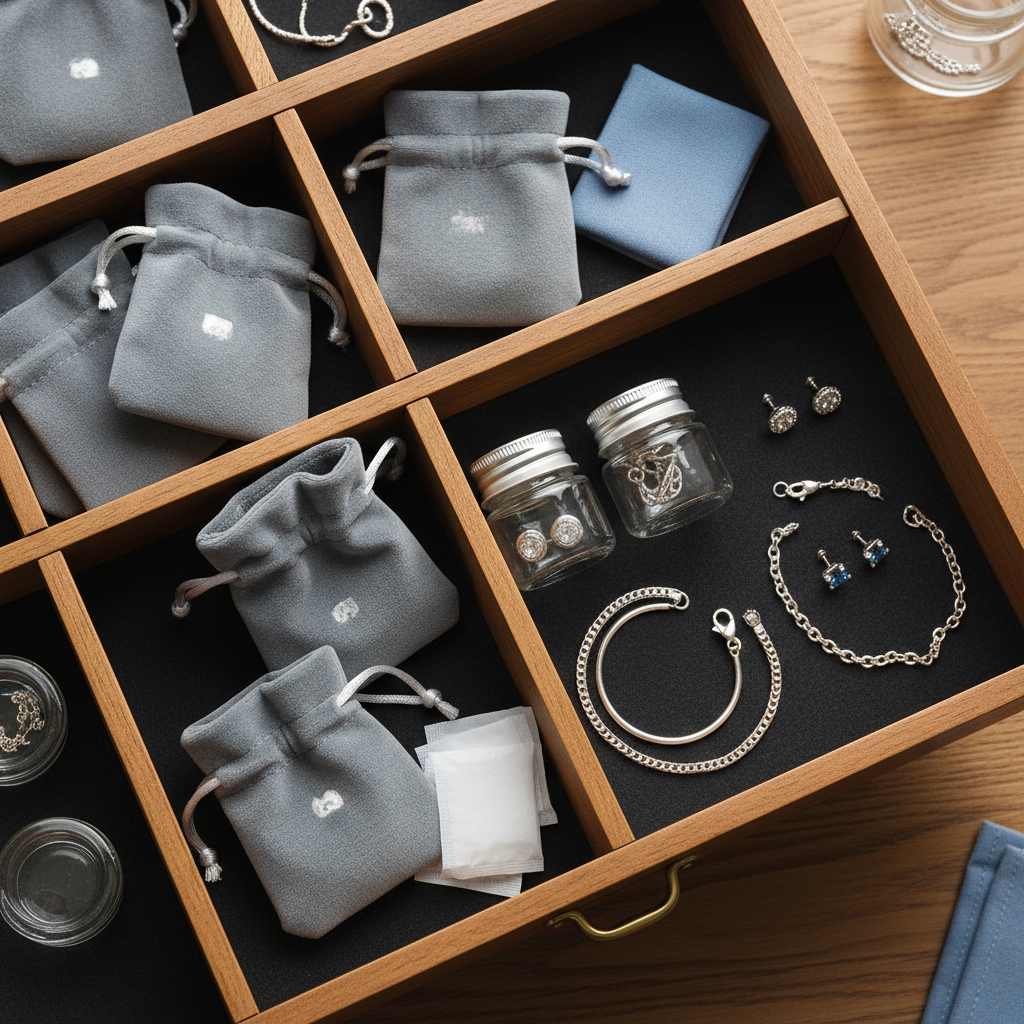
Quick comparison: storage approaches
| Method | Effectiveness | Best for | Notes |
|---|---|---|---|
| Anti-tarnish pouch | High | Daily wear pieces | Easy, reusable; replace when saturated |
| Zip bag + desiccant | High | Chains, bracelets | Remove air before sealing |
| Open jewelry dish | Low | Within-day holding | Use only short-term while at home |
| Bathroom cabinet | Poor | None | Humidity accelerates tarnish |
Tools and Resources We Trust
Use a mild dish soap, baby-soft brush, microfiber cloths, anti-tarnish pouches or strips, and desiccant packs. For coated silver, treat rhodium like a finish—gentle methods only. Our education guides and store resources help you implement these tools correctly.
Helpful Diamond2Deal resources you can open in a new tab as you plan your routine:
- Understanding metal finishes alongside diamonds in our engagement ring guide.
- Care that keeps studs bright like new in the diamond stud earrings guide.
- Movement and hinge care parallels in the diamond hoop earrings guide.
- Clasp and link checks discussed in the tennis bracelets guide.
- Stacking and daily-wear insights in the eternity rings style guide.
- Considering rhodium-plated options? Review this sterling silver rhodium-plated ring example.
For restoration, inspection, or complex heirlooms, a skilled jeweler’s bench is the right move. External overviews on older pieces and repair options can also help frame decisions—see a general vintage jewelry guide and this overview of jewelry repair services as context pieces. For sparkle basics, here’s a light primer on why jewelry shines.
Real-World Examples from Diamond2Deal Clients
Small, consistent habits beat occasional deep cleans. Our clients who rinse after workouts, dry thoroughly, and store in pouches report brighter silver month to month, fewer polish sessions, and easier inspections before milestones like engagements or anniversaries.
Everyday commuter (Manhattan): A client who wears a sterling chain during daily subway commutes noticed weekly dulling. Switching to a rinse-and-dry routine after work and adding a desiccant to storage cut visible tarnish between Monday and Friday.
Active traveler: A frequent flyer kept a mini kit—zip bags, a microfiber, and travel-sized soap—in a dopp kit. Post-flight rinse + overnight pouch storage kept hoops bright through multi-city trips.
Heirloom caretaker: A customer managing a vintage silver locket avoided abrasive pastes and opted for short soaks and microfiber buffs. The engraving stayed crisp, and the locket sat safely in an anti-tarnish pouch between wears.
Bridal stack planner: A bride-to-be paired a sterling guard with a lab-grown diamond solitaire. She chose rhodium-plated sterling for a whiter tone and followed a gentle-care plan so the finish stayed even throughout the engagement season.
Silver vs. White Gold vs. Platinum: Maintenance Differences
Silver needs anti-tarnish storage and gentle washing; white gold often benefits from periodic rhodium re-plating; platinum resists tarnish but shows patina and may need professional polishing. Choose the metal whose upkeep matches your lifestyle.
| Metal | What happens over time | At-home routine | Pro service |
|---|---|---|---|
| Sterling silver | Tarnish (silver sulfide) | Soap bath, microfiber, airtight storage | Deep clean + inspection as needed |
| Rhodium-plated silver | Finish can thin with abrasion | Gentle wash only; avoid abrasives | Re-plate if finish wears |
| White gold (rhodium plated) | Warm tone returns as plating thins | Gentle wash; soft cloth | Occasional re-plating for brightness |
| Platinum | Patina (micro-scratches), no tarnish | Soap bath; microfiber | Polish to restore high gloss |
Not sure which metal matches your routine? Book time with our team to talk through daily wear, desired look, and maintenance expectations—then choose with confidence.
Manhattan Care Tips: Humidity, Seasons, and City Living
In Manhattan (New York County), humidity swings, transit, and indoor heating make prevention essential. Rinse and dry after sweaty commutes, avoid bathroom storage, and use anti-tarnish pouches with desiccants. Keep a mini care kit at the office for quick wipes before events.
City life is kinetic—great for style, tough on silver. A few hyper-local tweaks keep pieces camera-ready during long days and last-minute plans.
- Commute-smart: After a humid walk near Grand Central, rinse, pat dry, and pouch-store your chain when you get home.
- Seasonal switch: During summer storms or winter radiators, refresh desiccant packs more often to combat humidity spikes.
- Desk kit: Stash a microfiber cloth and a couple of zip bags at work—use before dinners near Bryant Park or after lunchtime gym sessions.
Frequently Asked Questions
These quick answers address the most common silver-care questions we hear—from daily wear to safe cleaning and long-term storage. Each tip is practical and easy to apply at home.
How often should I clean sterling silver I wear daily?
Do a quick soap-and-water clean once a week, then dry and store airtight. If you sweat, swim, or apply lotions while wearing it, rinse and dry the same day. Small, frequent cleans prevent buildup and reduce the need for abrasive polishing.
Are aluminum-foil baking-soda baths safe for gemstone jewelry?
Skip them for gemstone-set pieces. Those methods can etch or loosen stones and finishes. Use a mild soap bath with a soft brush instead. For stubborn tarnish or heirlooms, ask a jeweler to clean and inspect settings professionally.
What’s the best way to store silver so it doesn’t tarnish?
Store each item separately in an airtight pouch or zip bag with air pressed out. Add anti-tarnish strips and a desiccant pack, and keep storage outside humid bathrooms. A drawer organizer makes the habit effortless.
Can I wear sterling silver in the shower or at the gym?
It’s best to remove it. Water, soap film, sweat, and chlorine speed up tarnish and can fatigue clasps and hinges. If you forget, rinse, pat dry, let it air-dry fully, then store airtight that same day.
Does rhodium plating stop tarnish completely?
Rhodium is highly tarnish-resistant and keeps a bright-white tone, but the finish can thin with wear. Use gentle cleaning only and avoid abrasives. If brightness fades unevenly, ask a jeweler about re-plating.
Best Practices, Key Takeaways, and Next Steps
Clean gently, dry completely, and store airtight with anti-tarnish aids. Keep a simple kit where you take jewelry off. Build a weekly 10-minute routine and book a pro inspection annually for heirlooms or complex designs.
Key takeaways
- Prevention beats polishing—limit sulfur, moisture, and residues.
- Gentle soap baths + microfiber cloths protect stones and finishes.
- Airtight, individual storage with desiccants slows tarnish dramatically.
- Rhodium-plated silver needs gentle care; avoid abrasives.
- Annual professional checkups keep prongs, hinges, and clasps secure.
Soft mid-article CTA
Have questions about pairing silver with lab-grown diamonds, wedding bands, or daily-wear pieces? Book an appointment with a Diamond2Deal expert. We’ll help you match style, metal, and maintenance to your lifestyle—so your jewelry looks brilliant every day.
Plan your routine today: Build a small home kit (soap, brush, microfiber, pouches, desiccants), set a weekly reminder, and choose storage outside the bathroom. If you’re in New York, stop by our Madison Avenue office to pick up care materials and see finishes in person.