

Tungsten Carbide Bands: Why Couples Love Them (2026)
Tungsten carbide wedding bands are rings forged from tungsten and carbon that deliver extreme scratch resistance, a modern look, and day‑to‑day durability. At Diamond2Deal in Manhattan (420 Madison Ave, 5th Floor, Rm 500), we help couples compare finishes, widths, and comfort-fit profiles so the band you choose feels great and lasts.
By Mit Trivedi — President, Diamond2Deal | Last updated: 2026-06-05
Overview and Table of Contents
This complete guide explains what tungsten carbide bands are, why they’re popular, how they’re made, and how they compare to gold, platinum, titanium, and ceramic. You’ll see styles, best practices for sizing and care, local tips for Manhattan shoppers, and tools to pick a ring with confidence.
Use this guide as a practical roadmap from shortlisting materials to choosing your final band. We combine our New York service experience with education-first buying to keep the process simple and enjoyable.
- What tungsten carbide is and how it performs
- Why couples choose it over traditional metals
- Finishes, inlays, widths, and engraving ideas
- Head-to-head comparison with gold, platinum, titanium, and ceramic
- Fit, sizing, daily care, and safe removal
- Local considerations for Manhattan ring shopping
- Diamond2Deal resources to help you decide
What Are Tungsten Carbide Wedding Bands?
Tungsten carbide wedding bands are rings sintered from tungsten and carbon powders under intense heat and pressure. The result is a dense, hard material that resists scratches, keeps a crisp finish, and holds shape. It’s ideal for active lifestyles, modern styling, and long-term wear.
In plain terms, you’re choosing a ring that stays sharp-looking with minimal maintenance. The alloy’s inherent hardness (typically rated around the upper end of the Mohs scale for jewelry metals) makes everyday scuffs far less noticeable than on softer precious metals.
- Material makeup: Tungsten + carbon fused into tungsten carbide (WC)
- Look and feel: Naturally gunmetal gray; can be polished, brushed, matte, or faceted
- Weight: Substantial “heft” many wearers enjoy; denser than titanium
- Comfort: Comfort-fit interiors reduce pressure across the knuckle for all-day wear
Because tungsten carbide is engineered, consistency is a strength: width, finish, and symmetry remain uniform from piece to piece, which many detail-obsessed wearers appreciate.
Why Tungsten Carbide Bands Matter for Modern Couples
Tungsten carbide bands offer high scratch resistance, style variety, and day-to-day practicality. For Manhattan and New York County couples who commute, travel, and work with their hands, the metal’s durability and low upkeep make it a smart, stress-free wedding band choice.
Most couples weigh two things: appearance and lifestyle match. Tungsten satisfies both. The metal’s hardness helps it maintain a like-new surface longer, while the palette of finishes—matte, brushed, polished, hammered—covers classic to ultra-modern tastes.
- Low-maintenance appeal: Wipe with a lint-free cloth; no daily fuss
- Style flexibility: Pairs easily with lab-grown diamond engagement rings, black accents, or gold inlays
- Active-life ready: Great for gym-goers, travelers, healthcare, hospitality, and tech pros
- Value mindset: Many shoppers prefer investing in the engagement ring while choosing a rugged, handsome band
We see this daily in our New York customer base: commuters want a ring that takes bumps and goes right back to looking polished after a quick clean. Tungsten fits that brief.
How Tungsten Carbide Bands Are Made and How They Perform
Tungsten carbide bands are crafted by pressing tungsten and carbon powders, then sintering at high heat to form a single, ultra-hard structure. Precision machining and finishing follow. The result: crisp edges, reliable symmetry, and strong scratch resistance for everyday wear.
Manufacture starts with powdered tungsten and carbon blended to an exact ratio. A binder holds form as the blank is pressed, then burned away during sintering. CNC tools shape interiors (often comfort-fit) and bevels. Final finishing—polish, brush, or texture—defines the visual identity.
- Hardness: Typically measures toward the hard end for jewelry metals; resists most casual scratches
- Brittleness trade-off: More resistant to abrasion but can crack under sharp, concentrated force
- Weight and balance: Feels solid on hand; many couples like the presence
- Finish retention: Brushed/matte textures remain readable longer than on softer precious metals
Performance in real life is straightforward: if your routine includes keyboards, weights, and transit turnstiles, you’ll notice fewer scuffs. That peace of mind is why tungsten carbide has become a top modern wedding band pick.
Types, Finishes, and Styles You’ll See
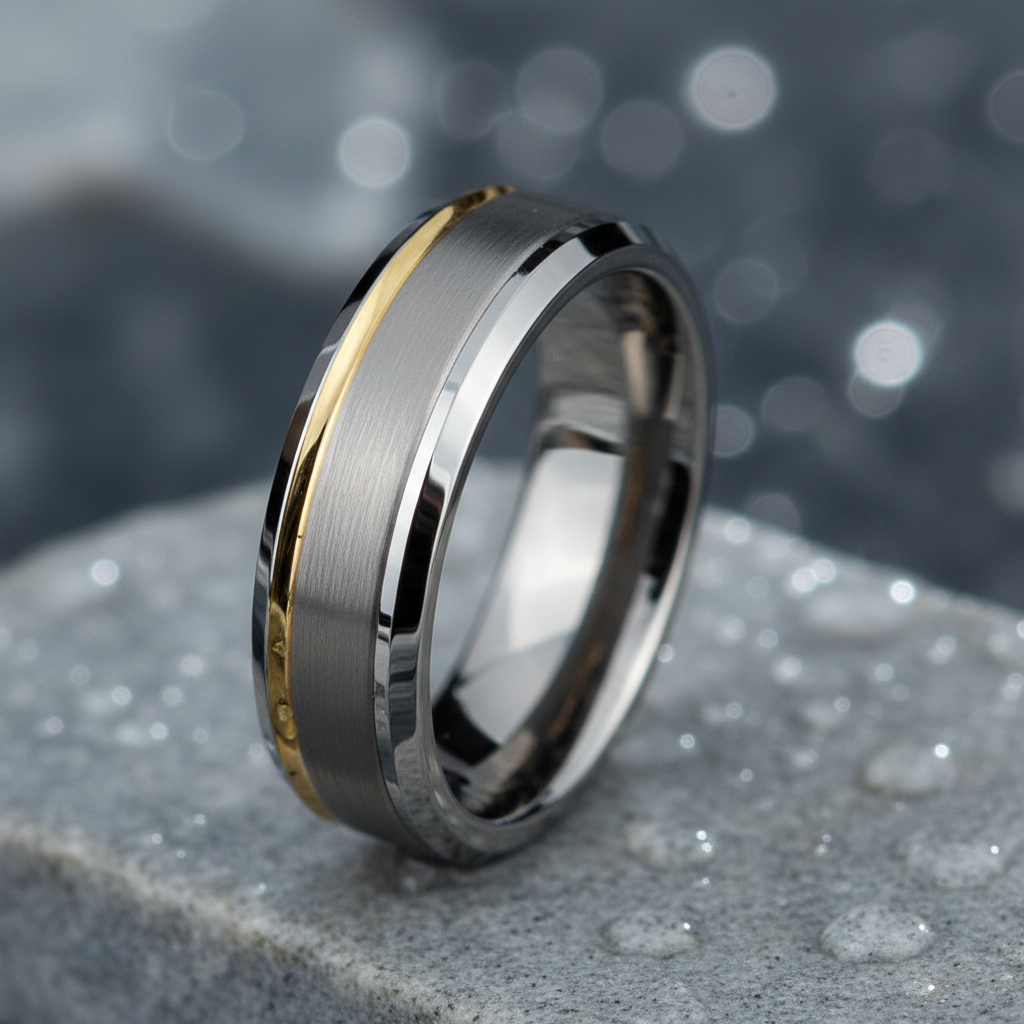
Tungsten carbide bands come in polished, satin, brushed, and hammered finishes, with options like gold inlays, black or two-tone treatments, faceting, and beveled edges. Widths typically range from 4–8 mm, with comfort-fit interiors standard for most men’s bands.
Choosing a style starts with finish, then moves to edges, width, and any accent details. Your engagement ring’s metal and design can guide coordination—keep tones complementary, or go bold with contrast.
-
Finishes:
- Polished: Mirror-like shine for formal looks
- Brushed/Satin: Understated, modern texture that hides micro-marks
- Matte: Soft, contemporary presence that photographs beautifully
- Hammered: Organic texture with artisanal character
- Edges & profiles: Classic flat, domed comfort-fit, beveled, or faceted
- Accents: 14K/18K gold inlays, black ion plating, carbon fiber, or subtle grooves
- Widths: Commonly 4–8 mm; broader bands read bolder, narrow bands feel lighter
- Pairing ideas: Contrast a matte tungsten band with a bright lab-grown diamond solitaire for a timeless duo
For inspiration on texture, see our internal primers on surface treatments like matte wedding bands and hammered bands explained. These foundations help you visualize how tungsten finishes read in different lighting.
Tungsten vs. Gold, Platinum, Titanium, and Ceramic
Tungsten carbide excels in scratch resistance and finish retention. Gold and platinum win on tradition and resize-ability. Titanium is ultra-light and comfortable. Ceramic is hard and color-stable but can chip. Choose based on lifestyle, aesthetics, and maintenance preferences.
Use this at-a-glance table to match the metal to your priorities. If you want low upkeep with modern style, tungsten is compelling. If lifelong resizing flexibility matters, precious metals may be smarter.
| Property | Tungsten Carbide | Gold (14K) | Platinum | Titanium | Ceramic |
|---|---|---|---|---|---|
| Scratch Resistance | Very high | Low–moderate | Moderate | Moderate–high | High |
| Hardness (relative) | Hardest in set | Softest in set | Softer than tungsten | Mid-range | Near tungsten |
| Weight on Hand | Hefty | Medium | Hefty | Very light | Medium |
| Resizing | Not resizable | Resizable | Resizable | Limited | Not resizable |
| Finish Options | Wide: matte, brushed, faceted | Wide: classic polish | Wide: elegant luster | Modern, matte-heavy | Modern, colorfast |
| Allergy Considerations | Often hypoallergenic alloys | Depends on alloy mix | Generally hypoallergenic | Generally hypoallergenic | Generally hypoallergenic |
| Traditional Symbolism | Modern | Classic | Classic | Contemporary | Contemporary |
Want more context on metal families? See this overview of common jewelry metals for a broad refresher before you decide.
Best Practices: Sizing, Care, and Safety
Pick a comfort-fit interior, confirm width on a sizing band, and allow for finger changes across seasons. Clean with mild soap and a soft cloth. For emergencies, tungsten carbide can be safely cracked with specialized tools to remove the ring without injuring the finger.
Accurate sizing matters more with non-resizable metals. We advise testing two widths (for example, 6 mm and 8 mm) with a comfort-fit sizer for 10–15 minutes each—type, grip, and flex your hand to mimic real wear. Note mobility over the knuckle and resting feel.
- Sizing tips: Try on at room temperature. Fingers swell with heat and activity.
- Daily care: Rinse with mild soap, then dry with a lint-free cloth to restore luster.
- Storage: Keep separate from diamonds and other hard items to avoid mutual abrasion.
- Engraving: Laser engraving is crisp on tungsten; preview short phrases or dates.
- Removal readiness: ER teams use ring crackers or vise-like tools to fracture tungsten quickly and safely when needed.
For surface style planning, our matte wedding bands guide and hammered texture primer show how different finishes behave with wear.
Tools and Resources to Help You Choose
Use structured guides, finish explainers, and design resources to move from options to a confident pick. Diamond2Deal’s wedding ring guide, style articles, and customization education help you compare widths, finishes, and pairing ideas with your engagement ring.
Start with fundamentals, then narrow to finish and width. If you’re pairing with a lab-grown diamond engagement ring, balance brightness and texture for a cohesive set.
- Explore our wedding ring guide for fit, width, and metal selection basics.
- Learn how matte finishes photograph and hide micro‑marks.
- See hammered bands explained for tactile, organic texture.
- Pair with a center-stone: read our custom engagement rings guide to coordinate metals and profiles.
- Choosing between profiles? Our women’s band styles explainer helps visualize match-ups for couples’ sets.
Local considerations for Manhattan
- Plan try-ons near Midtown errands; our address is close to Rockefeller Center and Grand Central, making lunchtime appointments efficient.
- Summer humidity and winter cold affect finger size. Test fit across seasons or re-check fit after major temperature swings.
- New Yorkers live fast. Choose a finish that matches your routine—brushed or matte often look fresh even after a crowded commute.
Real-World Examples from Diamond2Deal Clients
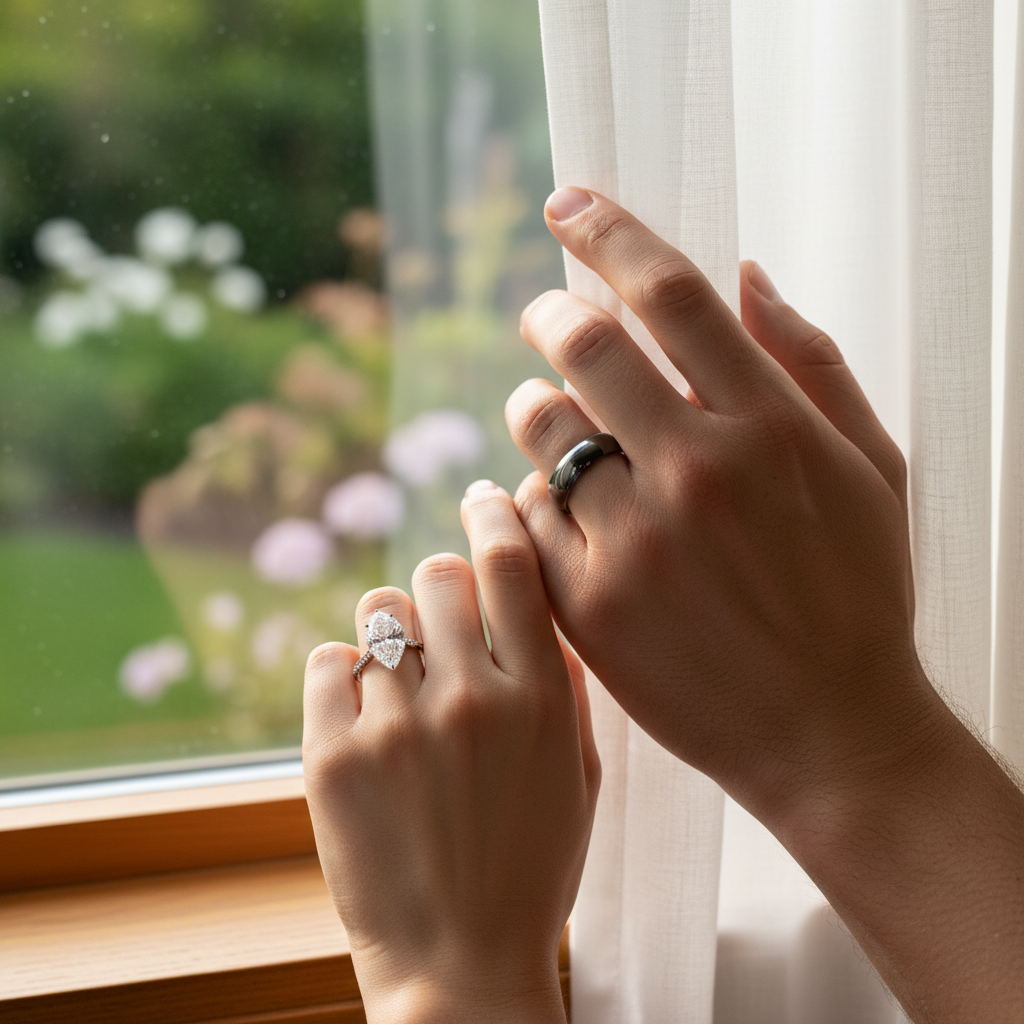
Couples often combine a low‑maintenance tungsten band with a lab‑grown diamond engagement ring for balance. The tungsten holds up to everyday wear, while the engagement ring shines for life events. Here are three quick scenarios that mirror what we see in New York.
In our experience, the best decisions pair lifestyle with style intent. Consider these snapshots to spark your own short list.
- The Commuter Professional: An 8 mm brushed tungsten band with beveled edges feels solid and hides micro‑marks. It pairs cleanly with a lab‑grown solitaire. After three months of subway commutes, the finish still reads crisp after a quick wipe.
- The Fitness Enthusiast: A 6 mm domed comfort‑fit tungsten band avoids visible scuffs from weights and rowing machines. They keep a silicone band for heavy lifting days, but the tungsten remains the daily favorite.
- The Minimalist Couple: Matching 6 mm matte tungsten bands with subtle gold inlay echo the warmth of her yellow gold pendant. The two‑tone moment ties the set together without feeling overly formal.
Every couple’s routine is different. If you type, travel, lift, and cook, tungsten’s resilience is hard to beat for a wedding band you’ll hardly think about—until someone compliments it.
Frequently Asked Questions
These quick answers cover performance, safety, and care for tungsten carbide wedding bands. Each response is direct, practical, and based on what we explain most often to Diamond2Deal shoppers.
Are tungsten carbide bands really scratch resistant?
Yes. Tungsten carbide is much harder than gold or platinum, so it resists everyday scratches from keys, desks, and gym equipment. While no ring is invincible, tungsten noticeably maintains its finish longer than softer precious metals with normal wear.
Can a tungsten wedding ring be resized later?
No. Tungsten carbide cannot be stretched or compressed like gold or platinum. That’s why accurate initial sizing is important. If your size changes, you’ll replace rather than resize. Comfort-fit interiors help many wearers enjoy a stable feel across seasons.
Is tungsten safe in emergencies if my finger swells?
Yes. Emergency responders use ring crackers or vise-like tools to fracture tungsten quickly. The material breaks cleanly under concentrated force, letting teams remove the ring without twisting or cutting your finger.
Will a tungsten band match my lab-grown diamond engagement ring?
Absolutely. Matte or brushed tungsten complements the sparkle of a lab-grown diamond and keeps attention on the center stone. If you like warmth, choose a gold inlay or pair with yellow or rose gold jewelry for a cohesive, modern set.
Key Takeaways
Choose tungsten carbide if you want a modern, scratch‑resistant band with minimal upkeep. Confirm comfort‑fit sizing, pick a finish that matches your routine, and remember tungsten’s not resizable. Pair thoughtfully with your engagement ring to create a set that looks intentional.
- Tungsten carbide wedding bands keep their look with little maintenance.
- Comfort-fit interiors and the right width are crucial for long wear.
- Not resizable—prioritize precise sizing up front.
- Match finish and color accents to your engagement ring and daily style.
Conclusion: Make a Confident, Stylish Choice
Tungsten carbide bands deliver effortless style and durability for busy couples. Focus on finish, width, and comfort-fit shape, then pair with your engagement ring’s vibe. If you’re in Manhattan, book a quick visit near Midtown and leave with a decision you’ll love wearing.
Here’s our suggestion: shortlist two widths and two finishes, wear each for 10–15 minutes, then choose the one you forget you’re wearing. That’s your winner. For guidance, start with our wedding ring guide and finish explainers.
Soft CTA: Want personal help? Our team at Diamond2Deal blends family-owned service with education-first advice. Bring your engagement ring, and we’ll map pairings and widths so your set looks intentional and feels great all day.
Trend inspiration if you love bold contrasts: black accents beside bright diamonds are having a moment. For visual ideas, browse a roundup of black diamond looks and notice how matte textures elevate sparkle.
If you’re still exploring metal families broadly, this metals overview offers helpful context. And if you’re planning a center-stone, you can review general diamond selection steps here: find a diamond.